That convenient bag of charcoal might be the single biggest obstacle between you and a perfect 12-hour brisket. We’ve all been there. The lure of readily available charcoal is strong, and it’s easy to assume that all fuel is created equal. However, fighting inconsistent lump sizes and chemical taints mid-cook quickly proves otherwise. When weighing up Charcoal Kings against other common charcoal options, the real choice is between a generic, less specialized product and high-density carbon designed for performance.
You probably agree that nothing ruins a Sunday faster than a firebox full of dust that kills your airflow or a short burn time that requires constant management. This guide explains why specialist hardwood purity determines the success of your next low-and-slow session. You’ll learn how to achieve stable temperatures for 10-hour cooks, avoid the excessive sparking that ruins the lighting experience, and why the shift to local Australian supply in 2026 has changed the game for every backyard pitmaster. We’re breaking down everything from ash content to fixed carbon levels so you can stop guessing and start grilling with authority.
Key Takeaways
- Eliminate chemical taints and off-flavours by choosing 100% natural hardwood over mass-market products containing binders and fillers.
- Comparing Charcoal Kings vs Bunnings charcoal reveals why high-density carbon is essential for maintaining stable temperatures during 10-hour low-and-slow cooks.
- Identify the specific fuel types that optimize airflow in Kamados and provide the clean wood-smoke synergy required for professional offset smoking.
- Reduce cleanup time and prevent firebox clogs by switching to premium lump charcoal that produces minimal ash and consistent piece sizes.
- Understand the cost-benefit of professional-grade fuel where superior burn duration often leads to a lower cost per cook than standard retail bags.
Hardware Store Convenience vs. Specialist Performance: The Great BBQ Trade-Off
The 2026 landscape of the Australian BBQ fuel market has shifted dramatically. Since January 1, 2026, international shipping regulations have classified charcoal as a Dangerous Good (UN 1361, Class 4.2). This change, combined with new biosecurity import conditions effective July 30, 2026, has pushed the market toward domestic Australian hardwood. Most Aussie grillers start their journey with a “Bunnings run.” It’s accessible and fits the weekend routine perfectly. You grab your snags, a new bag of potting mix, and a 7kg bag of Jumbuck or Heat Beads without a second thought. It’s the standard entry point for backyard cooking.
To better understand this concept, watch this helpful video:
The moment you outgrow generic hardware store charcoal usually happens mid-cook. You might notice a thick, acrid smoke that taints your expensive wagyu brisket. Or perhaps you find that half the bag is comprised of tiny shards and dust that choke your firebox. To understand what charcoal is at a professional level, you have to look beyond the price tag. Charcoal Kings defines the specialist category by focusing on the specific technical needs of pitmasters rather than just general retail convenience.
The Convenience Factor: Why We Buy at Bunnings
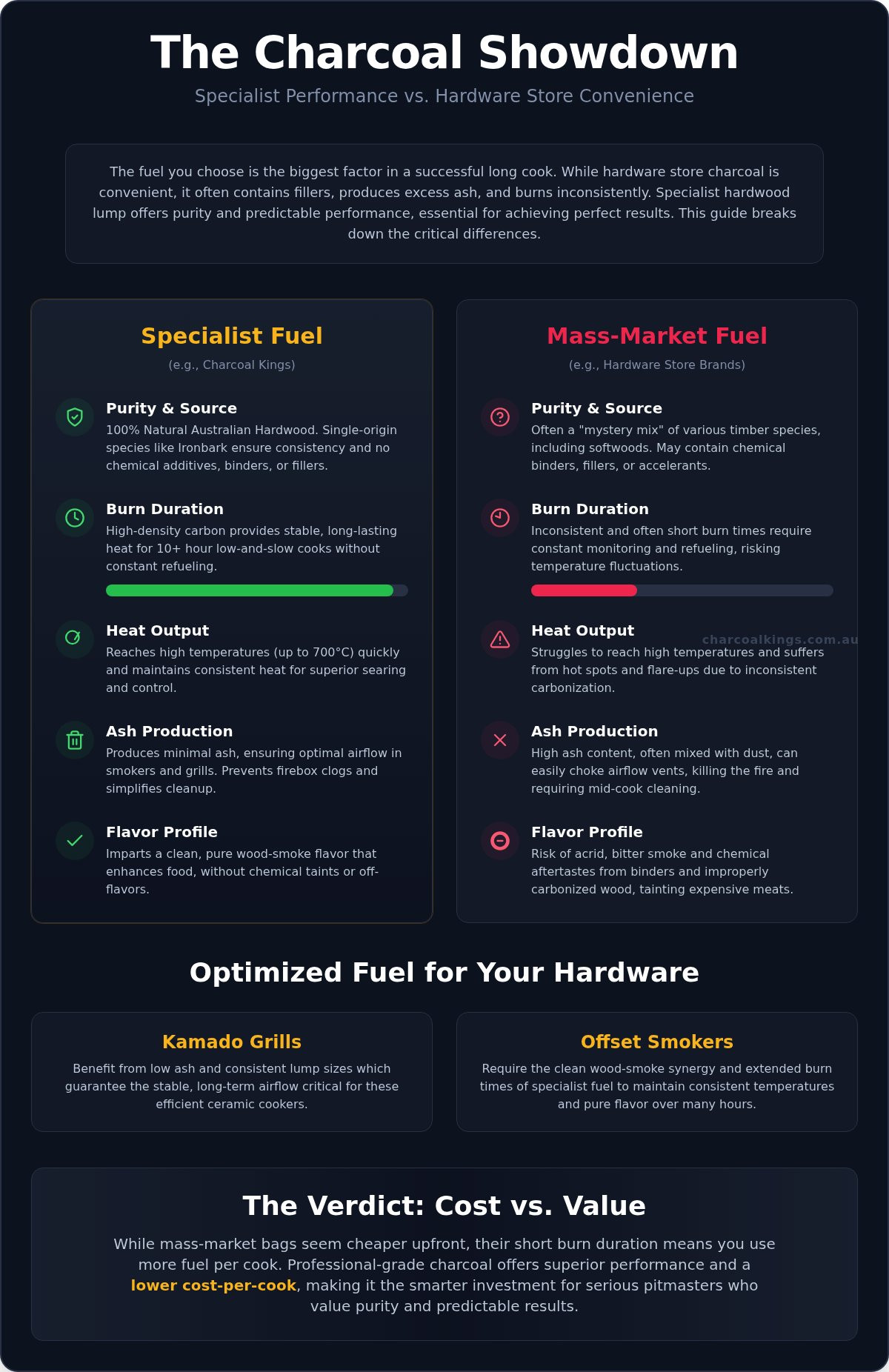
Bunnings dominates the casual market through sheer accessibility. The “grab it with the sausages” mentality works because it requires zero planning. Mass-market brands keep price points low by sourcing mixed timber species and using high-speed production methods. This often results in inconsistent carbonisation. You get a bag of “generic” hardwood that might contain softwoods or timber with high moisture content. These bags frequently include chemical binders or fillers to help the product light faster, which can lead to excessive sparking and a chemical aftertaste in your food.
The Specialist Shift: Why Quality Matters
When you move from a hobby to a craft, performance consistency becomes your primary metric. The debate of Charcoal Kings vs Bunnings charcoal isn’t just about brand names; it’s about sourcing transparency. Specialist suppliers provide 100% natural hardwood, often specifically high-density species like Ironbark. This ensures you know exactly what wood is in your smoker. Charcoal Kings acts as a wholesale supplier to leading Australian BBQ restaurants because professional chefs can’t afford temperature swings or ash clogs. This food-service-grade quality is now the benchmark for serious home pitmasters who demand purity and predictable burn times.
Technical Metrics: Comparing Heat, Duration, and Ash Volume
Technical performance is where the marketing fluff ends and the physics of carbonization begins. Most casual grillers judge fuel by the price per bag, but professional pitmasters look at fixed carbon content and energy density. High-quality Australian hardwood lump can reach temperatures of 700°C within 15 minutes. This is a level of intensity that mass-market products rarely achieve. When analyzing Charcoal Kings vs Bunnings charcoal, the performance gap is most visible in how the fuel handles oxygen and heat retention. Professional-grade charcoal should maintain a fixed carbon content of at least 70% to ensure a clean, hot burn. This level of charcoal quality control prevents the fire from stalling or producing the heavy, bitter smoke associated with under-carbonized wood.
The High Heat Test: Searing Performance
Charcoal Kings Hardwood Lump reaches 350°C+ significantly faster than entry-level options. This speed is a direct result of the high-density species used, such as Ironbark. Denser wood creates a more intense coal bed that radiates heat consistently across the entire grill surface. In the showdown of Charcoal Kings vs Bunnings charcoal, the specialist fuel wins on efficiency; you use less volume to achieve the same searing power. Thermal mass represents the energy stored within the coal bed that allows the cooking temperature to recover almost instantly after the lid has been opened. This prevents your steaks from stewing in their own juices while the grill struggles to get back up to temperature.
The Low and Slow Test: 12-Hour Consistency
Temperature stability is the hallmark of a successful low-and-slow cook. Low-density coals often suffer from a “spike and dip” cycle where they burn hot and fast before collapsing into ash. This requires the cook to constantly adjust vents and add more fuel. A 10kg bag of premium hardwood lump can often outlast 15kg of generic fuel because the carbon is more concentrated. Ash management is also a critical factor for ceramic Kamado-style grills. High-quality hardwood produces less than 3% ash by weight, whereas cheaper alternatives can leave a thick layer of debris that chokes the bottom air vents. For those tired of fighting their equipment, switching to professional-grade hardwood fuel eliminates these mechanical frustrations.
Safety and lighting experience also differ between these tiers. Cheap fuel often contains high moisture or trapped air pockets that cause excessive sparking and “popping” when lit. This is not just a nuisance; it is a safety hazard for your deck and your clothes. Premium hardwood lights with minimal sparking and produces a clean, blue smoke within minutes. This allows you to start your cook faster without waiting for chemical binders to burn off. You get a predictable, stable fire that lets you focus on the food rather than the firebox.
Purity and Flavour: 100% Hardwood vs. Mystery Mixes and Binders
The flavour of your meat is directly tied to the purity of your fuel. Many budget-friendly options found in the standard hardware store run rely on chemical binders and fillers to hold compressed sawdust together. These additives don’t just affect how the fuel burns; they release acrid gasses that penetrate your food during a long cook. When comparing Charcoal Kings vs Bunnings charcoal, the most significant difference is the total absence of these synthetic materials. A pure hardwood product ensures that the only thing you taste is the authentic wood smoke and the quality of your ingredients. There’s no room for mystery mixes when you’re aiming for competition-grade results.
Clean smoke is the goal of every serious pitmaster. It’s often described as a faint, thin blue haze that gently seasons the meat without overpowering it. Dirty smoke is thick, white, and bitter, usually caused by volatile matter or chemical additives burning off. For a deeper dive into how different fuels behave, check out Charcoal: The Ultimate Guide to Fuelling Your BBQ. Charcoal Kings provides 100% natural hardwood with zero fillers, ensuring your firebox produces clean smoke from the first light to the final pull. This commitment to purity is why specialist fuel remains the choice for those who value the integrity of their cook.
The Science of Carbonisation
Professional kilning is a precise process that determines the final carbon content of the charcoal. High-quality charcoal goes through a controlled environment that removes volatile matter, leaving behind a product that is mostly pure carbon. This is why specialist lump doesn’t smell like a chemical factory when you light it up. In contrast, mass-market bags often contain a high percentage of “fines” and dust at the bottom. This isn’t just a waste of money; it’s a clear sign of poor handling or low-grade raw materials that haven’t been properly carbonised. High moisture content in these budget bags also leads to longer lighting times and excessive, unpleasant smoke that can ruin a cook before it even starts.
Sourcing Australian Ironbark
Ironbark is widely considered the gold standard for Australian BBQ due to its incredible density and neutral, clean flavour profile. We focus on sustainable, high-density timber sourcing to provide a fuel that outlasts and outperforms compressed sawdust products. Natural lump charcoal maintains the original structure of the wood, allowing for better airflow and a more authentic flavour than briquettes made from mystery wood mixes. Choosing Charcoal Kings vs Bunnings charcoal means opting for a single-species hardwood that delivers predictable, professional results every time you fire up the smoker. You get a steady, clean burn that respects the meat and the process.
Matching Fuel to Hardware: When to Invest in the Good Stuff
Your hardware dictates your fuel grade. While a standard kettle might tolerate a generic bag for a quick sear, professional-grade hardware like offsets and kamados demand a higher standard of carbon. The debate of Charcoal Kings vs Bunnings charcoal usually settles once you see how specific grills react to different ash volumes and piece sizes.
For Offset Smokers, airflow and clean wood-smoke synergy are the top priorities. You need large, consistent pieces of hardwood lump that allow oxygen to move freely through the firebox. In a Kamado, low-ash production is non-negotiable. Because ceramic grills rely on precise air intake through small bottom vents, a bed of fine ash from cheap fuel can choke your fire mid-cook. Kettle BBQs offer more versatility; they handle direct searing and indirect roasting well with most fuels, but high-density lump provides the thermal mass needed for thicker cuts. If you’re using a Hibachi, Binchotan-style heat is essential. It provides the intense, flameless infrared heat required for traditional Japanese grilling that standard hardware store charcoal simply cannot replicate.
Hardware-Specific Recommendations
Charcoal Kings Lump is the preferred choice for South Australian Offset Pitmasters who need predictable, clean-burning fuel for 12-hour brisket sessions. You don’t want to fight your firebox when the temperature drops at 3 AM. Conversely, Bunnings briquettes might suffice for a quick mid-week sausage sizzle where flavour nuance isn’t the primary goal. If you’re still deciding on the right setup for your backyard, read The Ultimate BBQ Buying Guide: Choosing Your Perfect Grill in Australia to match your equipment to your cooking style.
Storage and Handling for 2026
Australian climates can be brutal on charcoal storage. High-humidity regions cause charcoal to absorb moisture, which leads to difficult lighting and excessive smoke. Follow these steps to maintain your fuel quality:
- Store bags in a cool, dry place, ideally in a sealed plastic bin.
- Shake off loose ash from partially used lump to allow for easy re-lighting.
- Keep bags off concrete floors to prevent moisture wicking from the ground.
The physical comparison of Charcoal Kings vs Bunnings charcoal often reveals that specialist bags are significantly more robust. We ensure our bag durability is high enough to survive nationwide shipping, whereas retail-grade bags often tear during transport, leading to the dust problem. Upgrade your fuel supply to ensure your hardware performs at its absolute peak.
The Verdict: Why Charcoal Kings is the Professional Choice for Purity
The decision between Charcoal Kings vs Bunnings charcoal ultimately comes down to your goals as a griller. If you’re hosting a casual backyard gathering with standard sausages and thin steaks, the convenience of a hardware store run is hard to ignore. However, for anyone moving into the world of low-and-slow pitmastery, that convenience carries a heavy performance tax. The 2026 BBQ season has made the choice even clearer. With international shipping regulations now imposing heavy surcharges on imported fuels, the value of high-quality, domestic Australian hardwood has never been higher. You aren’t just buying fuel; you’re buying temperature stability and flavour integrity.
A common misconception is that specialist fuel is a luxury expense. A technical cost-benefit analysis reveals that “expensive” fuel often saves money over the course of a season. Because high-density Ironbark and premium Hardwood Lump possess superior thermal mass, you consume fewer grams of fuel per hour. A 10kg bag of professional-grade lump can easily outlast 15kg of low-density retail charcoal that quickly collapses into useless ash. When you factor in the cost of ruined meat from chemical taints or the frustration of a stalled firebox, the investment in purity pays for itself in the first few hours of a long cook.
The Case for Charcoal Kings
We provide unmatched purity for the health-conscious and flavour-focused pitmaster. Our focus is 100% natural fuel with no chemical binders, fillers, or mystery wood species. This is essential for high-end hardware like Kamados and Offset Smokers where airflow is the lifeblood of the fire. Based in Holden Hill, South Australia, we offer nationwide shipping and direct support from experts who actually use these products every day. You don’t get that level of technical expertise from a retail clerk in a hardware aisle. We understand the specific carbonisation levels required to reach 700°C for a perfect sear or to hold 110°C for a 12-hour brisket.
Next Steps for Your Next Cook
Transitioning from hardware store fuel to specialist hardwood is straightforward but requires a small adjustment in fire management. Start by thoroughly cleaning your firebox to remove any residual ash from low-grade briquettes. You’ll immediately notice that premium lump lights faster and produces a cleaner, blue smoke. This change significantly reduces equipment maintenance, as there is less corrosive ash buildup in your vents and gaskets. The long-term results are reflected in the bark, the smoke ring, and the authentic wood-smoke flavour of your food. Stop settling for retail compromises and start cooking with the authority of a professional. Secure your supply of premium Australian hardwood today and dominate your next cook. Get it done right.
Dominate Your Fire for the 2026 Season
Winning the backyard battle requires more than just a premium cut of meat; it demands a fuel source that doesn’t quit. The technical comparison of Charcoal Kings vs Bunnings charcoal highlights a clear shift toward specialist performance. You’ve seen how high-density Australian hardwood eliminates the chemical taints and inconsistent burn times associated with mass-market retail options. Choosing professional-grade carbon means less ash cleanup for your ceramic grills and more stable temperatures for those critical 10-hour low-and-slow sessions.
As a wholesale supplier to leading Australian BBQ restaurants, we provide the same restaurant-grade quality to home pitmasters. Every bag contains 100% Natural Hardwood with zero chemical additives. We ship nationwide from our Holden Hill, SA warehouse to ensure your firebox is never empty. It’s time to stop fighting your equipment and start mastering the craft with a fuel that respects the meat.
Upgrade your next cook with Australia’s purest Hardwood Lump from Charcoal Kings and experience the difference that purity makes. Get your pit ready for greatness.
Frequently Asked Questions
Is Charcoal Kings charcoal better than Bunnings charcoal for long cooks?
Charcoal Kings Hardwood Lump is superior for long cooks because it offers higher energy density and temperature stability. Low-density coals found in retail stores often burn out quickly, requiring frequent firebox management. Using a high-density species like Ironbark ensures your pit stays at a steady 110°C for the duration of a brisket cook. In the Charcoal Kings vs Bunnings charcoal comparison, the specialist fuel wins on longevity and reduced fuel consumption per hour.
Does Charcoal Kings lump charcoal spark less than hardware store brands?
Yes, our premium lump charcoal produces significantly less sparking because it lacks the chemical binders and trapped moisture found in mass-market brands. Excessive sparking is usually a sign of low-grade wood or additives burning off. Our controlled kilning process ensures high carbonization, which results in a cleaner and safer lighting experience. This is vital for backyard safety, especially when lighting your grill on wooden decks or near flammable materials.
Can I use Charcoal Kings Binchotan in a standard Weber Kettle?
You can use Binchotan in a Weber Kettle, but it’s specifically engineered for the intense infrared heat of a Hibachi. Binchotan burns at a much higher temperature for up to four hours, making it less efficient for a standard kettle setup unless you’re doing high-heat searing. For most kettle cooks, our standard Hardwood Lump or Briquettes provide better versatility. Binchotan is a specialist tool for focused, high-intensity Japanese-style grilling.
Why is specialist charcoal more expensive than grocery store brands?
Specialist charcoal costs more because it utilizes high-density timber and a more rigorous carbonization process. Grocery store brands often use mixed softwoods or compressed sawdust with chemical fillers to keep prices low. While the initial bag price is higher, the cost-per-cook is often lower because you use less fuel to maintain heat. You’re paying for purity, which results in better flavour and less mechanical frustration with your BBQ hardware.
Which charcoal produces less ash for my Kamado Joe or Big Green Egg?
Premium Hardwood Lump is the best choice for ceramic grills because it produces less than 3% ash by weight. Ceramic cookers like the Kamado Joe rely on clear bottom vents to maintain precise airflow. Low-grade fuels produce thick, heavy ash that can choke these vents mid-cook, causing your temperatures to stall. Switching to a high-purity fuel ensures your airflow remains consistent, which is non-negotiable for successful long-duration smoking.
Is Charcoal Kings charcoal 100% natural Australian hardwood?
Every bag of our Hardwood Lump Charcoal is 100% natural Australian hardwood with zero chemical additives or binders. We focus on high-density species like Ironbark to provide the heat and longevity professional pitmasters demand. This purity is the core of our brand promise. By avoiding synthetic fillers, we ensure that the only thing seasoning your meat is clean, authentic wood smoke. It’s the standard for serious Australian BBQ.
Does Bunnings sell professional-grade Ironbark charcoal?
Bunnings typically focuses on high-volume retail brands that use mixed hardwood species rather than professional-grade Ironbark. While they offer convenience, they don’t provide the single-species density required for precision smoking. Specialist suppliers like Charcoal Kings source specific high-density timbers to ensure performance consistency. If you need the intense heat and long burn times of genuine Ironbark, you’ll need to look beyond the standard hardware store inventory.
How much charcoal do I need for a 12-hour brisket cook?
For a 12-hour brisket cook in an offset smoker, you’ll typically need between 6kg and 8kg of high-density lump charcoal. This estimate varies based on your specific grill and ambient weather conditions. Because our charcoal has a higher fixed carbon content, it burns more efficiently than retail alternatives. In the Charcoal Kings vs Bunnings charcoal matchup, you’ll find that our premium fuel allows you to complete long cooks with significantly less total weight.