What if your BBQ budget’s biggest leak isn’t a new smoker, but the steady stream of charcoal, smoking woods and small accessories? Fuel and handy extras are easy to overlook, while one-off gear can make annual spending hard to predict. A practical approach to budgeting for a year of bbq hobby supplies starts with separating what you buy regularly from equipment you replace or add only occasionally.
Your spending should reflect how you actually cook, not an idealised calendar. A quiet winter, a run of weekend gatherings or more low-and-slow sessions can all change how much fuel you use. Charcoal, briquettes, smoking woods and accessories each play a different role. Grouping them together can hide where your budget is going.
This guide shows you how to build a year-round plan from your own BBQ habits. Estimate recurring purchases, set aside an allowance for occasional gear, and track what you use as your cooking routine changes. You’ll get a clearer view of your supplies spending and a practical way to adjust the plan without treating every new accessory as a surprise.
Key Takeaways
- Build your annual supplies budget around purchases you actually make, separating consumables from durable gear and optional extras.
- Estimate fuel needs from planned cooks and personal usage records, rather than relying on generic consumption figures.
- Compare supplies by type, pack size, intended use and purchase frequency, and enter current prices in A$.
- Use a simple monthly or quarterly record to track purchases and review whether your budget still fits your cooking habits.
- Make budgeting for a year of bbq hobby supplies more practical by treating charcoal and smoking woods as repeat purchases, and grills or smokers as longer-term gear.
What belongs in a year of BBQ hobby supplies budgeting?
An annual BBQ supplies budget is a plan for the purchases that support your cooking across the year. It covers items you use up and replace, along with occasional gear you want to plan for. The aim of budgeting for a year of bbq hobby supplies is to see the full cost of the hobby, rather than treating each bag of fuel or new tool as an isolated expense.
Keep supplies separate from food, drinks and hosting costs for a particular gathering. Meat, vegetables and beverages belong to the meal budget; plates, decorations or extra seating are event costs. This distinction makes it easier to understand what the hobby itself costs, including in months without a big get-together.
The right annual BBQ supplies budget depends on personal use, not a universal figure. Cooking frequency, fuel choice and preferred techniques all affect what belongs in your plan. Build it from purchases you actually make, then add categories only when they fit your setup.
Which BBQ supplies recur throughout the year?
Recurring supplies are items you use up during cooking and need to replenish. Depending on your setup, these might include charcoal, briquettes, smoking woods, firelighters, rubs and sauces. The types of charcoal available vary, so record the fuel you use rather than assuming every option belongs in your budget.
Start with your purchase history. If you cook with charcoal and occasionally use smoking wood, those are your recurring categories. Don’t add briquettes, sauces or firelighters just because they’re common BBQ supplies. Your list should reflect your cooking style and the fuel you choose.
Which purchases belong in a separate gear fund?
Grills, smokers and durable accessories differ from supplies used up at the grill. They’re typically longer-term purchases, although a worn or damaged item may need replacing. Keep planned replacements and upgrades in a separate gear fund so a larger purchase doesn’t distort your view of regular replenishment.
List the equipment you own, note any replacement or upgrade you’re considering, and record it separately from recurring supplies. If you’re weighing up a new grill, the Australian BBQ grill buying guide can help you assess how a grill fits your cooking needs before adding it to your gear plan.
Give optional extras their own line, too. A new accessory, an additional rub or a different smoking wood might be useful, but it isn’t automatically a regular expense. Mark these as optional so you can prioritise the fuel and supplies you rely on first. Separating the categories gives you a clearer picture of routine use while leaving room for considered upgrades.
How to estimate recurring BBQ fuel and supply use
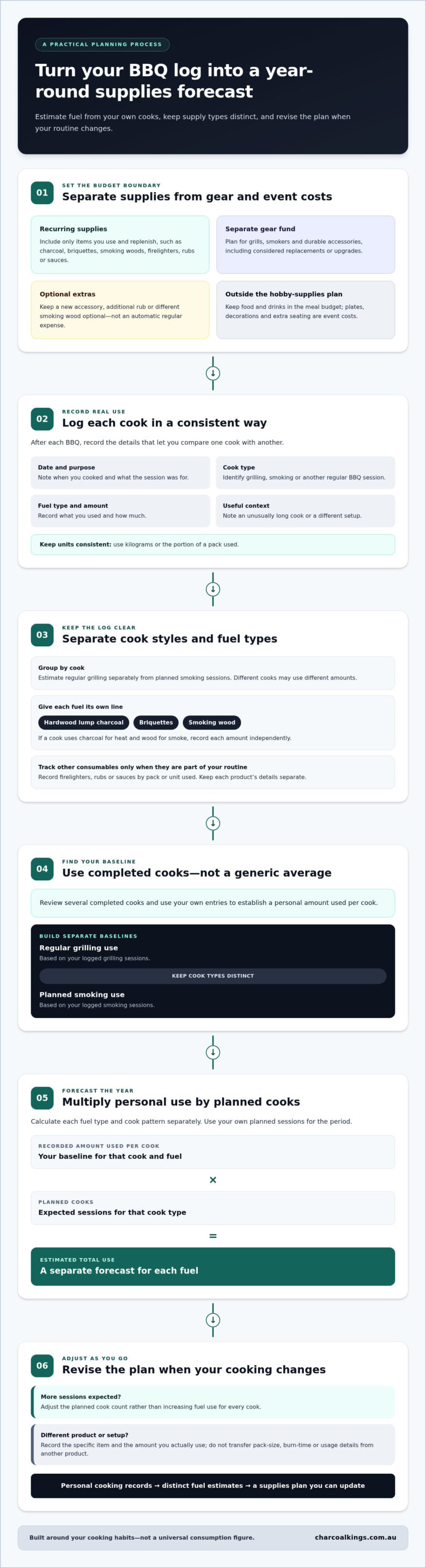
A useful fuel estimate starts with your own cooking, not a generic figure. Count the cooks you expect to have, record the fuel used for each, then total the expected use by fuel type. If your routine changes over the year, make separate estimates for different kinds of cooks instead of assuming every session uses the same amount.
Actual fuel use varies with the cook, equipment and personal routine. A short grilling session and a longer smoking cook won’t necessarily use the same amount of fuel. Your own records give you a more relevant planning baseline than unsupported average consumption or spending figures.
Build an estimate from your own BBQ log
After each BBQ, note the date, cooking purpose, fuel type and amount used. Record the amount in a consistent unit, such as kilograms or the portion of a pack used, so you can compare like with like. Add a short note if the cook was unusually long or involved a different setup.
Review several completed cooks and use those entries to set a personal baseline. Then count the cooks you plan for the year and multiply expected sessions by the relevant per-cook use. Estimate regular grilling separately from planned smoking sessions. If you expect to cook more often than you did during the period you logged, adjust the session count rather than inflating the fuel estimate for every cook. This turns budgeting for a year of bbq hobby supplies into a forecast you can revise as your plans develop.
Keep different fuels and consumables distinct
Use separate lines in your log and budget for hardwood lump charcoal, briquettes and smoking wood. If one cook uses charcoal for heat and wood for smoke, record each amount independently. That way, increased use of one fuel won’t be mistaken for higher use of another.
Include firelighters, rubs or sauces only if they’re part of your routine. Track them by pack or unit used, then estimate how often you’ll need to replenish them based on your own records. Keep product details separate, too: don’t transfer burn-time, pack-size or usage information from one product to another. Record the specific item and the amount you actually use.
A simple table can keep the estimate clear:
- Fuel or supply: charcoal, briquettes, smoking wood or another item you use.
- Cook type: grilling, smoking or another regular BBQ session.
- Use per cook: the amount recorded in your log.
- Planned cooks: your expected sessions for the period.
- Estimated total: use per cook multiplied by planned cooks.
For the broader budgeting process, Fidelity’s budgeting strategies offer general approaches to organising spending. Apply the same discipline here: use your own records, keep categories distinct and update your estimate when your cooking pattern changes. If you’re choosing fuel for upcoming cooks, browse charcoal options for BBQ use and compare them with the types you’ve logged.
How to compare BBQ supply purchases without guessing at value
A low pack price doesn’t automatically make a supply the better fit. Compare each option with what you cook, how much you use and how well the pack suits your storage space. This keeps purchase decisions grounded in your own routine, not assumptions about typical BBQ spending or promised savings.
Use a comparison table and enter current prices yourself. Record prices in A$ and compare like with like, including the amount in each pack and how often you expect to buy it. Treat cost per cook as a personal measure: divide what you spend on a supply by the number of cooks completed using it.
Compare fuel options against the way you cook
Lump charcoal, briquettes and smoking woods may serve different purposes in your BBQ routine. Compare them by intended use and personal preference, rather than assuming one fuel works best for every cook. If you use more than one fuel in a session, list each separately so its role and use remain clear.
A guide to fuelling a BBQ with charcoal can help you understand charcoal options as you decide what belongs in your comparison. Keep product details distinct: don’t apply one charcoal product’s burn time or pack information to another.
Check pack size, storage and purchase frequency
Pack size affects how often you replenish a supply and how much space you need to store it. Compare larger and smaller packs using prices you’ve checked yourself, alongside your recorded consumption. A larger pack may mean fewer shopping trips, but don’t assume it saves money or suits your storage arrangements.
Use these columns to make the comparison practical:
| Product type | Pack size | Intended use | Purchase frequency | Personal cost (A$) |
|---|---|---|---|---|
| Charcoal | Enter pack size | Enter your use | Enter frequency | Enter current price |
| Briquettes | Enter pack size | Enter your use | Enter frequency | Enter current price |
| Smoking wood | Enter pack size | Enter your use | Enter frequency | Enter current price |
Add other supplies only when they’re part of your routine. For rubs, sauces or accessories, use the same fields where they’re useful, but don’t compare unrelated products by pack price alone. A sauce and a bag of fuel serve different purposes, so assess each against your actual use.
After a few purchases, review the table alongside your BBQ log. Compare what you expected to use with what you actually used, then update purchase frequency or pack preference. This makes budgeting for a year of bbq hobby supplies more accurate over time, without relying on a universal price target.
How to set and review a practical BBQ supplies budget
A workable budget starts with a limit that suits your finances, then gives each planned purchase a place. The goal isn’t to spend every dollar or predict every cook perfectly. It’s to make recurring supplies visible, set aside money for gear you expect to replace or upgrade, and adjust the plan when your BBQ routine changes.
Build the plan in this order:
- Set a personal limit. Choose the amount you’re comfortable allocating to BBQ supplies for the period.
- List your categories. Separate regular fuel and consumables from occasional equipment and accessories.
- Estimate use. Base recurring supplies on your own cooking records and expected sessions.
- Record purchases. Log each purchase in A$ against its category.
- Review and revise. Compare planned and actual spending, then update future allocations.
Create a flexible monthly or quarterly plan
Choose a monthly or quarterly view that’s easy to maintain. Allocate your own amounts to recurring fuel, other consumables and occasional gear, using figures you’ve chosen rather than a generic target. Keep an unallocated line for supplies you didn’t anticipate. It can stay blank or hold an amount that fits your limit; there’s no fixed percentage to use.
A spreadsheet, notes app or paper log will do the job. Use a simple template and fill in your own figures:
| Period | Recurring fuel (planned / actual, A$) | Consumables (planned / actual, A$) | Gear fund (planned / actual, A$) | Unplanned supplies (A$) | Notes |
|---|---|---|---|---|---|
| Month or quarter: ______ | ______ / ______ | ______ / ______ | ______ / ______ | ______ | ______ |
| Month or quarter: ______ | ______ / ______ | ______ / ______ | ______ / ______ | ______ | ______ |
For an Australian seasonal check-in, label each review with the season and note any planned changes to your cooking schedule, equipment or preferred fuel. Use it as a planning prompt, not an assumption that every household cooks differently at a particular time of year.
Adjust the plan as your BBQ routine changes
At each review, compare planned with actual spending by category. If you’ve started cooking more often, revise the recurring supply allocation to reflect the change. Keep a one-off grill or accessory purchase separate so it doesn’t look like your regular fuel needs have increased. Update the next period’s plan instead of treating one unusual month as the new norm.
If you’re refining your charcoal routine, a beginner’s guide to barbecuing with charcoal can help you think through the cooking approach behind your supply choices. Review your budget after a meaningful change, such as a different BBQ, fuel preference or planned cooking frequency. That regular check is what makes budgeting for a year of bbq hobby supplies useful in practice.
Once your categories are clear, browse BBQ charcoal and supplies to compare options with your plan and cooking habits.
Choosing Charcoal Kings supplies for your BBQ budget
Use the budget you’ve built to decide which supplies fit your cooking routine. Charcoal Kings offers products across recurring fuel, smoking woods, seasonings, accessories, grills and smokers. These are options, not a required shopping list. Include the products you expect to use, and keep repeat purchases separate from longer-term equipment so one planned upgrade doesn’t crowd out regular supplies.
Charcoal Kings uses no chemicals in the manufacturing of any of its charcoal. Consider that product detail alongside your preferred fuel and the cooking you plan to do. Keep your purchase notes and current prices in A$ beside each category, rather than assuming every product type belongs in your annual plan.
Match confirmed Charcoal Kings products to budget categories
For a recurring fuel line, Easy Burn Charcoal is one option to compare with your cooking log. It has an approx. 3 hours burning time and is ready to cook in just 15 minutes. Premium Hardwood Lump Charcoal has a 4 hour burn time. Keep each product’s stated details distinct when estimating what suits your planned cooks.
Smoking wood can have its own budget line. Australian Mallee Wood Chips are an option if smoking is part of your BBQ routine. Track wood separately from charcoal and note how often you use it. Rubs, sauces and BBQ accessories can also fit your plan when they’re part of your actual cooking habits. You don’t need to budget for every category.
Plan purchases through the right buying channel
Use your records to distinguish supplies that need replenishing from equipment you may buy occasionally. Charcoal and smoking woods can be repeat purchases based on use; grills and smokers are longer-term gear to plan for separately. Accessories may fall into either category depending on whether you use them up or expect to replace them. Include an item only when it serves a real purpose in your setup.
Charcoal Kings sells products online, and authorised stockists provide an in-person buying option. Compare the current product information with your budget categories, intended use and storage space before choosing what to add. A measured approach keeps your plan personal and avoids turning a useful product range into a list of must-buys.
Choose the products that suit your cooking plans and leave the rest off your list. Explore Charcoal Kings BBQ supplies online or through an authorised stockist.
Put your BBQ supplies plan into action
Make your next step simple. Before your next supply run, decide what you need for the BBQ sessions already on your calendar. That gives your budget a practical starting point instead of leaving it as a plan you mean to revisit. After each cook, note what you used and let that experience guide your next purchase.
Over time, budgeting for a year of bbq hobby supplies becomes less about predicting every expense and more about building a routine you can maintain. Your interests may shift. A new smoking project, a different fuel preference or an equipment upgrade can earn a place in the plan when it fits your priorities. Adjust as you go, and keep the process straightforward enough to stick with.
Choose supplies that suit your setup and the way you want to cook. Explore the range and select what fits your next BBQ project: Explore Charcoal Kings BBQ supplies. Start with one cook, learn from it and build a budget that works for you.
Frequently Asked Questions
How much should I budget for a year of BBQ supplies?
There’s no fixed annual figure for every hobbyist. For budgeting for a year of bbq hobby supplies, start with an amount you’re comfortable allocating, then use recent receipts or order history to estimate what your routine requires. Include supplies you expect to use, and keep larger equipment purchases visible as separate decisions. If you’re new to BBQ, track a shorter period first and revise your annual estimate once you’ve logged actual use.
Can I work out my BBQ charcoal needs from how often I cook?
Yes. Cooking frequency helps, but it won’t predict fuel quantity on its own. A quick grill and a longer cook can use different amounts, even if both count as one BBQ session. Group past cooks by type, such as grilling or smoking, and compare the fuel recorded for similar sessions. If you’re planning a different style of cook, treat it as a separate estimate until you have enough personal records to refine it.
Is buying BBQ supplies in bulk always better value?
No. A larger pack may suit someone who uses that supply regularly and has appropriate storage, but it isn’t automatically the better choice. Compare the current pack price with how much you actually use before your next purchase. If a supply sits unused between occasional cooks, a smaller pack may fit your routine better. Judge the option by your real consumption and storage needs, not pack size alone.
What should I include in a BBQ hobby supplies budget?
Include supplies that support your own cooking, such as charcoal, briquettes, smoking woods, firelighters, rubs or sauces when you use them. Leave food and drinks out if you want the budget to show the cost of the hobby rather than a particular meal. You can also record durable tools separately, especially if you’re tracking repairs or replacements. A category you never buy doesn’t need a line in your plan.
How can I budget for BBQ equipment as well as charcoal?
Keep equipment spending separate from repeat fuel purchases so you can see which costs are routine and which are occasional. Add a grill, smoker or durable accessory to your gear plan only when you’re considering a real purchase or replacement. Use the price shown at the time, then decide how much to set aside and over what period. This keeps a one-off purchase from skewing your view of regular supply use.
Can I make a BBQ budget if my cooking habits change during the year?
Yes. Treat the budget as a flexible working plan and update it when your routine shifts. For example, if you add regular smoking sessions, record that change separately from your usual grilling and adjust future fuel estimates accordingly. Review purchases monthly or quarterly, whichever is easier to maintain. If a period includes a one-off gear purchase, label it clearly so it doesn’t distort the picture of your ongoing supplies.