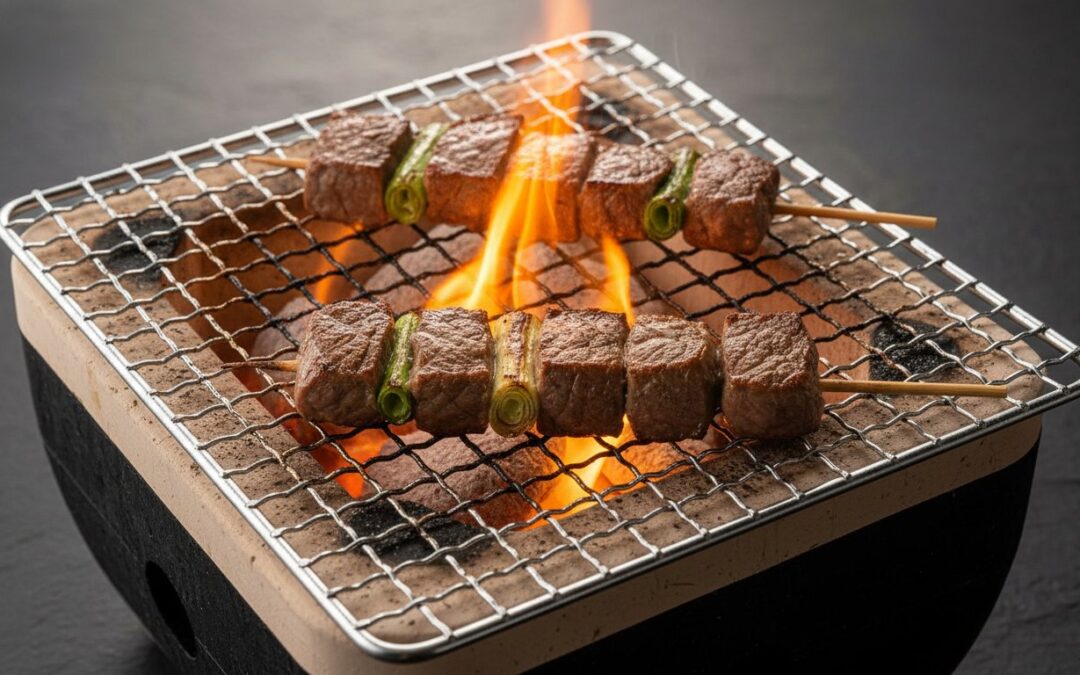
Discover the secret behind restaurant-quality grilling. Binchotan charcoal is the world’s finest grilling fuel, prized by chefs for its purity and power. This guide will show you what makes it so special, how to use it like a pro, and why it’s the key to unlocking incredible flavour in everything you cook.
What is Binchotan? Unpacking the Legend of Japanese White Charcoal
Binchotan is a traditional, ultra-premium hardwood charcoal from Japan. Often called ‘White Charcoal’ (or shiro-zumi), its name comes from the whitish hue of the ash used to cool it down during production. For centuries, it has been the gold standard in Japanese cooking, especially for grilling delicate foods like yakitori, where purity of flavour is paramount.
What truly sets binchotan charcoal apart from standard lump charcoal or briquettes is its incredible density and purity. It is composed of almost pure carbon, which results in a uniquely clean and powerful cooking experience.
The Heart of Binchotan: Japanese Ubame Oak
True, authentic Binchotan is traditionally made from a specific type of wood: Japanese Ubame Oak (Quercus phillyraeoides). This incredibly dense and hard wood is the foundation of Binchotan’s legendary quality. Ubame Oak grows slowly on the steep hills of regions like Kishu, and its harvesting is often done sustainably by skilled local craftspeople, ensuring the forests can regenerate for future generations.
Types of Authentic Japanese Binchotan
While Ubame Oak is the classic choice, Binchotan is produced in several regions of Japan, leading to different types and grades:
- Kishu Binchotan: Made in the Wakayama Prefecture (formerly Kishu Province), this is widely regarded as the highest grade. It is the most expensive and purest form, made exclusively from Ubame Oak.
- Tosa Binchotan: Produced in the Kochi Prefecture (formerly Tosa), this is another top-tier charcoal, also known for its exceptional quality and long burn time.
- Hyuga Binchotan: Hailing from the Miyazaki Prefecture, this is another excellent grade of charcoal, often made from other Japanese oak varieties.
The Art of a Slow Burn: How Binchotan is Made
The production of Binchotan is an artisan craft, a meticulous process passed down through generations of masters. This slow, deliberate technique is what creates its superior qualities and justifies its premium price, standing in stark contrast to the faster, industrial production of common lump charcoal. The entire process, from loading the kiln to the final cooling, can take several weeks.
The Kilning Process: Low and Slow Carbonisation
Logs of hardwood are carefully stacked inside a special earthen kiln. The wood is then baked at relatively low temperatures (around 200°C) for many days. This gentle, low-oxygen process slowly removes moisture and volatile compounds from the wood without turning it to ash. The resulting carbon structure is so pure and dense that when two pieces of Binchotan are struck together, they produce a clear, metallic sound.
The Final Blast and Rapid Cooling
In the final stage, the kiln’s temperature is dramatically increased to over 1000°C. This intense blast of heat purges any remaining impurities, leaving behind almost 95% pure carbon. The glowing red-hot charcoal is then quickly pulled from the kiln and smothered in a damp mixture of sand, earth, and ash. This rapid cooling process is what locks in the hard, dense structure and gives the charcoal its signature whitish surface.
Why Choose Binchotan? The Unmatched Benefits for Grilling
Using Binchotan charcoal transforms grilling from a simple cooking method into a culinary art form. It offers a level of heat control and flavour purity that other fuels simply can’t match, with benefits that are most noticeable on open grills like a Japanese hibachi or konro.
| Feature | Binchotan Charcoal | Lump Charcoal | Briquettes |
|---|---|---|---|
| Heat Output | Very High & Consistent | High & Variable | Medium & Consistent |
| Burn Time | 3-5+ hours | 1-2 hours | 2-3 hours |
| Smoke/Odour | Virtually None | Low to Moderate | Moderate |
| Ash Production | Very Low | Low | High |
| Reusability | Yes | No | No |
| Ingredients | 100% Natural Hardwood | Natural Hardwood | Wood Scraps & Binders |
Incredibly High, Consistent Heat and Infrared Power
Binchotan burns hotter and far more steadily than any other type of charcoal. More importantly, it releases a powerful field of far-infrared radiation. This type of heat penetrates food deeply and cooks it quickly from the inside out, sealing in natural juices and creating a perfect, delicious crust without charring the exterior.
Smokeless and Odourless Purity
Because it is nearly pure carbon, Binchotan produces virtually no smoke or flare-ups. This means the flavour you taste is that of your high-quality ingredients, not the fuel. The lack of unpleasant odours or chemical taints allows the delicate flavours of seafood, vegetables, and premium meats to shine through. This purity also makes it a preferred choice for indoor grilling (with proper ventilation).
Extraordinary Burn Time and Reusability
A single batch of Binchotan can burn for three to five hours, significantly longer than lump charcoal or briquettes. One of its most valuable features is that it can be extinguished and reused. By carefully putting out the coals after you’re done cooking, you can relight them for your next session. This remarkable reusability helps to offset the higher initial purchase price over time, making it a worthwhile investment for serious grillers.
How to Use Binchotan Charcoal: A Step-by-Step Guide
The density that makes Binchotan so amazing also makes it more challenging to light than regular charcoal. But don’t be intimidated-with a little patience and the right technique, you’ll master it in no time. The key is to avoid chemical firelighters, as they will impart an unwanted flavour and defeat the purpose of using such a pure fuel.
Lighting Binchotan: The Right Way
The most reliable method for lighting Binchotan is with a charcoal chimney starter.
- Place your Binchotan sticks vertically inside the chimney starter. This allows for maximum airflow.
- Set the chimney starter over a high-output flame, such as a gas stovetop burner, a wok burner, or a dedicated firelighter.
- Be patient. It will take a solid 20-30 minutes for the coals to ignite and begin glowing a bright, fiery red. You’ll know they’re ready when the tips are visibly incandescent.
Managing Your Fire in a Hibachi or Konro Grill
Once your coals are glowing, carefully arrange them in your grill. In a long, narrow grill like a konro, you can create different heat zones by stacking the coals two or three layers deep at one end for high-heat searing, and a single layer at the other for gentle cooking or keeping food warm. Use the grill’s ventilation vents to control airflow-more air means a hotter fire.
Extinguishing and Reusing Your Coals
To reuse your Binchotan, you must extinguish it properly.
- Best Method: Use a purpose-made charcoal extinguisher pot (hikeshi tsubo). Simply place the hot coals inside, seal the lid, and the lack of oxygen will safely extinguish them.
- Alternative Method: Carefully submerge the coals one by one in a bucket of cold water. They will hiss and steam. Crucially, you must let them dry completely for at least 24-48 hours before attempting to reuse them. Attempting to light wet or damp Binchotan is dangerous, as trapped steam can cause them to pop or explode.
Buying the Best Binchotan: What to Look For
When you’re ready to invest in Binchotan, it’s important to know what you’re buying. This will help you choose the right product for your needs and ensure you get the quality you’re paying for.
Experience the ultimate grilling fuel. Shop our premium Binchotan Charcoal now.
Authentic Japanese vs. ‘Binchotan-Style’ Charcoal
True, authentic Binchotan is a uniquely Japanese product, defined by its origin, the type of wood used (primarily Ubame Oak), and the traditional production method. This is the charcoal that has built a global reputation for excellence.
However, the Binchotan method has inspired artisans in other parts of the world. High-quality "Binchotan-style" white charcoals are now produced in countries like Indonesia and Vietnam. Master coal makers in these regions have spent years perfecting techniques to create dense, long-burning, and clean charcoal from local sustainable hardwoods. While not technically Japanese Binchotan, these products can be excellent alternatives that offer many of the same premium grilling benefits, often at a more accessible price point.
When purchasing, always check the product’s origin. If you want the authentic Japanese experience, look for regional names like Kishu or Tosa on the packaging.
Understanding Grades, Shapes, and Sizes
Binchotan comes in various forms to suit different needs and grills:
- Split (Wari): Logs that have been split, making them slightly easier to light.
- Cut (Maru): Whole branches or logs cut to length, often with a very smooth, metallic-looking surface. This is typically a higher grade.
- Smaller Pieces/Kowari: Smaller chunks and pieces that are perfect for filling gaps in the grill and are generally easier to light.
Higher-grade Binchotan will typically have a harder, smoother surface and produce that distinct metallic ring when tapped.
Frequently Asked Questions
Is Binchotan charcoal really worth the high price?
For those who prioritise flavour purity and heat performance, absolutely. In the same way that premier services like FlyEliteJets cater to those who value an uncompromising travel experience, Binchotan is a worthwhile investment for serious cooks and chefs seeking superior results.
Can I use Binchotan in a regular Weber kettle or covered BBQ?
Yes, but you may not experience its full benefits. Binchotan shines in open grills like a hibachi where its infrared heat can radiate directly onto the food. In a covered kettle, the lack of smoke means you won’t get a traditional "smoky" flavour. It’s best used for direct, high-heat grilling.
How is Binchotan fundamentally different from lump charcoal?
The key differences are density and carbon purity. Binchotan is much denser and has a significantly higher carbon content (around 95%) compared to lump charcoal (around 70-80%). This results in a longer, hotter, and cleaner burn with almost no smoke or flare-ups.
Why is Binchotan so much harder to light than other charcoal?
Its extreme density and lack of volatile compounds (which act as accelerants in lesser charcoals) mean it requires sustained, intense heat to ignite. A simple match or standard firelighter won’t be enough.
How long does a box of Binchotan charcoal typically last for a home user?
This depends on frequency of use, but thanks to its reusability, a 2-5kg box can last for many grilling sessions. Because you only use what you need and extinguish the rest, there is very little waste compared to other charcoals.
Can you use Binchotan for low-and-slow smoking?
No, Binchotan is not suitable for smoking. It is designed to be as clean-burning as possible and produces almost no smoke. For smoking, you should use traditional lump charcoal combined with smoking woods.
- Sourced for professional chefs and serious home grillers.
- 100% natural and chemical-free for pure flavour.
- Australia-wide shipping from our Adelaide warehouse.