Most backyard grillers treat fuel as a basic commodity, but for the serious pitmaster, it’s a precision instrument. Finding authentic binchotan charcoal australia wide is often a challenge, especially when generic “white charcoal” imitations fail to deliver the legendary performance you expect. You want the intense, clean heat of Japanese binchotan without the smoke or chemical additives found in standard lump charcoal.
You likely share the common frustration regarding the high upfront cost and the notorious difficulty of lighting these dense, metallic logs. It’s an investment that requires a specific skillset to master. This guide ensures you don’t waste a single gram of carbon. We’ll show you how to achieve restaurant-quality sears and exploit the incredible reuse potential of this fuel to justify every cent spent.
We’ll break down the differences between Kishu, Tosa, and Miyazaki grades and explain how the January 2026 shipping regulations affect your local supply. You’ll gain a clear understanding of how to source, ignite, and extinguish authentic Binchotan to transform your outdoor cooking into a professional-grade operation.
Key Takeaways
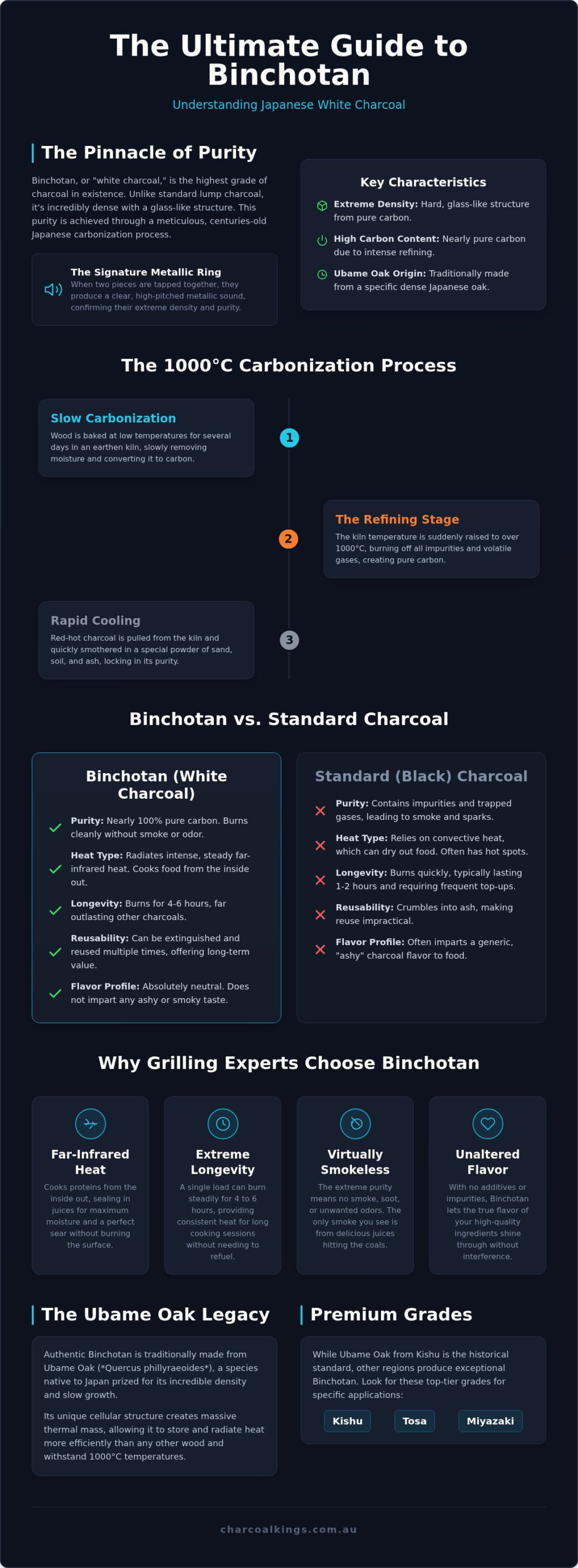
- Understand the unique 1000°C carbonisation process that creates the signature metallic ring and extreme density of authentic white charcoal.
- Learn how far-infrared heat technology cooks proteins from the inside out to ensure maximum moisture retention and a superior sear.
- Master the specialized ignition methods required for dense fuels while maintaining a strict “no additives” environment for your food.
- Identify the performance differences between Kishu, Tosa, and Miyazaki grades to find the best binchotan charcoal australia has to offer for your specific grill setup.
- Discover how the extreme longevity and reuse potential of premium hardwood fuels provide long-term value for professional and home chefs alike.
What is Binchotan Charcoal? The Standard of White Charcoal
Binchotan is the highest grade of charcoal in existence. Often referred to as “white charcoal” due to its distinctive appearance, it represents the pinnacle of Japanese craftsmanship. Unlike the soft, crumbly lump charcoal found in local hardware stores, authentic binchotan is incredibly dense and possesses a glass like structure. When you tap two pieces together, you’ll hear a clear metallic ring rather than a dull thud. This density is the result of a rigorous carbonisation process that transforms raw timber into a fuel source with unparalleled thermal properties. For those seeking the best binchotan charcoal australia has to offer, understanding this production process is the first step toward mastering the pit.
The production requires extreme precision. Artisans carbonise the wood at relatively low temperatures for several days before suddenly increasing the heat to approximately 1000°C. This final “refining” stage burns off all volatile gases and impurities. Once the carbonisation is complete, the charcoal is pulled from the kiln and smothered in a mixture of sand, soil, and ash to cool it rapidly. This specific cooling method leaves a fine white dust on the surface, giving it the name “white charcoal.” Because of this intense heat, binchotan charcoal australia suppliers provide a product that is nearly pure carbon.
The results of this process provide several key advantages for the griller:
- Zero Smoke: Since all impurities are removed, the fuel burns without producing smoke or soot.
- Neutral Flavour: Without volatile oils or chemicals, the charcoal doesn’t impart unwanted “ashy” tastes to the meat.
- Extreme Longevity: A single load can burn for four to six hours, far outlasting standard briquettes.
- Steady Heat: It provides a consistent, high temperature output that is easy to manage once established.
The Ubame Oak Legacy
Authentic Binchotan traditionally uses the Holm Oak, known scientifically as Quercus phillyraeoides. This species is native to the coastal hills of Japan and is prized for its extreme density and slow growth. Because the wood is so tightly packed at a cellular level, it creates a finished product with massive thermal mass. This allows the charcoal to store and radiate heat more efficiently than any other timber. Ubame Oak remains the gold standard for Binchotan production because its unique cellular structure allows it to withstand 1000°C temperatures without crumbling into ash.
Binchotan vs. Black Charcoal: The Molecular Difference
The difference between Binchotan and standard “black” charcoal is found at the molecular level. Standard charcoal is cooled inside the kiln, which allows it to reabsorb some volatile gases and moisture as the temperature drops. This makes black charcoal easy to light but prone to sparking and smoking. Binchotan is pulled out hot and cooled instantly, locking in a pure carbon structure that is almost diamond like in its hardness. This lack of impurities is why we maintain a strict “no additives” promise. When you tap high quality Binchotan, the metallic “ping” confirms that the carbonisation is complete and the fuel is free from internal voids or unburnt resins.
Why Grilling Experts Choose Binchotan Over Standard Charcoal
Standard lump charcoal burns fast and hot, but it lacks the sustained intensity required for precision grilling. Experts prefer binchotan charcoal australia because it reaches temperatures that standard briquettes simply cannot match. It isn’t just about raw heat; it’s about the quality of that heat. While standard fuels rely on convective air currents to transfer energy, this fuel radiates energy. A single load of high quality white charcoal can last between 4 and 6 hours. This far outperforms standard Australian hardwood lump, which typically requires constant topping up during long sessions. You spend less time managing the fire and more time focused on the food.
Many beginners worry about smoke. It’s a common myth that all charcoal is “dirty.” High grade binchotan is virtually smokeless and odourless because of its extreme purity. Any smoke produced during the cooking process comes from fat and juices dripping onto the coals, not the fuel itself. This clean burn ensures the natural flavour of your ingredients remains the focus. There are no chemical additives to taint your food. We believe in 100% natural fuel that lets the quality of your meat speak for itself.
The performance metrics of this fuel are clear:
- Sustained Heat: Maintains high temperatures for hours without significant fluctuations.
- Moisture Retention: Radiant heat cooks without stripping the internal juices from the meat.
- Zero Sparking: The dense structure prevents the dangerous popping and sparking common in cheaper fuels.
Far-Infrared Cooking: The Secret to Professional Searing
Far-infrared (FIR) waves are the primary reason chefs choose this fuel. Unlike convective heat, which dries out the surface of the meat before the centre is cooked, FIR waves penetrate the protein deeply. This allows for a perfect crust on a Wagyu steak while keeping the interior succulent. It’s the essential tool for Yakitori, where thin slices of chicken must be seared rapidly without losing moisture. If you want to achieve this level of precision, you can find professional grade binchotan and accessories at our Holden Hill showroom.
The Economics of Reuse: Why Binchotan is Cost-Effective
The high initial price often deters hobbyists. However, the true cost is measured by the hour, not the kilogram. Because of its density, you don’t need a large volume to maintain heat. More importantly, you can reuse it. Once your cook is finished, extinguish the coals in a ceramic pot or quickly dip them in water. You can relight these same pieces two or three times. When you calculate the burn time per dollar, this premium fuel often becomes more economical than cheap, fast burning alternatives that turn to ash in under an hour.
Essential Guide to Lighting and Managing Binchotan in Australia
Lighting Binchotan is the biggest hurdle for most Australian BBQ enthusiasts. Because this fuel is nearly as dense as rock, you cannot light it like standard briquettes. Never use chemical firelighters or “quick light” fluids. These petroleum based products destroy the purity of your binchotan charcoal australia and taint your food with acrid chemical fumes. If you use a premium fuel, you must use a clean ignition method. Most professionals use a dedicated gas burner or a bed of natural kindling to start the process without introducing synthetic odours.
Safety is paramount during the startup phase. Binchotan can “pop” or explode if it contains internal moisture. When trapped water turns to steam rapidly, it creates enough pressure to shatter the log. Always store your charcoal in a dry, airtight container. If you live in a humid coastal area, pre-heat the logs near the edge of the grill before placing them directly over the flame. This gently drives out any lingering moisture and prevents dangerous sparking.
The 5-Step Lighting Process
Follow this proven sequence to ensure a successful ignition every time. Patience is the key to managing high performance carbon. You aren’t just lighting a fire; you’re charging a thermal battery.
- Step 1: Build a foundation. Start by lighting a small bed of high quality lump charcoal in a chimney starter or your grill. This provides the sustained base heat required to ignite the denser white charcoal.
- Step 2: Nest the Binchotan. Place your logs vertically on top of the glowing lump charcoal. This vertical orientation creates a natural chimney effect, pulling oxygen through the fuel for a more efficient start.
- Step 3: Observe the 20-30 minute rule. White charcoal takes significantly longer to catch than standard wood. Don’t rush the process or move the logs prematurely.
- Step 4: Recognize the glow. Once the logs are glowing deep red and a light grey ash begins to form on the surface, they are ready.
- Step 5: Control the air. In a Konro or Hibachi, use the side vents to manage the temperature. More air increases the heat intensity for searing, while closing them down allows for a slower, radiant cook.
How to Extinguish and Save Your Fuel
The real value of binchotan charcoal australia lies in its reuse potential. Do not let it burn out to ash once your meal is finished. The most effective method is using a Keshitsubo, a ceramic or metal extinguishing pot. By placing the hot coals inside and sealing the lid, you starve the fire of oxygen. This preserves the structure of the charcoal for your next session. Alternatively, you can use a quick water dip. While this is faster, the charcoal must be completely dried out before you attempt to relight it, or you risk the popping phenomenon mentioned earlier. Store your saved fuel in a cool, dry place to maintain its premium performance standards.
Selecting the Right Grade: Kishu, Tosa, and Miyazaki Explained
Not all Binchotan is created equal. Understanding the regional grades is essential for anyone sourcing binchotan charcoal australia wide. The quality of the fuel depends on the specific wood species used and the traditional kiln techniques of the prefecture. While all authentic Japanese white charcoal follows the high temperature refining process, the subtle differences in density and heat output will dictate how you manage your grill.
Kishu Binchotan is the heritage grade from Wakayama Prefecture. It is the original white charcoal, crafted exclusively from Ubame Oak. It is prized for its extreme density and steady, long lasting heat. Tosa Binchotan, produced in the Kochi Prefecture, is the high performance alternative. It also utilizes Ubame Oak but is often preferred by high volume restaurants for its intense, stable heat profile. For the home griller, Miyazaki Binchotan (Hyuga) offers a balanced choice. Made from Blue Oak, it is slightly softer and more user friendly, making it easier to ignite while still providing the benefits of far infrared cooking.
If you require perfect consistency, consider the Ogatan alternative. This is not raw timber but compressed sawdust that has been carbonised using the Binchotan method. It features a uniform hexagonal shape and a central hole to facilitate airflow. It burns clean and smokeless, providing a reliable option for those who value predictable performance over the traditional aesthetics of raw logs.
Regional Differences in Density and Burn
Kishu is widely considered the “Champagne” of charcoal due to its historical significance and purity. Tosa has earned a reputation for slightly faster lighting times because the kiln masters often use different cuts of wood that facilitate quicker heat absorption. Kishu provides the longest burn duration available, while Tosa offers a slightly higher peak temperature for intense searing sessions. Both grades maintain our strict “no additives” standard for a clean, professional finish.
Choosing the Right Shape: Long Logs vs. Small Cuts
The shape of your fuel should match your hardware. Long logs are the standard for professional Konro setups, as they provide a consistent wall of radiant heat across the entire length of the grill. For compact Hibachis or smaller domestic grills, “Koma” (small pieces) are more practical. These smaller cuts allow for better airflow in tight spaces and are easier to arrange. If you need to break down larger logs, wrap them in a heavy cloth and tap them with a hammer to prevent creating excessive dust. Explore our full range of premium Binchotan charcoal to find the right grade for your next cook.
Sourcing Premium Binchotan Charcoal in Australia with Charcoal Kings
Buying high end fuel from overseas involves significant logistical hurdles. As of January 2026, new shipping regulations classify charcoal as Class 4.2 Dangerous Goods. This increases costs and compliance requirements for individual importers. Sourcing your binchotan charcoal australia wide through Charcoal Kings eliminates these risks. We manage the complex import permits and ABF regulations so you can focus on the grill. Our warehouse in Holden Hill, South Australia, serves as a central hub for both retail and wholesale distribution across the country. You get the product you need without the customs headaches.
We maintain a strict “No Additives” promise across our entire inventory. Many “binchotan style” products on the market contain fillers or chemical binders to mimic the density of the real thing. Our supply is 100% natural. This ensures your food is never exposed to synthetic residues or off-gassing. For professional chefs and steakhouses, we offer tailored wholesale opportunities to keep your kitchen running with the highest grade fuel available. Visit our Holden Hill showroom to see our full range of binchotan charcoal and high end hardware in person.
The Charcoal Kings Difference: Quality Control
Our approach is straightforward. We source only the highest grade fuels and reject anything that doesn’t meet our density standards. If you’re transitioning from standard lump to Binchotan, our team provides expert advice to help you master the learning curve. We understand that this is a premium investment. That’s why we use rugged, reliable packaging. Your charcoal arrives intact and ready for use, not as a box of dust and fragments. We treat every order with the respect a master craftsman expects. Our quality control process ensures that every piece of white charcoal delivers the metallic ring and glass like finish that defines the category.
Complete Your Setup: Grills and Accessories
The best fuel requires the right bbq hardware to perform correctly. While you can use Binchotan in standard grills, it excels in ceramic lined Konro or Hibachi setups designed for radiant heat. We stock essential tools for handling these high temperatures safely, including heavy duty tongs and Keshitsubo extinguishing pots. Mastering binchotan charcoal australia is about more than just buying a box of carbon. It’s about joining a community of Australian pitmasters who value the primal craft of fire and the purity of the end result. Get your gear, fire up the pit, and cook like a King.
Level Up Your Grilling with Professional Grade Fuel
Mastering the art of white charcoal requires patience and the right materials. You now understand that authentic grades like Kishu and Tosa provide a clean, radiant heat that standard lump charcoal simply cannot match. By following the correct lighting sequence and utilizing an extinguishing pot for reuse, you transform a premium investment into a cost-effective precision tool. This isn’t just fuel; it’s the foundation of superior flavour. The transition from amateur to expert begins with the carbon you choose to put in your pit.
Finding high-quality binchotan charcoal australia wide is no longer a guessing game. We are an Australian Owned & Operated business and a Specialist Wholesale & Retail Supplier dedicated to the craft of fire. Our products remain 100% Natural & Additive-Free to ensure your food tastes exactly as intended without chemical interference. We take pride in supplying both home enthusiasts and professional kitchens with the most reliable fuel on the market. Stop settling for fast-burning alternatives that turn to ash before the sear is complete.
Shop Premium Binchotan Charcoal at Charcoal Kings and take command of your next cook. Fire up the pit and experience the difference that true craftsmanship makes.
Frequently Asked Questions
Is Binchotan charcoal actually smokeless?
Binchotan is virtually smokeless and odourless during the burn. Any smoke you see during a cook comes from animal fats or marinades hitting the hot coals, not the fuel itself. Because the refining process removes all volatile substances, it burns with a clean, invisible flame. This purity is why high-end restaurants prefer it for delicate ingredients like seafood or Wagyu beef that shouldn’t be tainted by acrid soot.
How long does Binchotan take to light?
Expect to spend 20 to 30 minutes lighting this fuel. Its metallic density prevents it from catching as quickly as standard Australian hardwood. You must use a sustained heat source, such as a gas ring or a chimney starter filled with glowing lump charcoal. Once the logs show a deep red glow and a fine white ash begins to form on the surface, they are ready for the grill.
Can I use Binchotan charcoal in a standard Weber or offset smoker?
You can use it in a Weber, but it isn’t recommended for optimal performance. Binchotan is a radiant heat source meant for small, open-top grills like Hibachis or Konros. Standard kettles and offset smokers rely on convective airflow, which doesn’t utilize the far-infrared waves that make this fuel special. It’s better to stick with hardwood lump for those larger, enclosed setups to avoid wasting premium carbon.
Why does Binchotan charcoal pop or spark when lighting?
Popping occurs when moisture trapped inside the charcoal’s core turns into steam and expands rapidly. Because the carbon structure is so dense, the steam cannot escape easily and causes the log to fracture loudly. Always store your binchotan charcoal australia in a dry, airtight container. If the charcoal feels damp, pre-heat it near the fire for several minutes before placing it directly on the heat source.
How many times can I reuse Binchotan charcoal?
You can typically relight the same pieces 2 to 3 times. This reuse potential is what makes the higher price point manageable for home cooks. To save your fuel, place the glowing coals into a ceramic extinguishing pot with a tight lid to starve them of oxygen. Once they’ve cooled completely, they remain structurally sound and ready for your next session. Don’t leave them in the grill to turn to ash.
What is the difference between Japanese Binchotan and Vietnamese versions?
The difference lies in the raw material and kiln standards. Japanese Binchotan traditionally uses Ubame Oak, which creates a denser, harder product with a longer burn time. Vietnamese versions often use lychee or other hardwoods. While Vietnamese charcoal is a high-quality alternative, it generally lacks the extreme burn duration and the signature metallic ring found in the original Japanese varieties from Kishu or Tosa.
Is Binchotan charcoal toxic?
Authentic Binchotan is completely non-toxic and free from chemical additives. It is produced through a natural carbonisation process that leaves behind pure carbon. Unlike cheap briquettes that use petroleum binders or sawdust fillers, this fuel won’t release acrid fumes or toxins into your food. It is the cleanest burning solid fuel available for culinary use, provided you maintain proper ventilation in your cooking area.
Where can I buy authentic Binchotan charcoal in Adelaide?
You can source authentic binchotan charcoal australia directly from our Holden Hill showroom in Adelaide. We are a specialist supplier based in South Australia, offering retail and wholesale options for the entire country. Local customers can visit us to inspect the different grades in person, while those elsewhere can utilize our reliable national shipping network. We ensure every box meets our strict standards for purity and performance.