
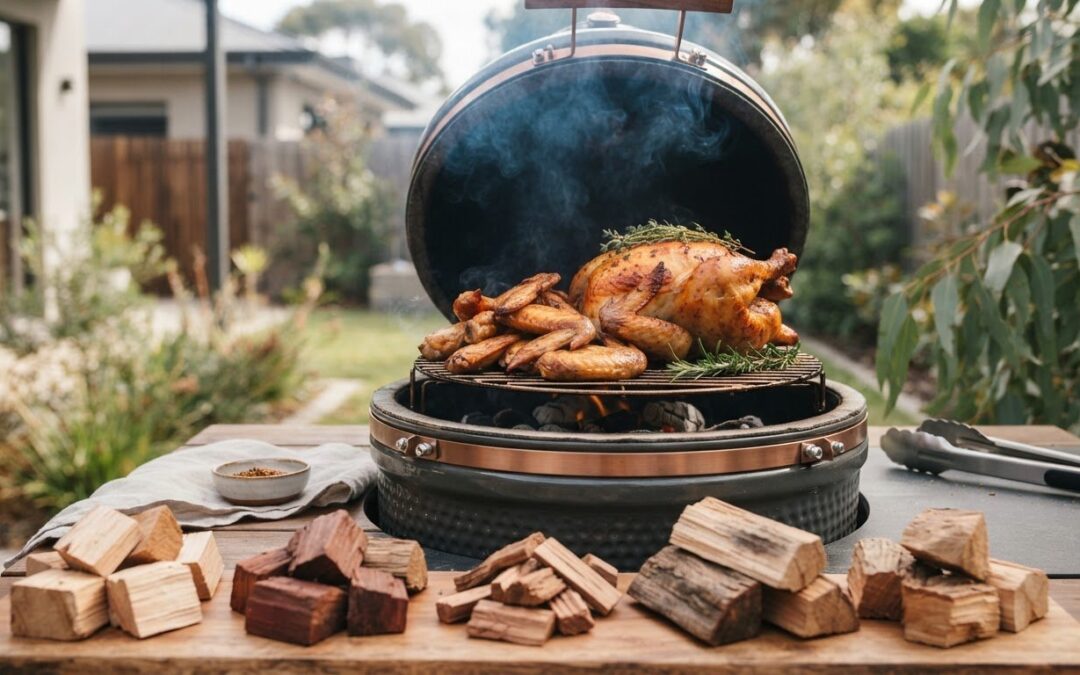
The strongest smoke rarely makes the best chicken. Because poultry has a delicate flavour, the best wood for smoking chicken is usually a mild option that suits the cut and cooking time, rather than the boldest wood available. If you’re concerned about smoke overpowering the meat or leaving a bitter taste, start with a lighter hand.
Apple and cherry bring a gentler smoke, while hickory and oak create a more pronounced flavour. Your choice depends on the chicken cut, its seasoning, how long it will be exposed to smoke and how much wood you use. This guide compares popular smoking woods and shows how to match their flavour to whole chicken, wings and other cuts.
You’ll also learn when to use chips or chunks, why clean smoke matters and how to manage the fire for a balanced result. Keep the smoke controlled and use wood intended for cooking, and you can choose a flavour with confidence, whether you’re using a smoker or adding wood to a charcoal BBQ.
Key Takeaways
- The best wood for smoking chicken depends on the flavour you want and how much smoke the cut will take on.
- Compare apple, cherry, pecan, hickory and oak by smoke intensity before choosing a wood for your dish.
- Choose in order: desired flavour, chicken cut, seasoning, then smoke intensity. Treat wings, whole chicken and strongly seasoned pieces as starting points, not fixed pairings.
- Choose chips, chunks or pellets to suit your smoker, and adjust the amount gradually while keeping airflow steady.
- Build a repeatable setup by testing one wood at a time and recording the result. Wood adds flavour; charcoal and fire management provide the heat.
Best wood for smoking chicken: why balanced smoke matters
Mild fruit woods are an approachable starting point for balanced chicken. Apple and cherry add a gentler smoke character than more assertive woods, making them practical choices while you learn how smoke behaves in your cooker. The best wood for smoking chicken still depends on the flavour you want, the cut, its seasoning and how long it’s exposed to smoke.
Balanced smoke is clean, restrained smoke that complements rather than masks chicken. The goal isn’t to cover every surface in heavy smoke. Chicken has a mild flavour, so an intense or prolonged smoke can dominate its natural taste and leave the meal tasting harsh.
Wood contributes aroma and flavour, but it doesn’t determine when chicken is done. Heat, cooking method and the thickness of the cut affect cooking, while seasoning brings its own salt, spice and savoury notes. For a wider overview of smoking as a cooking method, see Smoking (cooking) on Wikipedia.
What smoke adds to chicken
As suitable wood smoulders, its smoke can add an aromatic layer and deepen the flavour of the meat. It may also influence the chicken’s colour, though the result varies with the wood, the cooker and how the cook is managed. Treat smoke as one part of the finished dish, not a guaranteed colour or flavour setting.
Keep the contributions distinct. A rub or marinade seasons the surface; the cooking method and heat shape how the chicken cooks; wood smoke adds another layer of aroma and taste. Since chicken doesn’t have the robust flavour of some red meats, heavy smoke can crowd out its subtler character, especially when the smoke is strong or exposure continues longer than the dish needs.
Why a mild first choice is practical
Apple and cherry are accessible first choices because their smoke is generally considered mild and fruit-forward. They let you explore how wood changes the flavour without beginning with a forceful smoke profile. Neither is a universal winner: the result depends on the seasoning and the amount of smoke reaching the chicken.
A restrained starting point also makes adjustments easier to judge. Use a mild wood for one cook, then decide whether you want more smoke next time. If you begin with a strongly flavoured wood, it can be harder to separate its intensity from the seasoning or cooking conditions. Change one factor at a time so you can identify what you prefer.
- Choose a mild fruit wood when you want smoke to sit in the background.
- Consider a stronger flavour when it suits the seasoning and the result you’re after.
- Keep heat and doneness decisions separate from the choice of smoking wood.
Think of wood as a flavour choice, not a shortcut to better fire management. A suitable wood can complement chicken, but clean smoke and controlled heat still matter. Start gently, taste the difference, then adjust the next cook to match your preferred balance.
How apple, cherry, pecan, hickory, and oak differ on chicken
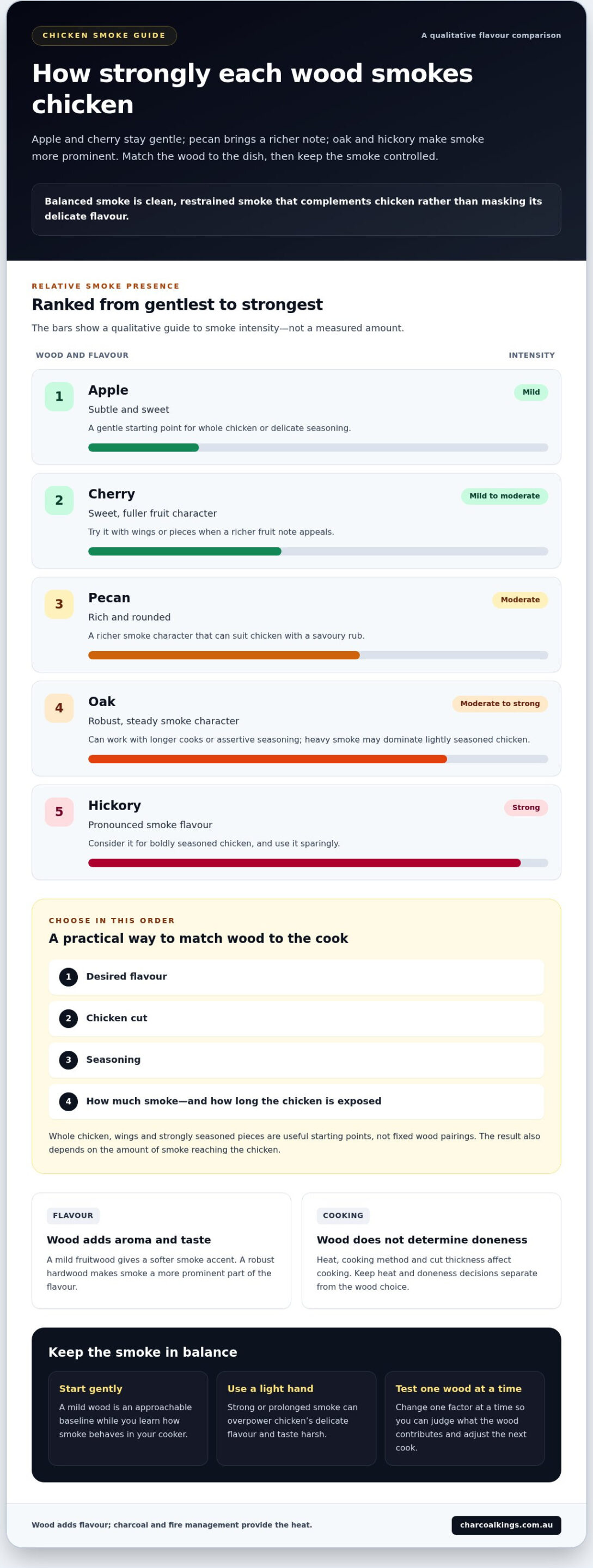
Wood choice is a flavour dial. Apple and cherry sit on the gentler end, pecan brings a richer profile, and hickory or oak can make the smoke more pronounced. The best wood for smoking chicken depends on how much smoke you want alongside the cut and seasoning. Use the comparison below as a starting point, then adjust to suit your cooker and taste.
| Wood | Flavour character | Intensity | Suitable chicken use |
|---|---|---|---|
| Apple | Subtle and sweet | Mild | Whole chicken or delicate seasoning |
| Cherry | Sweet, fuller fruit character | Mild to moderate | Wings or pieces where a richer fruit note appeals |
| Pecan | Rich and rounded | Moderate | Chicken with a savoury rub |
| Hickory | Pronounced smoke flavour | Strong | Boldly seasoned chicken, used sparingly |
| Oak | Robust, steady smoke character | Moderate to strong | Longer cooks or assertive seasoning |
Mild fruitwood gives chicken a softer smoke accent; robust hardwood makes smoke a more prominent part of the flavour.
Mild fruit woods: apple and cherry
Apple is a subtle, sweet option for restrained smoke, especially when you want the seasoning and chicken to remain in the foreground. Cherry also brings sweetness, but its character can seem fuller. It may contribute to a deeper-looking colour on the chicken, though the result depends on the cooking process, smoke exposure and other ingredients. Neither fruit wood guarantees a particular finish.
For a useful comparison, try one wood at a time. Apple gives you a gentle baseline; cherry lets you test a slightly fuller fruit note without immediately moving to a forceful smoke flavour.
Richer woods: pecan, hickory, and oak
Pecan suits cooks looking for a richer smoke character, particularly alongside savoury seasoning. Hickory is more assertive, so use a restrained amount before deciding whether to add more on a later cook. Oak is another robust option. Its stronger presence can work with bold seasoning, but may dominate lightly seasoned chicken if the smoke is too heavy.
These are flavour distinctions, not fixed pairings. A strongly seasoned wing may handle a more prominent smoke than a simply prepared whole bird, but the amount and exposure still matter.
Mesquite is a strong option, not the default choice for chicken. If you want to experiment with it, start cautiously and judge the result before using more. Heavy smoke can crowd out the meat’s flavour, so a small change is easier to assess than a large one.
Choose wood for flavour, not doneness. Keep cooking heat and safe handling in view as separate parts of the cook; the USDA Food Safety Guidelines for Smoking Meat and Poultry cover smoking poultry safely. To compare flavour profiles in your own setup, browse smoking woods for BBQ and test one choice at a time.
Choose smoking wood for your chicken cut, seasoning, and flavour
Make the pairing in a simple order: decide the flavour you want, consider the cut or dish, account for the seasoning, then set the smoke intensity. This prevents a popular wood choice from taking over a dish that calls for a lighter touch. The best wood for smoking chicken is the one that fits the whole cook, not just the meat on its own.
Use this decision sequence before lighting the smoker:
- Desired flavour: Do you want smoke in the background or a more noticeable BBQ character?
- Cut or dish: Is it a whole bird, wings or smaller pieces?
- Seasoning: Will the rub or sauce add sweet, savoury or spicy notes?
- Smoke intensity: Choose wood strength and amount to complement those flavours.
Pair wood intensity with the dish
For a clean, subtle chicken flavour, start with a mild fruitwood. If your rub or sauce is bold and savoury, a richer wood may stand alongside it without disappearing. These are starting points, not rules: personal taste, smoker design, airflow and how the wood burns all affect the result. Smoking adds flavour through the wood’s smoke, as explained by MSU Extension on Smoking as a Food Cooking Method.
More smoke isn’t automatically better. Longer exposure can make assertive wood more noticeable, so consider both its strength and how long the chicken will be in the smoke. A moderate wood used throughout a longer cook can leave a stronger impression than expected. Keep the amount restrained when testing a new pairing.
Adjust for whole birds, wings, and seasoning
A whole chicken and a batch of wings may spend different amounts of time in the smoker, changing how prominent the smoke tastes. For a whole bird with simple seasoning, a mild choice can leave room for the chicken’s own flavour. Wings with a punchy rub or sauce may suit a fuller smoke, provided it doesn’t compete with the seasoning.
Match flavours rather than stacking them. Sweet seasoning can work with a gentle fruit note; savoury or spicy seasoning may stand up to a richer smoke. These combinations are guides, not fixed pairings. Results shift with the cut, cook time and smoker conditions.
Keep other variables steady while comparing woods. Use the same cut, seasoning and cooking approach, with similar smoke exposure, then change the wood on the next cook. That makes it easier to tell whether the difference came from the wood or another part of the setup.
- Whole bird, lightly seasoned: Choose a restrained smoke so it complements rather than dominates.
- Wings with a bold rub: Consider a richer flavour, but begin with modest smoke exposure.
- Pieces with a sweet glaze: Try a compatible mild profile and avoid piling on competing sweetness or smoke.
For more on how wood families differ, use the broader smoking-wood guide as a reference, then apply the same decision order to your chicken. Record the wood and seasoning you used, along with how the smoke tasted. Adjust one element next time. A repeatable approach makes it easier to find a pairing you’ll want to cook again.
Use smoking wood cleanly: form, amount, and Australian sourcing
Good smoke starts before the wood reaches the fire. Choose a known, suitable wood, use a modest amount and give the cooker enough airflow to burn cleanly. Avoid treating fallen branches or unidentified garden wood as smoker fuel: you may not know the species or whether it has been exposed to chemicals or contamination. The best wood for smoking chicken needs to be suitable for food smoking as well as a good flavour match.
Choose the wood form for your smoker
Chips, chunks and pellets behave differently, and they aren’t interchangeable. Chips are small and can produce smoke quickly; chunks are larger and are often used with charcoal or in equipment designed to take them. Pellets are made for compatible pellet smokers. Check your smoker’s instructions and use the form its fire system is designed to handle. Don’t assume soaking is needed: follow the equipment guidance and use the wood as supplied.
Use this straightforward process for a controlled cook:
- Select suitable wood. Choose clean wood of a known species, intended for food smoking.
- Add modestly. Begin with a restrained amount rather than filling the firebox or adding a large load at once.
- Maintain airflow. Keep the cooker’s vents set for steady combustion and temperature control.
- Assess the smoke. Aim for light, steady smoke. Dense, acrid smoke is a sign to review airflow, fuel and how the wood is burning.
- Adjust gradually. If the smoke flavour is too faint or too strong, change the amount on the next cook rather than making several changes at once.
Recognise clean smoke and avoid unsuitable timber
Clean smoke should look light and steady rather than thick and persistent. Smoke appearance is a useful cue, not a substitute for managing the fire: poor airflow or wood that isn’t burning cleanly can create a harsh flavour. Give the cooker time to settle after adding wood, then assess the smoke before adding more.
Only clean, untreated, food-suitable wood belongs in a smoker. Never use painted, treated, glued or contaminated timber, including construction offcuts. Leave unidentified wood out of the cook, and avoid relying on wood with bark when you can’t establish that it’s suitable. Keep smoking wood dry and protected from rain and ground moisture; store it where it can stay clean and be identified before use. Seasoned wood is a practical choice, but not all wood needs the same preparation.
Match the wood form to your smoker, keep the first addition restrained and make small adjustments as you learn how your setup responds. Explore smoking woods for your BBQ to choose a flavour option for your next chicken cook.
Build a repeatable smoked-chicken setup with Charcoal Kings
Good results come from controlling the cook, not changing several things at once. Choose one wood, add a restrained amount and note what you taste. On the next cook, adjust one factor. This simple test helps you find the best wood for smoking chicken for your smoker, preferred flavour and fire-management style, rather than chasing a universal ranking.
Keep a simple chicken-smoking flavour log
Use a notebook or phone note to record the wood type, approximate amount, chicken cut, seasoning and approximate time exposed to smoke. Add a quick result, such as “smoke too strong” or “good balance, could be fuller.” Keep the cut, seasoning and cooking approach steady while testing a new wood. Then change just the wood or its amount on the next cook.
Personal preference is the measure. A flavour that works beautifully with one rub may not suit a simple seasoning, and a wood that tastes balanced to one cook may seem too strong to another. A short log makes those differences easier to understand and repeat.
Choose fuel that fits your barbecue
Charcoal and smoking wood have different jobs. Charcoal supplies the heat for cooking; smoking wood contributes aroma and flavour. Adding more wood won’t correct unstable heat or poor airflow. Start with sound fire management, then use wood as a controlled flavour choice. For the fundamentals, use a charcoal barbecue guide alongside your smoker’s instructions.
Build a test around a consistent charcoal setup, then add one suitable wood in a modest amount. Keep the vents and cooking approach steady, and note how the smoke behaves. This gives you a clearer comparison than changing charcoal, wood and seasoning together. Match the charcoal fuel to your barbecue and the wood form to equipment designed to use it.
- Set the heat: Use suitable charcoal and manage airflow for a steady cook.
- Add flavour: Introduce one smoking wood in a restrained amount.
- Record the result: Note the flavour and make one adjustment next time.
Charcoal Kings supplies smoking woods alongside charcoal and BBQ fuel, so you can treat smoke flavour and heat fuel as separate parts of the setup. Keep your notes close, repeat the cook and adjust gradually until the balance suits your chicken and your taste.
Explore smoking woods and BBQ fuel for your next smoked-chicken cook.
Make Your Next Chicken Cook Your Best Yet
Your next cook is a chance to develop a smoke profile that feels like your own. Use what you’ve learned as a starting point, then notice what you enjoy: a light aroma in the background or a fuller smoke flavour. The best wood for smoking chicken isn’t a fixed winner. It’s the choice that brings the whole dish together for you.
Keep the experiment simple. Give a new wood a fair try, note the result and let your palate guide the next adjustment. Over time, you’ll build a reliable approach for the chicken dishes you cook most, without relying on guesswork or chasing someone else’s favourite pairing.
Charcoal Kings is an Australian-based supplier in Holden Hill, South Australia, with smoking woods and charcoal BBQ fuels for your setup. Explore smoking woods and BBQ fuel for your next cook, and find a flavour worth making your own.
Frequently Asked Questions
Should I soak wood chips before smoking chicken?
Usually, no. Soaking isn’t a universal requirement and can delay smoke production while surface water evaporates. Start with dry chips if your smoker’s instructions allow them, and follow the equipment maker’s directions for loading and use. If your setup calls for a particular preparation, use that guidance. The best wood for smoking chicken still needs to suit your smoker and burn cleanly, whether it’s soaked or dry.
How much smoking wood should I use for chicken?
Start with a small addition, then give the smoke time to settle before deciding whether you need more. The right amount depends on the wood’s form, the smoker and the length of the cook, so a fixed measure won’t suit every setup. For example, try one small chunk in a charcoal smoker or a modest handful of chips where the instructions permit. Record the amount to repeat or adjust next time.
Can I use wood from a fallen tree to smoke chicken?
Only use it if you can identify the species and know it hasn’t been treated or contaminated. A fallen branch from an unknown tree, a roadside verge or a sprayed garden could carry risks you can’t assess by appearance alone. Don’t burn painted, treated, glued or mouldy wood for food. If its origin or condition is uncertain, choose purpose-sold smoking wood instead.
What happens if chicken gets too much smoke?
Excessive smoke can leave chicken tasting harsh, bitter or ashy, and can overpower the seasoning. A dark exterior alone doesn’t prove the smoke is excessive, since ingredients and cooking conditions affect colour too. If the smoke looks dense and smells acrid, pause adding wood and check airflow and combustion. Let the cooker stabilise before making another adjustment, rather than adding more fuel to chase flavour.
Does the type of wood change how long chicken takes to cook?
No, the wood’s flavour doesn’t set the cooking time. Chicken cooks according to factors such as the cut, its size, the cooking temperature and the smoker’s stability. Wood may affect how the fire behaves in some setups, but don’t use smoke level or wood choice as a doneness test. Check the thickest part with a food thermometer and follow recognised food-safety guidance for poultry.
Can I combine two types of wood when smoking chicken?
Yes, but test each wood on its own first so you know what each contributes. Then combine small amounts of familiar, food-suitable woods, keeping the rest of your setup steady. A mild fruitwood paired with a richer wood can create a more layered smoke profile, but too much of either may dominate. If the blend tastes unbalanced, return to one wood and adjust from there.
Are wood chips, chunks, and pellets interchangeable?
No. Chips, chunks and pellets differ in size and how they feed or burn, and smoker designs use them differently. Pellets generally belong in equipment designed for pellet fuel; chips or chunks may suit other smokers according to their instructions. Don’t put a different form into a unit just because it’s made from wood. Check the manual first, and choose the form the smoker is built to use.