
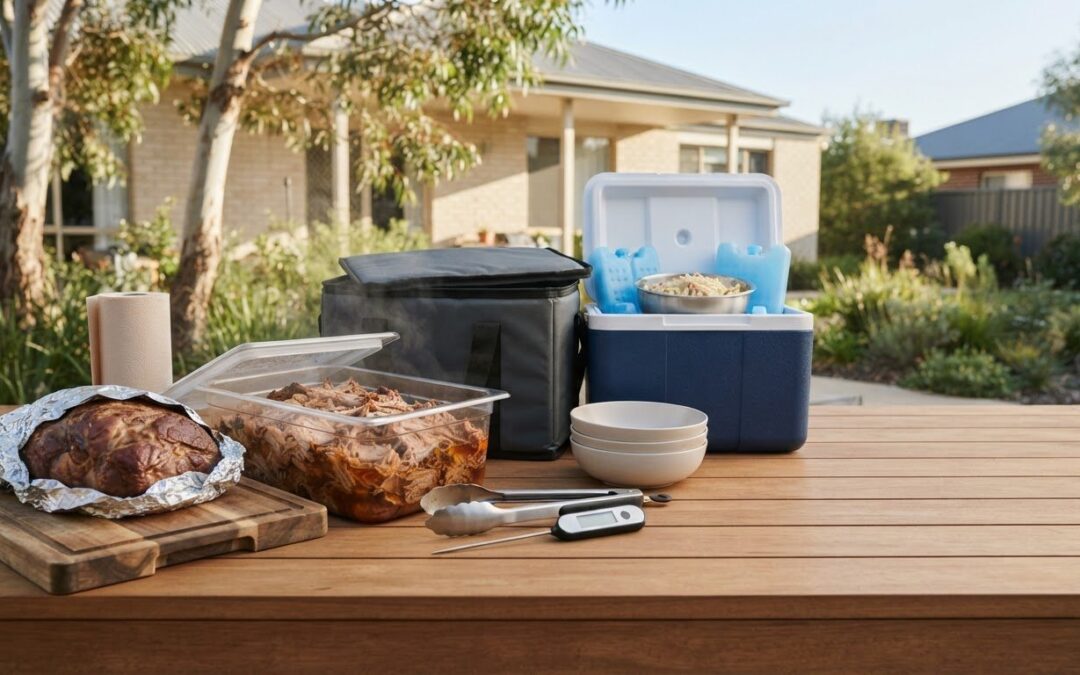
The best way to transport pulled pork for a party depends on the journey and when you plan to serve it. For a straightforward trip, an insulated carrier can help keep a whole, wrapped pork shoulder warm. If you’re cooking ahead or facing a longer journey, chilling the pork and reheating it at the venue may be more practical. Choose a plan you can maintain and check from departure through serving.
It’s natural to worry about food safety and keeping the meat moist. Pulled pork can dry out when it’s shredded too early, and guessing at its temperature leaves you unsure whether it’s safe to serve. A reliable food thermometer lets you check the pork instead of relying on the clock or how warm the container feels.
This guide explains how to choose between hot and chilled transport, pack the pork to protect its moisture, and plan reheating and serving. You’ll also learn when to keep the shoulder whole and pull it on site, so the meat arrives tender and ready for the party.
Key Takeaways
- The best way to transport pulled pork for a party depends on your journey, serving time and ability to maintain a safe temperature.
- Keep the cooking juices with the pork where suitable, and choose a sealed container that suits your hot or chilled transport plan.
- Use a departure-to-serving timeline to organise packing, temperature checks and any reheating at the destination.
- Before serving, check the pork’s temperature and prepare clean utensils and a suitable serving setup.
Best way to transport pulled pork for a party: start with hot or chilled
Choose your plan before packing. Transport the pork hot if the journey is manageable and you can keep it safely hot, or transport it chilled if you’re cooking ahead, travelling further or unsure when it’ll be served. Distance is only one factor. Consider your departure and serving times, the equipment available at both ends, and whether you can check the food’s temperature during the trip.
For Australian food-safety guidance, consult Food Standards Australia New Zealand (FSANZ) and follow its current advice on safe food temperatures and time out of temperature control. Choose one temperature plan, maintain it throughout the journey, and use a reliable food thermometer to check the pork. An insulated carrier helps retain heat or cold, but it can’t confirm that the food is being held safely.
If you’re deciding when to pull the meat, pulled pork is commonly prepared from slow-cooked cuts that become tender enough to shred. Keeping the cooked pork whole until serving can help protect its moisture. If you pack it pulled, include cooking juices to help it stay succulent.
When should you transport pulled pork hot?
Hot transport suits a straightforward trip when you can keep the pork hot from packing through serving. Place it in a preheated, food-safe insulated carrier with a secure lid, and minimise opening the carrier during travel. Check the pork’s internal temperature before departure and on arrival. Don’t assume the carrier’s insulation or the length of the drive guarantees safe holding. Follow current FSANZ guidance for hot food.
When is chilled transport the better plan?
Chilling can be a better fit for a longer journey, an uncertain serving time or a make-ahead party plan. Pack the pork in a sealed, food-safe container and carry it in an adequately chilled cooler. At the destination, you’ll need suitable equipment and enough time to reheat it thoroughly before serving. Plan this step in advance rather than relying on a slow cooker to bring cold pork up to temperature.
Make your choice based on what you can control. If you can reliably maintain and check hot holding, take the hot route. If not, chilling the pork for travel and reheating it at the venue may offer a clearer plan. Either way, keep the container closed as much as possible, protect the pork from contamination, and check its temperature at key points. Use a thermometer rather than guesswork to see whether your plan is working.
How to pack pulled pork so it stays moist and contained
A good packing setup keeps the pork’s juices close, prevents leaks and supports your hot or chilled transport plan. Follow this sequence, and keep the meat covered while you prepare the rest of the party gear.
Rest, pull and portion the pork before packing
Let the pork rest after cooking before you shred it. This gives the juices time to settle through the meat rather than running straight onto the board. Save the cooking liquid, skim off excess fat if you like, and mix some back through the pulled pork. Keep the rest separate so you can adjust the moisture when serving.
- 1. Rest the cooked pork. Keep it covered while it rests instead of leaving it exposed as you organise other food.
- 2. Pull or portion it for your plan. For a nearby party, transporting the pork whole and pulling it on site can help limit moisture loss. If you’re chilling it for later, divide it into portions that fit shallow containers and are easy to reheat.
- 3. Add the juices. Mix some cooking liquid through the meat, or pack it separately in a sealed container to add before serving.
- 4. Pack snugly. Use a clean, food-safe container sized to the portion. Avoid excessive empty space, which leaves the meat more exposed to air and can make the container harder to secure.
- 5. Seal and check. Close the lid firmly, check for drips, then place the container upright in your carrier.
A sealed container helps prevent spills during bumps and turns while limiting the pork’s exposure to air. That protects the vehicle from leaks and helps keep the meat from drying out. Don’t overfill the container. Leave enough room for the lid to close securely.
Choose containers and insulation for the journey
A lidded, food-safe container is the primary barrier against leaks. An insulated carrier adds temperature protection around that container, but it doesn’t replace temperature checks. For hot transport, make sure the container and carrier are suitable for hot food. For chilled transport, place a sealed container inside an adequately chilled cooler.
Keep hot pork separate from chilled drinks and other temperature-sensitive items. Secure the carrier upright on the vehicle floor or in another stable spot so it can’t tip or slide. Pack serving utensils separately, and keep the lid closed until you’re ready to serve.
Build your packing setup around the cook and the journey. If you’re planning a BBQ menu as well, explore BBQ cooking guidance for ideas to complement the meal.
Hot carrier or chilled cooler: compare the pulled-pork transport options
Neither transport method is automatically best. Match the setup to the journey, serving time and equipment available at the destination. A hot carrier can suit a direct trip when you can monitor the pork and serve it soon after arrival. A chilled cooler may be easier to manage if you’re travelling for longer or the serving time could change, provided there’s a way to reheat the pork safely.
Use FSANZ guidance as your Australian reference for temperature control. Its general benchmarks are to keep potentially hazardous food cold at 5°C or below, or hot at 60°C or above. Take readings with a food thermometer rather than treating travel time or insulation as proof that the pork is safe.
| Factor | Hot transport | Chilled transport |
|---|---|---|
| Timing | Useful when the trip and serving plan are straightforward. | Can suit make-ahead plans, longer journeys or uncertain serving times. |
| Equipment | Insulated carrier, secure food-safe container and thermometer. | Chilled cooler, cold packs, sealed container and thermometer. |
| At the party | Check the pork on arrival and keep it hot until serving. | Keep it cold until reheating. Allow time and arrange suitable reheating equipment. |
What a hot transport setup can and cannot do
An insulated carrier slows heat loss, helping the pork retain warmth during travel. Towels or blankets can add insulation around a securely closed container, but they’re not temperature controls and can’t prove the food is still safely hot. Check the pork on arrival with a suitable food thermometer. If the temperature has fallen below the FSANZ hot-holding benchmark, don’t rely on wrapping alone to make it safe.
How to plan chilled transport and reheating
A cooler and cold packs help keep chilled pork cold in transit. Keep the meat sealed and separate from raw foods to prevent cross-contamination from leaks or contact. At the destination, reheat it using suitable equipment and follow current FSANZ advice for reheating and time out of temperature control. A cooler preserves cold. It doesn’t reheat food.
Choose the best way to transport pulled pork for a party by asking which temperature you can reliably maintain from departure to serving. If you can’t check or control the temperature, revise the plan before travelling. The carrier, cooler and packing materials support the process, but a thermometer and a workable serving plan let you verify it.
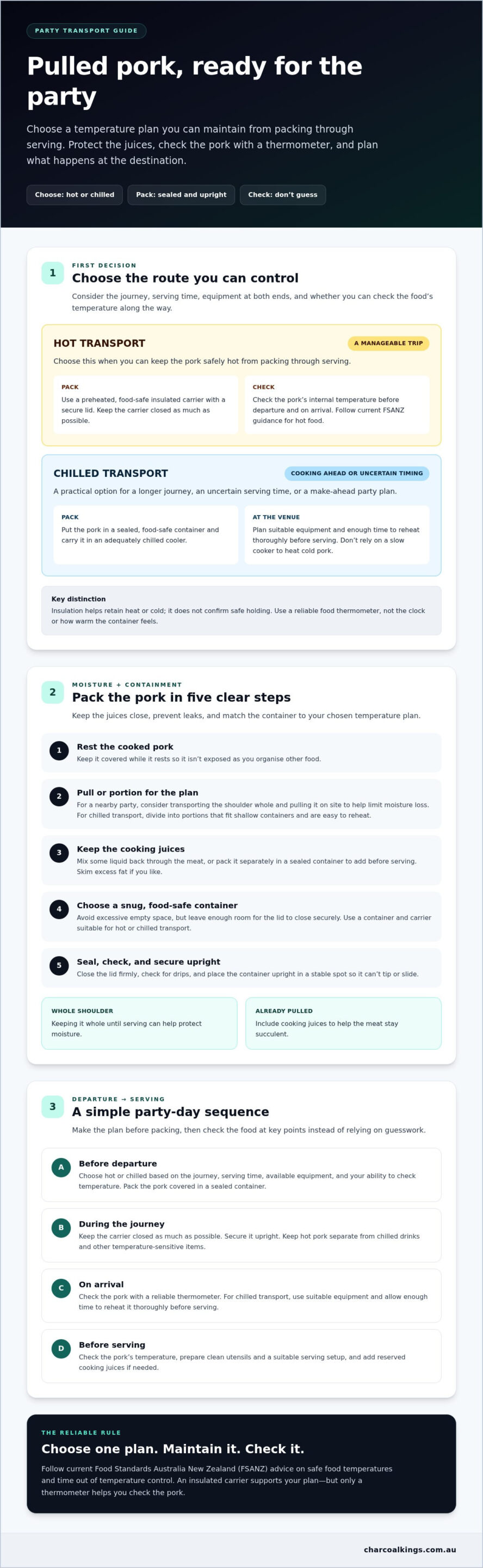
A party-day timeline for transporting pulled pork safely
Build the schedule backwards from serving time. Work out when the pork needs to leave, what you’ll do when it arrives and how it will be kept safe until guests are ready to eat. The best way to transport pulled pork for a party is a plan you can maintain and check, even if traffic or the party schedule changes.
Before leaving home
Confirm that the destination has the equipment your chosen method needs. Hot transport requires a suitable way to keep the pork hot after arrival. Chilled transport needs cold storage during the wait and suitable equipment to reheat the pork before serving. If either setup is missing, adjust the plan before departure.
Use this checklist as you pack:
- Food: Pulled pork packed according to your hot or chilled plan, with its cooking juices secured.
- Containers: Clean, food-safe containers with tight-fitting lids, plus a stable carrier or cooler.
- Temperature checks: A clean, working food thermometer.
- Serving kit: Clean serving utensils and any separate tools needed to handle the container.
- Destination setup: Confirmed access to suitable reheating or hot-holding equipment, if required.
Check the route and expected arrival time before choosing how to transport the food. If you’re expecting delays, allow for them in your serving plan rather than assuming the journey will run to schedule.
On arrival and before serving
Check the container for leaks or damage, then measure the pork’s temperature with a food thermometer. Follow current Food Standards Australia New Zealand (FSANZ) guidance for safe handling, holding and reheating. If the pork needs reheating, use suitable equipment and follow official advice before serving. Don’t use a slow cooker as a substitute for safely reheating chilled food.
If arrival is delayed, don’t rely on the original departure reading. Recheck the temperature and consider how the food has been held during the delay. Follow current FSANZ guidance on time and temperature control. If you can’t establish that the pork has been handled safely, don’t serve it.
Set the pork up for service only when you’re ready. Use clean utensils, keep them reserved for the pork, and avoid leaving the food unattended while guests serve themselves. For a smoother handover, decide who will check the temperature and manage the serving setup before the party gets busy.
Need practical gear for your next cookout? Explore BBQ accessories for useful additions to your setup.
Serve party-ready pulled pork with confidence
The final check is simple: know whether the pork travelled hot or chilled, then handle it safely through serving. A dependable transport plan only works if the food stays under appropriate temperature control after arrival too. Use a clean food thermometer and current Food Standards Australia New Zealand (FSANZ) advice rather than relying on how warm or cold the container feels.
A final checklist before the first serve
- Confirm temperature control: Check the pork and consider how it was handled during the trip. If you can’t establish that it has remained safe, don’t serve it.
- Reheat if needed: If you transported the pork chilled, reheat it using suitable equipment and follow current FSANZ guidance. Don’t serve it straight from the cooler.
- Set out clean utensils: Use clean serving tools and keep them separate from utensils used for raw foods.
- Prepare the serving setup: Arrange appropriate hot-holding or chilled storage before guests begin serving themselves.
Keep the pork covered between servings where practical. Check its temperature as needed, and don’t leave it sitting out while the party carries on. If service is delayed, return to your temperature-control plan and consult current FSANZ advice on safe handling and time limits.
Handle leftovers with the same care
After serving, promptly store leftovers according to current Australian food-safety recommendations. Transfer them with clean utensils into clean, sealed containers, and label them if that will help distinguish them from other party food. Follow current FSANZ advice for cooling, refrigeration and reheating leftovers rather than assuming they’ll keep for a particular length of time.
The best way to transport pulled pork for a party ends with the same discipline it starts with: choose hot or chilled transport, check the food, and maintain safe handling at the destination. For ideas and guidance to help plan your next cook, explore the charcoal guide from Charcoal Kings.
Plan the journey, then get ready to serve
The best way to transport pulled pork for a party is the method you can manage safely from departure through serving. Choose hot or chilled transport based on your trip and destination, pack the pork securely with its juices, and use a food thermometer to check rather than guess. Once you arrive, make sure reheating or holding equipment and clean serving utensils are ready before the food goes out.
A little planning helps protect the pork’s moisture and gives you one less thing to worry about on party day. Follow current Australian food-safety advice for temperature control and leftovers, especially if plans change or serving is delayed.
For your next cook, explore Charcoal Kings’ BBQ range. Charcoal Kings supplies hardwood lump charcoal and other BBQ fuels, alongside BBQ grills, smokers and accessories for retail and wholesale customers. Browse the range to get your next cookout set up, then enjoy the food and company.
Frequently Asked Questions
What is the best way to transport pulled pork to a party?
The best way to transport pulled pork for a party depends on the journey and serving plan. For a manageable trip, use a food-safe container inside an insulated carrier and check the pork’s temperature on arrival. If you’re travelling further or the serving time is uncertain, chill it before departure in a sealed container inside an adequately chilled cooler, then reheat it at the destination. Follow current Food Standards Australia New Zealand (FSANZ) guidance throughout.
Can you transport pulled pork in a cooler?
Yes, a cooler can transport pulled pork either hot or chilled, provided you use it for the method it can support. For chilled transport, pack the pork in a sealed, food-safe container with cold packs and keep it separate from raw foods. For hot transport, use an insulated carrier and monitor the pork with a food thermometer. A cooler or carrier helps maintain temperature, but doesn’t prove the food is safely held.
How do you keep pulled pork warm during transport?
Pack the hot pork in a secure, food-safe container, then place it in a preheated insulated carrier. Keep the lid closed and the carrier upright during the trip. Towels can provide extra insulation, but they’re not a substitute for temperature checks. Use a clean food thermometer to check the pork on arrival, and follow current FSANZ advice for hot holding. Arrange suitable equipment at the destination if the pork won’t be served straight away.
Is it better to transport pulled pork hot or cold?
Neither method is best for every trip. Transport it hot if the journey and serving schedule are straightforward and you can maintain hot holding. Choose chilled transport if you’re cooking ahead, travelling further or unsure when the meal will be served. Confirm you can reheat the pork safely at the destination. FSANZ guidance uses 5°C or below for cold food and 60°C or above for hot food. Check temperatures rather than guessing.
How long can pulled pork stay in an insulated carrier?
There’s no reliable fixed time that applies to every insulated carrier, journey or quantity of pork. The food’s temperature can change depending on the carrier, packing, starting temperature and how often it’s opened. Check the pork with a food thermometer and follow current FSANZ advice. If it enters the 5°C to 60°C temperature danger zone, track how long it remains there and apply the Australian 2-hour/4-hour rule. Insulation alone can’t confirm safety.
Can you reheat pulled pork at the party?
Yes, you can reheat pulled pork at the party if suitable equipment is available and you allow enough time. Keep chilled pork refrigerated or in a properly chilled cooler until reheating, then heat it thoroughly according to current FSANZ guidance. Don’t rely on a slow cooker or hot-holding dish to reheat cold pork. Once reheated, keep it hot for serving and use a food thermometer to check its temperature.
What is the safest way to store pulled pork leftovers?
Store leftovers promptly, following current FSANZ advice on cooling, refrigeration and time out of temperature control. Divide larger amounts into smaller portions in clean, sealed containers so they can cool and be stored more easily. Label containers if that helps prevent mix-ups, and keep leftovers separate from raw foods. Check current official guidance for how long to keep them and how to reheat them safely rather than relying on a guessed storage duration.