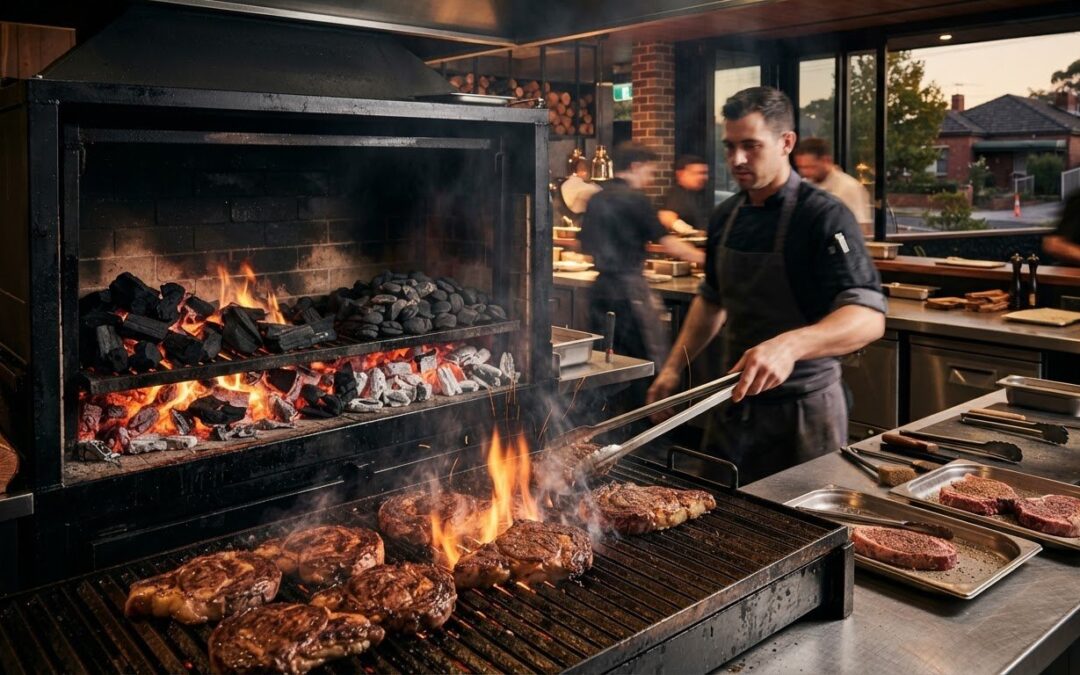
A busy steakhouse needs a fire that supports the pace of service, not just a headline heat claim. The best charcoal for high-volume steakhouse use is the fuel that suits your grill, searing demands and replenishment routine without adding unnecessary work for the team. Fuel format affects how charcoal sits and is managed in the fire bed, so compare options under your own operating conditions.
Use a consistent process to compare lump charcoal, briquettes and Binchotan against your grill, menu and service rhythm. This guide explains which performance factors to assess and how to run a practical trial. Charcoal Kings supplies Australian wholesale and food-service customers, with Premium Hardwood Lump Charcoal, which has a 4 hour burn time, and Redneck Charcoal briquettes, described as high heat and long-lasting.
Key Takeaways
- Choose charcoal for steakhouse service by matching fuel behaviour to your grill, menu and pace, not heat claims alone.
- Assess heat output, ember management, burn duration and replenishment as separate factors.
- Compare lump charcoal, briquettes and Binchotan against your kitchen’s fuel-handling needs instead of assuming one format suits every steakhouse.
- Run a fair trial with a consistent grill setup and record fuel performance and fit with service.
- Use the results to guide your selection, then explore Charcoal Kings’ wholesale and food-service charcoal supply.
What a High-Volume Steakhouse Needs from Charcoal
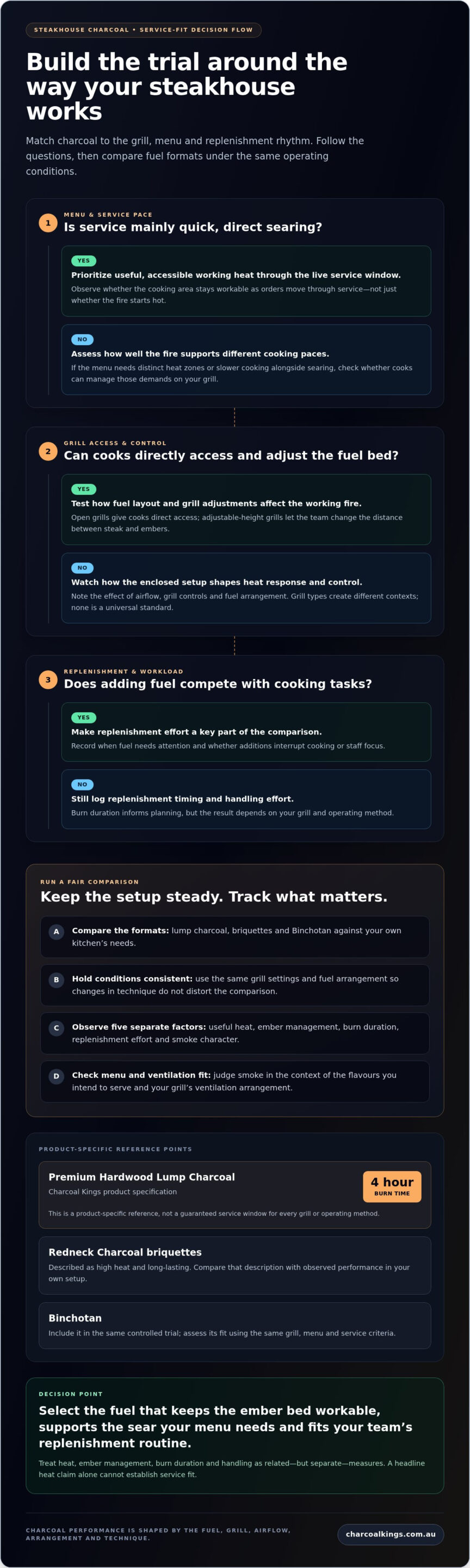
A high-volume steakhouse needs fuel that works with its grill, menu and service pace. A menu built around quick, direct searing puts different demands on the fire than one that alternates between direct searing and slower cooking. The production and types of charcoal provide useful background, but the right choice depends on how a fuel behaves in your kitchen.
For high-volume service, choose fuel that provides workable heat and a replenishment routine your team can manage across the grill’s actual setup and order flow. Searing matters, but fuel that is difficult to handle during a rush can disrupt the team’s rhythm. The best charcoal for high-volume steakhouse service is a practical match for the kitchen, not simply the fuel with the boldest heat claim.
How grill design and steak service shape fuel needs
An open grill gives cooks direct access to the fuel bed. An adjustable-height grill lets the team change the distance between steak and embers, while an enclosed charcoal grill contains the fire differently and may shape airflow and heat control. Santa Maria and parrilla grills are examples of distinct grill contexts, not universal standards for steakhouse cooking.
Menu and order flow matter just as much. A service focused on fast, direct searing needs accessible working heat. A broader menu may call for distinct heat zones or a fire that supports different cooking paces. Match the fuel to the grill’s controls and the tasks cooks need it to perform.
What “consistent charcoal” means in a working kitchen
In practice, consistency means the ember bed remains manageable, the grill responds predictably to its controls, and replenishment fits the service routine. Fuel shape and condition can affect how it sits and burns, but they are only part of the result. Airflow, fuel arrangement and staff technique also influence the fire, so avoid treating charcoal as the only variable.
- Set the working brief: Note the grill type, the menu’s searing demands and the pace at which orders arrive.
- Watch the ember bed: Assess how much of the cooking area is workable and whether cooks can manage the fire, not just whether it produces an initial flame.
- Track replenishment: Record when fuel needs attention and whether that interrupts cooking tasks.
- Keep operation consistent: Use the same grill settings and fuel arrangement when comparing options, so staff can distinguish fuel behaviour from changes in technique.
This makes fuel selection an operational decision. A charcoal format that suits one grill and team may not suit another, even if both cook steaks over embers. Start with your real service conditions, then assess how reliably the fuel supports the sear and the workflow around it.
Which Charcoal Properties Matter for Steakhouse Searing?
Assess charcoal on several fronts, not just peak heat. Heat output affects the searing power the fire can provide. Ember management describes how workable the fire remains as cooking continues. Burn duration informs replenishment planning, while the effort required to add or reposition fuel affects the team’s workload. These factors are related, but they are not interchangeable.
A heat claim alone can’t establish whether charcoal suits a kitchen. Searing performance also depends on how the fuel behaves through service and how well the grill and team can manage it. Charcoal works alongside grill design, airflow, fuel arrangement and cooking technique. A strong fire can still be difficult to control if the setup does not suit the menu.
Heat, searing and the live service window
A hot cooking surface supports browning, but the result depends on the steak, cooking method and heat management. Assess whether a charcoal option provides useful working heat for the period your kitchen needs it, rather than focusing on a single peak claim. A controlled trial under consistent grill conditions gives cooks a more relevant measure.
Record how the fire responds as orders move through service. Does the cooking area remain workable? Can staff make the heat adjustments their method requires? High heat matters, but it does not prove repeatable performance. The best charcoal for high-volume steakhouse use must fit both the sear and the service window.
Burn duration, ember management and smoke
Burn duration can help staff plan when to replenish fuel and how often that task competes with cooking. Ember management matters too: a bed the team can arrange and maintain makes heat adjustments more practical. Treat stated burn times as product-specific information, not a promise that every grill or operating method will produce the same result.
Smoke character is a menu decision. Consider whether the smoke suits the flavours the kitchen intends to serve, and whether the grill’s ventilation setup is appropriate for its use. Do not assume one fuel’s smoke profile will suit every steak, cooking style or dining environment.
- Heat output: Assess useful cooking heat in your grill, not just a headline claim.
- Ember management: Observe whether cooks can keep the fire workable as service progresses.
- Burn duration: Use product-specific information to plan a trial, then record what happens in your setup.
- Replenishment: Note how fuel additions affect staff focus and service flow.
- Smoke: Match the character of the cook to the menu and ventilation arrangement.
For a concrete reference point, Charcoal Kings’ Premium Hardwood Lump Charcoal has a 4 hour burn time. That specification belongs to this product. It is not a guaranteed service window for every setup. Use it as one factor in a practical comparison, alongside heat control, ember management and replenishment.
To apply these criteria to your own grill, consider a charcoal option for steakhouse service and assess it under your kitchen’s normal operating conditions.
Lump Charcoal, Briquettes or Binchotan: How to Compare Them
Compare each format against the same kitchen requirements: the grill it will run in, the heat control cooks need, how replenishment fits service and how the fuel handles in the fire bed. This keeps the decision grounded in what your team can observe instead of assuming one format is right for every steakhouse.
| Fuel format | Heat management | Replenishment focus | Fit to assess |
|---|---|---|---|
| Hardwood lump charcoal | Observe how the pieces sit in your grill and how the team manages the heat. | Record when fuel needs attention during your trial. | Assess it in the grill and cooking pattern you use for steak service. |
| Charcoal briquettes | Test how the format works with your grill’s controls and fuel arrangement. | Track the replenishment routine and its impact on staff workflow. | Compare it against your required working heat and service pace. |
| Binchotan | Evaluate it as a distinct, specialist format in your own setup. | Observe handling and replenishment under your operating conditions. | Consider it where its role makes sense for your grill and menu. |
When to evaluate hardwood lump charcoal
Include hardwood lump charcoal when you want to assess how that fuel format works with your grill, cooking technique and team’s fire management. Charcoal Kings’ Premium Hardwood Lump Charcoal has a 4 hour burn time. Keep that product-specific detail separate from your own trial results. For a broader explanation of the format, see Lump Charcoal: The Pro’s Choice for Flavour.
When to evaluate briquettes or Binchotan
Briquettes belong in a fair comparison when they suit your grill and replenishment routine. Redneck Charcoal briquettes are described as high heat and long-lasting; no specific burn duration is stated here. Binchotan is a separate specialist option, not a universal steakhouse choice. Use the existing Binchotan guide for more detail on that format.
Keep the comparison practical. Use the same grill configuration, cooking approach and observation notes for each trial. Record whether cooks can manage the fuel, how it fits the menu’s heat demands, and whether replenishment disrupts the shift. If a format requires a different operating method, note that separately instead of treating the change as a fuel result.
The best charcoal for high-volume steakhouse service is the option that fits the kitchen’s real conditions. A product name or format alone cannot decide that. Compare working performance, handling and service fit, then use the trial results to guide your selection.
How to Trial Charcoal in an Australian Steakhouse
A controlled trial helps separate fuel behaviour from the way a grill is run. Use the kitchen’s normal equipment and cooking approach, record what staff observe, then decide whether the fuel suits the operation. For general fire-management background, consult Mastering the Art of Barbecuing with Charcoal.
Set up a fair, repeatable fuel trial
Use the same grill, preparation approach and menu items for each fuel. Keep airflow, fuel arrangement and cooking technique consistent wherever possible. If something has to change, note it; otherwise, the team may mistake an operating difference for a charcoal difference. Staff observations are useful when gathered under like-for-like conditions.
- Document the setup. Record the grill type, its controls, the fuel arrangement, airflow settings and menu items used. Note preparation or operating steps that could affect the fire.
- Assess the fuel. Describe its format and how staff prepare and arrange it. Record the lighting routine as it happens, without treating one trial as a guaranteed result.
- Observe during cooking. Note how cooks manage the heat, maintain the ember bed and replenish fuel. Record whether those tasks interrupt cooking or fit naturally into the workflow.
- Review service fit. Ask the staff involved whether the fuel supported the kitchen’s cooking approach and routine. Compare notes across trials before making a selection.
Turn trial observations into a buying decision
Use the kitchen brief as the scorecard, not a headline claim. Compare each option’s operational fit, format, pack size and replenishment needs. For example, a pack size that suits your storage and fuel-handling routine may be more practical than one that is awkward to stage during service. Keep product specifications attached to the product they describe.
Then consider whether one fuel format can cover the grill’s tasks or whether separate formats make sense for distinct jobs. Choosing more than one format should follow observed needs, such as different grill tasks or handling routines, rather than assumption. The best charcoal for high-volume steakhouse use is the one your team can manage consistently in its actual setup.
Write down the final rationale: which cooking tasks the fuel supports, how replenishment fits the shift and what staff reported. This gives the kitchen a clear basis for future comparisons if the menu, grill setup or service routine changes. For fuel options to assess against your trial results, explore Charcoal Kings charcoal and fuel options.
Choosing Steakhouse Charcoal Supply with Charcoal Kings
Your final choice should reflect the grill you run, the menu you cook, the pace of service and what staff observed in a controlled trial. A fuel that performs well in one setup may need different handling in another. Use trial notes to identify what matters most to the kitchen, including the cooking task, replenishment routine and pack handling.
Charcoal Kings is an Australian supplier serving wholesale and food-service customers. Its charcoal options give steakhouse buyers specific products to assess against their operational brief, without assuming one format suits every grill or service style.
Charcoal Kings options to assess for steakhouse use
Redneck Charcoal briquettes are described as high heat and long-lasting. They are offered in 5 kg packs and a 20 kg bulk pack, so buyers can consider pack format alongside storage, handling and the trial plan. No burn-time figure is stated for Redneck Charcoal, so assess its behaviour in your grill rather than assigning it a duration.
Premium Hardwood Lump Charcoal has a 4 hour burn time. Keep that specification tied to this product and compare it with your trial observations; it is not a guaranteed service window for every setup. No chemicals are used in the manufacturing of any Charcoal Kings charcoal.
Use the options to frame a practical assessment:
- For briquettes: Trial Redneck Charcoal against the working heat and replenishment routine your team needs.
- For lump charcoal: Compare Premium Hardwood Lump Charcoal with the grill tasks and service conditions noted during your test.
- For either format: Consider pack size, fuel handling and how the product fits your established workflow.
Wholesale and food-service next steps
Before selecting a supply option, bring together the details that shaped your test: grill setup, menu requirements, staff observations and the fuel format you want to evaluate. This keeps the purchasing decision connected to actual kitchen needs rather than a general claim about charcoal. Consider whether one format meets the work or whether distinct grill tasks call for separate fuel assessments.
Commercial buyers can use Charcoal Kings’ wholesale or food-service enquiry route to discuss supply for their operation. Focus on the product format and pack size relevant to your trial, along with the service rhythm your kitchen needs to support.
Ready to take the next step? Explore Charcoal Kings for your steakhouse and assess the charcoal options against your grill, menu and trial results.
Put Your Fuel Decision to Work
Make the charcoal decision part of the kitchen’s operating playbook. Keep a short record of the selected fuel, the grill setup it was tested in and the service tasks it supports. This gives the team a practical reference when training staff, adjusting the menu or reviewing grill use. It also keeps future comparisons grounded in your own cooking conditions, rather than memory or broad product claims.
The best charcoal for high-volume steakhouse service is not a permanent label attached to one format. It is a choice that continues to fit the grill, the work cooks need to do and the restaurant’s service rhythm. Revisit the decision when those conditions change, and use team observations to guide the next test. A clear record makes that review easier to act on.
For an Australian steakhouse assessing its next fuel supply, Explore Charcoal Kings charcoal for food-service use. Put your trial findings to work and move forward with a fuel choice your team can assess confidently.
Frequently Asked Questions
What charcoal is best for a high-volume steakhouse?
There is no single format that suits every steakhouse. The best charcoal for high-volume steakhouse service depends on how the kitchen cooks and handles fuel. Note whether the grill team needs a fire that can be adjusted between menu items or a straightforward replenishment routine. Compare options in the same setup, then use staff feedback to judge whether the charcoal supports the kitchen’s service demands.
Are briquettes or lump charcoal better for steakhouse service?
Neither format is automatically better for every steakhouse. Assess briquettes and lump charcoal against the same cooking tasks, such as preparing a steady run of the same menu item. Note how the team works with each format, whether the fuel arrangement suits the grill and how replenishment fits between orders. A side-by-side trial gives cooks practical evidence instead of relying on general claims.
Can a steakhouse use more than one type of charcoal?
Yes, a steakhouse can assess different charcoal formats for separate grill tasks. For example, a kitchen might trial one format for its main grill and another for a distinct cooking station, then document each role separately. Make sure staff know which fuel belongs in each setup and follow a clear routine. Match the fuel to real tasks rather than combining formats without an operational reason.
How should a steakhouse test charcoal before choosing a supplier?
Run comparable trials using the restaurant’s usual equipment and cooking tasks. Record the fuel routine and grill handling, as well as where fuel is stored, how it is staged before service and whether staff can manage it without disrupting other duties. Ask the cooks involved to share observations after each trial. Then compare the notes with the kitchen’s supply needs, including the pack format that best fits its workflow.
Does charcoal choice affect steak flavour?
Charcoal is one part of the cooking setup, but it does not determine flavour alone. The grill, cooking technique and any smoking wood also shape the result. If the menu calls for a smoke note, assess the wood separately from the charcoal so staff can distinguish which element affects the cook. Record the approach used for each trial, and avoid assuming a fuel format will produce the same flavour in every kitchen.
What should a restaurant consider when buying charcoal in bulk?
Consider storage space, pack handling and how the kitchen plans replenishment before choosing a bulk format. A pack that suits the team’s storage and staging routine can make fuel easier to manage during service. Charcoal Kings serves Australian wholesale and food-service customers, and Redneck Charcoal briquettes are offered in a 20 kg bulk pack. Compare the format with your trial findings and day-to-day fuel-handling needs before setting a buying routine.