A single rogue ember doesn’t care about your weekend plans. With over 436,000 hectares burned in Victoria during the 2025/2026 season, the stakes for backyard pitmasters have never been higher. Mastering bbq safety tips australia is a non-negotiable requirement for anyone serious about the craft. You want the performance of high-quality hardwood lump charcoal without the risk of property damage or a heavy fine from the CFA. It’s a common frustration to feel buried under complex Total Fire Ban rules or to worry about a sudden fat fire spiraling out of control on your deck.
This definitive guide delivers the essential safety protocols you need to protect your home while achieving a superior, controlled burn. We’ll provide the clarity you’ve been looking for regarding current FRV regulations and the strict legalities of operating solid fuel smokers during fire seasons. You will learn the exact steps for safe ash disposal, property clearances, and flare-up prevention. We’re cutting through the noise to ensure your next cook is defined by quality results and absolute safety, not by uncertainty or risk.
Key Takeaways
- Master the essential bbq safety tips australia for 2026 to navigate heightened fire risks and protect your property with professional confidence.
- Establish a non-negotiable 3-metre clearance zone between your grill and any combustible structures or overhanging foliage.
- Eliminate the use of dangerous chemical accelerants by switching to natural firelighters and chimney starters for a pure, controlled ignition.
- Understand the strict legal differences between gas and solid fuel operation during Total Fire Bans to ensure full regulatory compliance.
- Prevent devastating fat fires and property damage by following the 24-hour ash disposal rule and maintaining a clean drip tray.
BBQ Safety in Australia: Understanding the Risks in 2026
In Australia, BBQ safety is more than a recommendation. It is a precise combination of equipment maintenance, situational awareness, and regulatory compliance. The 2026 season demands heightened vigilance from every pitmaster. Following the 2025 bushfire season, where the total area burnt reached 50 million hectares, the landscape remains volatile. High fuel loads and shifting climate patterns mean a single spark from your grill can have catastrophic consequences. Mastery of bbq safety tips australia is essential for protecting your property and your community. Different Barbecue cooking methods require specific safety mindsets, especially when transitioning from gas to high-performance solid fuels.
To better understand the fundamentals of safe operation, watch this briefing from Fire and Rescue NSW:
Firefighters attend hundreds of avoidable BBQ-related fires annually. Many of these incidents stem from fat fires or embers escaping from poorly managed units. There is a significant safety gap between basic recreational grilling and high-heat commercial-style smoking. Professional smokers maintain intense heat for many hours. They require dedicated thermal barriers and constant monitoring that a standard gas grill does not. Common risks identified for the 2026 season include:
- Unexpected wind gusts carrying hot embers into dry garden vegetation.
- Excessive fat buildup in drip trays igniting under high cooking temperatures.
- Inadequate clearance from timber fences, pergolas, or overhanging eaves.
The “She’ll Be Right” Myth vs. Reality
The “she’ll be right” attitude is a dangerous myth that leads to disaster. Overconfidence remains the leading cause of backyard fire incidents across Australia. Years of experience do not grant immunity to the laws of physics. Modern high-performance grills generate extreme heat. They require much stricter adherence to clearance rules than older, low-output models. Whether you are using Hardwood Lump Charcoal or Binchotan, the thermal energy involved necessitates a safety-first mindset for every single cook. Never leave a lit grill unattended, regardless of how many times you have used it before.
Regulatory Bodies: Who Sets the Rules?
State agencies like the Country Fire Authority (CFA) and Fire Rescue Victoria (FRV) define the legal boundaries for your cook. These organizations monitor daily fire danger ratings and declare Total Fire Bans. Local council bylaws may also restrict solid fuel use in specific residential zones or apartment balconies. You must check the fire danger rating for your specific district before lighting your charcoal. Ignorance of these rules is not a defense. If negligence leads to a fire, you face significant legal liability, heavy fines, and potential criminal charges. Compliance ensures you protect your family while staying on the right side of the law.
Creating a Safe Grilling Zone: Clearance and Setup
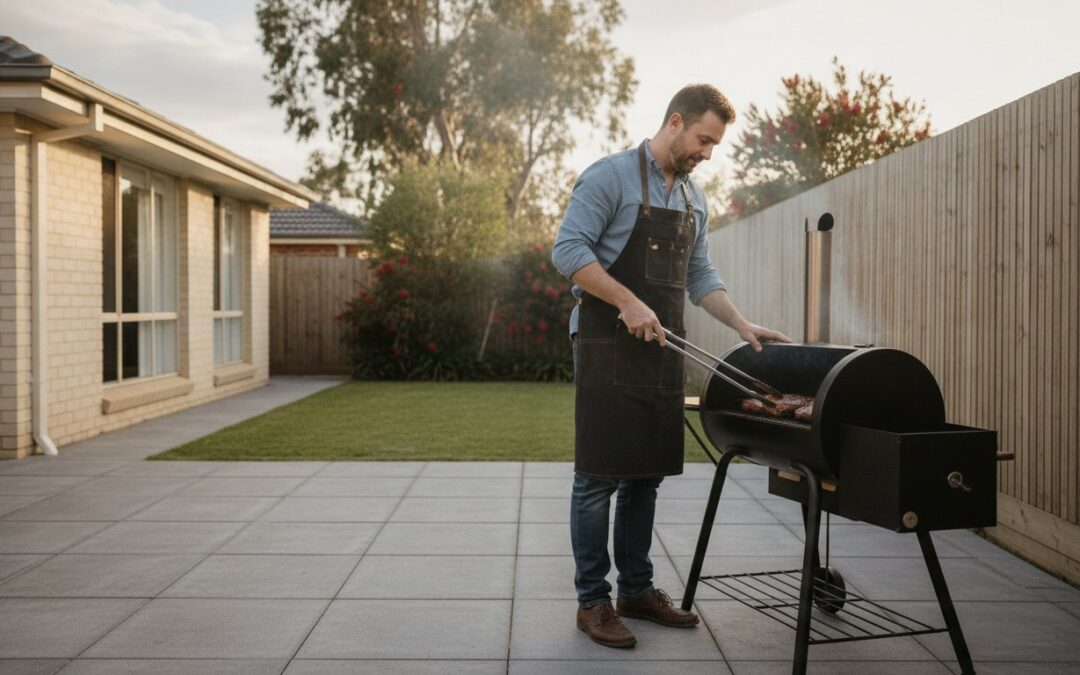
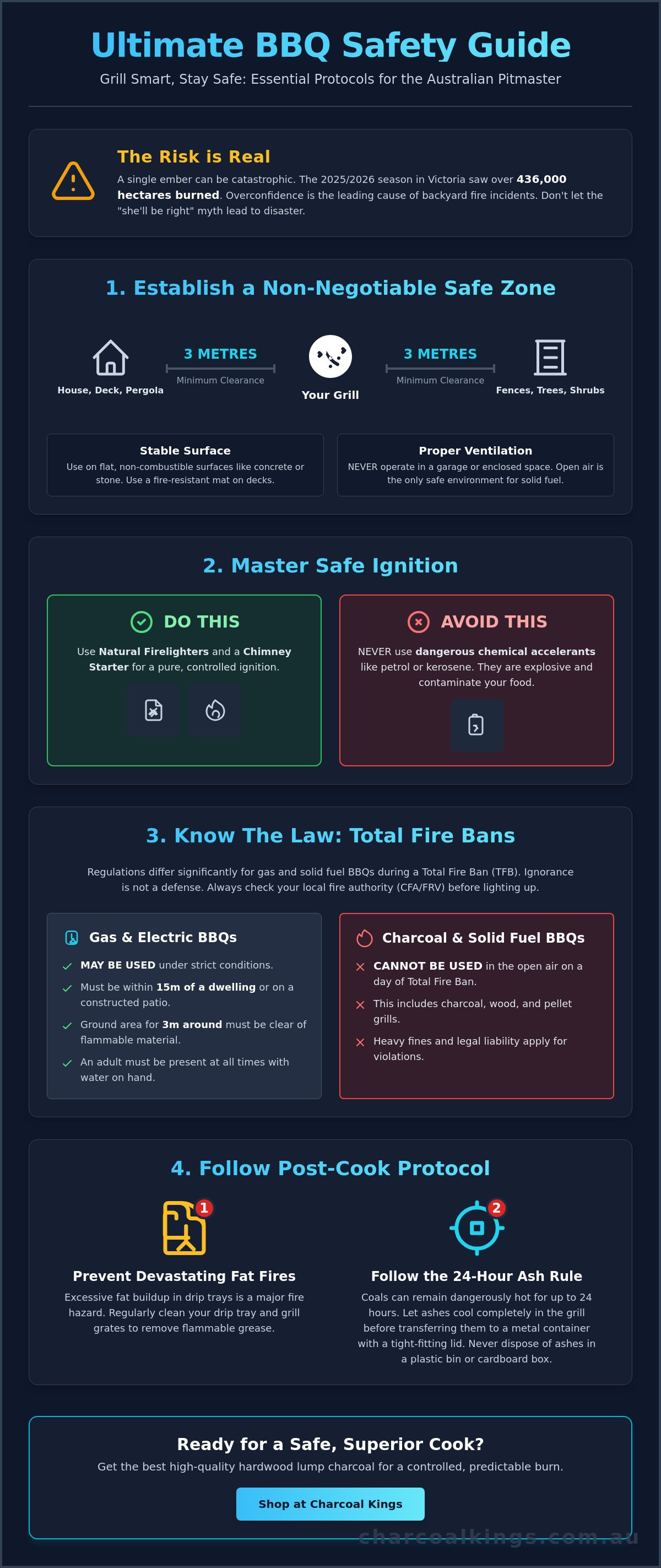
Safety begins before the first ember is lit. Establishing a dedicated grilling zone is the most effective way to prevent property damage. A non-negotiable 3-metre clearance must be maintained between your BBQ and any combustible structures, overhanging trees, or fences. While standard gas grills emit localized heat, high-performance offset smokers and charcoal units produce intense radiant heat. This heat can warp vinyl siding or ignite dry timber from a distance. Adhering to these bbq safety tips australia ensures you remain compliant with local regulations and keeps your family safe.
Surface stability is equally critical. Australian backyards often feature uneven lawns or sloping timber decks. A top-heavy smoker on a slight incline is a significant tip hazard. Always position your equipment on a flat, non-combustible surface like concrete or stone. If you’re grilling on a deck, use a heavy-duty, fire-resistant grill mat to catch stray embers or grease spills. Ventilation is the final pillar of a safe setup. Never operate a charcoal grill in a garage, under a low-hanging pergola, or within a semi-enclosed tent. Carbon Monoxide is a silent, odorless killer that builds up rapidly in confined spaces. Open air is the only safe environment for solid fuel combustion.
Deck and Patio Safety
Protecting timber surfaces requires more than just a mat. You must evaluate the environment above and around the grill. Never position your unit under low-hanging eaves or flammable shade sails. High flames or intense heat can easily ignite these structures. Wind direction is another vital factor. Position your grill so that prevailing gusts blow smoke and potential sparks away from the house and garden beds. Maintaining a 1.5-metre “Kid and Pet Free Zone” around the hot grill prevents accidental contact burns. For those looking to upgrade their setup with professional gear, investing in high-quality BBQ accessories can help manage these safety perimeters more effectively.
Apartment and Balcony Restrictions
Grilling in high-density areas presents unique challenges. Most Body Corporate rules in Australia strictly prohibit the use of charcoal or solid fuel on balconies due to the risk of falling embers and smoke nuisance. You must verify your specific building bylaws before lighting up. If permitted, ensure you have a minimum of 50cm clearance from walls and glass doors. Storage of fuel like Binchotan or Hardwood Lump Charcoal must be in a dry, ventilated area away from the heat source. Always keep a fire blanket or a bucket of sand nearby. Remember that during high-risk periods, the Total Fire Ban rules apply to balconies just as they do to backyards, often prohibiting solid fuel use entirely.
Charcoal and Solid Fuel Safety: Managing the Burn
Managing the burn is where many backyard cooks fail. Chemical accelerants like petrol, kerosene, or methylated spirits have no place in a professional setup. These liquids create volatile vapor clouds that can ignite with explosive force, causing severe burns and property damage. Stick to natural firelighters and mechanical ignition methods. High-quality bbq safety tips australia prioritize the use of pure fuels to ensure a predictable, controlled heat source. Purity is the cornerstone of safety; additives found in cheap, low-grade fuel often lead to unpredictable sparking and popping as the charcoal ignites. These flying embers are a primary cause of secondary ignitions in nearby vegetation.
Flare-ups are another common hazard. They occur when oxygen interacts with rendered fat dripping onto hot coals. While a small amount of flame is normal, large flare-ups indicate poor airflow management or excessive fat buildup. Using high-quality hardwood charcoal reduces these risks because it provides a more stable thermal mass. Always keep your grill lid nearby to smother sudden flames by cutting off the oxygen supply. For more comprehensive guidance on equipment maintenance, refer to the BBQ fire safety tips provided by Fire and Rescue NSW.
Safe Handling of Hardwood Lump Charcoal
Choosing the right fuel is a safety decision. Using Hardwood Lump Charcoal is significantly safer and more predictable than using low-grade alternatives filled with chemical binders. Professional-grade charcoal is carbonized thoroughly, which minimizes the “sparky” behavior common in inferior products. Before lighting your grill, inspect your fuel. Remove any visible pieces of foreign material or uncarbonized wood. Storage is equally vital. Keep your charcoal in a cool, dry environment. If charcoal absorbs moisture, the water turns to steam rapidly when heated, causing the coal to explode or “pop” violently, sending hot fragments out of the grill.
The Chimney Starter Method
The chimney starter is the gold standard for safe ignition. It eliminates the need for liquid fuels and concentrates the heat in a controlled metal cylinder. To use it safely, place the chimney on the lower charcoal grate of your grill, never on a timber deck or plastic table. Place two or three natural firelighters underneath and wait for the top coals to show a light dusting of grey ash. This process usually takes 15 to 20 minutes. When transferring the lit coals, wear heavy-duty, heat-resistant BBQ gloves. Pour the coals slowly and deliberately into the grill body to prevent ash clouds and stray sparks from rising into the air.
Navigating Total Fire Bans and Fire Danger Periods
Following strict bbq safety tips australia means understanding that a Total Fire Ban (TFB) is a legal mandate, not a suggestion. A TFB is declared on days when fires are likely to spread rapidly and be difficult to control. During these periods, the use of solid fuel barbecues is strictly prohibited in the open air. This includes anything burning wood, charcoal, or briquettes. While gas and electric units are often permitted under specific conditions, the spark risk associated with charcoal makes it too dangerous for high-risk days. You must check the daily fire danger rating for your specific district through your state fire authority website before you even think about lighting a match.
The “No Solid Fuel” rule is absolute for residential backyard cooks. Charcoal retains heat for hours and can release microscopic embers that travel kilometers in high winds. These embers were a primary factor in the 50 million hectares burnt during the 2025 season. Some commercial operators may hold specific Section 40 permits to operate during bans, but these require rigorous on-site suppression equipment and professional oversight. For the home pitmaster, a TFB means your smoker stays cold. Ignorance of these laws can result in fines exceeding $18,000 or even imprisonment if your fire causes property damage.
Extinguishing the Fire Properly
Shutting down a charcoal fire requires patience and the right technique. Never use water to extinguish hot coals. The resulting steam can cause horrific deep-tissue burns, and the sudden temperature drop will crack ceramic grill bodies or warp heavy-gauge steel. The professional standard is the “Choke Method.” Close all intake and exhaust vents completely to starve the fire of oxygen. This preserves your fuel for the next cook and ensures a controlled cooldown. A large charcoal bed can take 24 to 48 hours to become cold to the touch. Do not attempt to move the grill or dispose of the waste until you can safely hold your hand against the outer shell of the unit.
Emergency Preparedness
Every grilling station needs a dedicated emergency kit. This should include a fire blanket, a bucket of sand, and a fire extinguisher rated for Class A, B, and E fires. Ensure every family member knows the “Stop, Drop, and Roll” technique in case clothing catches fire. If a fire escapes the grill body and cannot be smothered immediately with a fire blanket, stop fighting it. Evacuate the area and call Triple Zero (000) instantly. To ensure you have the right gear for a safe and controlled shutdown, equip your station with premium BBQ accessories designed for high-heat management.
Maintenance and Post-Grill Safety
The cooking process doesn’t end when the meat is pulled from the grates. Post-cook maintenance is the phase where many backyard pitmasters become complacent, leading to avoidable property fires. Safe ash disposal is a foundational element of bbq safety tips australia. A pile of ash acts as a powerful thermal insulator, trapping heat and keeping embers alive for days after the surface appears cold. You must strictly adhere to the 24-hour rule. Wait at least one full day before attempting to clear the firebox. Even after this period, the waste must go directly into a dedicated metal bin with a tight-fitting lid. Never use plastic bins, cardboard boxes, or plastic bags. These materials will melt or ignite if a single microscopic coal remains active.
Before every season begins, you must inspect your BBQ for structural integrity. Check for rust on legs, hinges, and support frames. A corroded frame can fail under the weight of a full charcoal load, resulting in a catastrophic spill of burning fuel. Store your accessories and fuel in a dry, ventilated area. Moisture causes charcoal to degrade and leads to the dangerous “popping” hazards discussed in earlier sections. Proper storage prevents degradation and ensures your equipment is ready for a safe, high-performance burn every time.
The Science of Ash Management
Embers can remain live for up to 72 hours inside a dense pile of ash. Because oxygen cannot reach the core, the heat remains trapped and stable. This is why the “Metal Bin Only” rule is non-negotiable. Place your ash bin on a non-combustible surface like concrete or stone, never on a timber deck or near dry grass. Once the ash is completely cold and verified safe, you can repurpose clean wood ash in the garden to adjust soil pH. This is only safe if you have used pure fuel without chemical additives or accelerants.
Cleaning for Safety, Not Just Flavour
Preventing fat fires requires a deep-cleaning schedule that goes beyond the cooking grates. Deep clean your drip trays and the bottom of the firebox after every three to four cooks. Carbonised buildup on the inside of the hood can flake off, causing “grease rain” that can ignite during high-heat searing. Check all air vents for blockages. In Australia, spiders and debris frequently clog intakes during the off-season, which makes temperature control impossible and increases the risk of a flare-up. Using high-quality Firewood and pure charcoal ensures a cleaner burn with significantly less hazardous residue. These bbq safety tips australia are the final step in mastering a professional and safe grilling environment.
Master the Flame with Professional Precision
Safety is the foundation of every successful cook. By maintaining a strict 3-metre clearance zone and respecting the absolute prohibitions of Total Fire Ban days, you protect your property and the wider community. Implementing these bbq safety tips australia ensures your backyard sessions remain legendary for the right reasons. Don’t overlook the 24-hour rule for ash disposal or skip essential equipment maintenance. A clean, well-managed grill is a high-performance tool that delivers superior results without the risk of property damage.
As Australia’s leading charcoal specialists, we provide the expert advice and hardware you need to cook with confidence. We are authorized stockists of professional-grade BBQ hardware and supply only natural, additive-free fuels for a cleaner, more predictable burn. Our commitment to purity means you avoid the dangerous sparking and chemical residues associated with low-grade alternatives. Upgrade to Premium Hardwood Charcoal for a Cleaner, Safer Burn and experience the difference that authentic quality makes. It’s time to fire up the pit with the confidence of a master craftsman. Enjoy the perfect burn.
Frequently Asked Questions
Can I use a charcoal BBQ on a Total Fire Ban day in Australia?
No. You cannot use any solid fuel barbecue, including charcoal or wood-fired smokers, in the open air during a Total Fire Ban. This is a legal requirement across all Australian states. These bans are strictly enforced because escaping embers can travel long distances and ignite secondary fires in dry vegetation.
What is the safest way to light a charcoal BBQ without using petrol?
The safest method is using a chimney starter with natural firelighters. This technique provides a controlled and predictable ignition without the explosive risks associated with petrol or kerosene. It also preserves the purity of your fuel by avoiding chemical residues that can taint your food and cause unpredictable flare-ups.
How far should a BBQ be from a house or fence in Australia?
You must maintain a minimum clearance of 3 metres from any structure, timber fence, or overhanging foliage. Adhering to these bbq safety tips australia prevents radiant heat from warping vinyl siding or igniting flammable surfaces. Always ensure your grill is positioned on a stable, non-combustible base like concrete or stone pavers.
How do I safely dispose of charcoal ash after grilling?
Wait at least 24 hours for the ash to cool before attempting disposal. Always place the waste into a dedicated metal bin with a tight-fitting lid. Never use plastic bins or cardboard boxes. Embers can remain live and insulated deep within an ash pile for several days, easily melting through non-metal containers.
What type of fire extinguisher is best for a charcoal BBQ fire?
A dry powder fire extinguisher rated for Class A, B, and E fires is the most effective choice for charcoal setups. This rating ensures the extinguisher can handle fires involving solid fuels, fats, and oils. Keep a fire blanket nearby as a secondary defense to smother smaller flare-ups before they escalate.
Is it safe to use a charcoal grill under a covered patio or pergola?
No. Charcoal grills require full open-air ventilation to operate safely. Using a smoker under a covered patio or pergola leads to dangerous Carbon Monoxide buildup and presents a significant fire risk. Intense radiant heat can ignite roofing materials, while semi-enclosed spaces trap toxic gases that are lethal to humans and pets.
How do I stop my charcoal BBQ from sparking excessively?
Switch to high-quality Hardwood Lump Charcoal to minimize sparking. Excessive sparks are typically caused by chemical additives or uncarbonized wood found in low-grade fuel alternatives. Additionally, keeping your charcoal in a dry, moisture-proof container prevents the violent popping and spitting that occurs when damp fuel is heated.
What should I do if my BBQ catches fire and I can’t put it out?
Evacuate the area immediately and call Triple Zero (000). If a fire has escaped the grill body and cannot be smothered instantly with a fire blanket, do not attempt to fight it yourself. Professional fire services have the equipment to manage high-heat solid fuel fires safely. Your only priority is moving your family to a safe distance.