Competition success is built before the first slice is served. The most useful bbq competition secrets from Australian pitmasters are to choose well-marbled cuts, cook for tenderness and balance, and adapt your approach to the contest format. Adam Roberts has won more than 35 national-level trophies across multiple contest formats, while Andy Groneman has competed in barbecue for more than 30 years.
Great pork and ribs take more than a bold rub or a hot fire. The cut, smoke and balance of flavours all shape the result, while a pitmaster’s experience helps make each cook repeatable.
Learn how Australian pitmasters approach competition formats, prepare smoked pork and ribs, and draw on different backgrounds to refine their craft. You’ll also find practical guidance on choosing a smoker and balancing competition flavours, so you can bring a more deliberate approach to your next cook.
Key Takeaways
- Match your pork and rib preparation to the contest format, and make cut selection part of your plan before you light the smoker.
- Use pitmasters’ varied competition and cooking backgrounds to sharpen your own process, not just copy a single recipe.
- For brisket, resist stopping too soon; judge timing by how the cook is progressing rather than relying on a fixed schedule.
- Build rubs, marinades and sauces for balance, keeping individual flavours in check so the finished barbecue stays tender and enjoyable.
Pit-smoked pork and ribs
Competition pork and ribs reward controlled cooking, careful preparation and a clean turn-in. Plan for the cut, fire behaviour and judging format rather than relying on one fixed recipe.
Cooking Temperatures and Times
Brisket, ribs, pork and chicken each need a plan for heat, time and tenderness. No single cooking schedule suits every cut, smoker or contest format. Follow a consistent process, then assess texture and readiness instead of treating the clock as your only guide. Andy Groneman’s brisket advice is direct: cook longer rather than stopping too soon. For ribs and pork, allow enough time for tenderness without losing the meat’s shape.
Fire, Smoke and Temperature Control
During a long cook, manage the fire by keeping fuel and airflow steady and observing how the smoker responds. Add fuel before the fire fades, and make small airflow adjustments instead of chasing every fluctuation. Pay attention to smoke as well as heat: clean, light smoke builds barbecue flavour, while heavy smoke can dominate pork and ribs. Choose a smoker that suits your routine, then learn how it holds heat throughout a cook.
Meat Preparation for Turn-In
Start with the cut. Groneman recommends well-marbled meat for competition, since fat distribution contributes to flavour and moisture. Trim uneven edges and season evenly so portions cook and present consistently. Near turn-in, assess tenderness and appearance together: ribs should look neat, and pulled pork should remain moist rather than dry or clumped. Groneman also prefers barbecue without sauce, a reminder to let the meat and smoke stand on their own before adding a sauce.
Mistakes and Food-Safety Risks
Rushing brisket, using heavy smoke or over-seasoning can undermine flavour and texture. Keep raw and cooked meat separate, use clean utensils, and handle each cut carefully during preparation and turn-in. Poor handling can create food-safety risks, while missing turn-in requirements or breaching contest rules can affect scoring or eligibility. Read the event rules before cooking, organise your work area and assign each team member a clear task. These habits support both food safety and presentation.
Australian pitmasters and their backgrounds
Australian competition BBQ has been shaped by cooks who took different routes into the craft. Their experience shows how practice, teaching and contest formats can turn backyard cooking into disciplined competition work. For anyone seeking bbq competition secrets from Australian pitmasters, their backgrounds offer practical lessons in building repeatable skills.
Andy Groneman has competed in barbecue for more than 30 years. He was invited to help introduce American-style barbecue to Australian audiences in the early 2010s. At one point, he and his wife competed in more than 30 events a year. That experience across contests gives cooks practical ways to adapt recipes, equipment and timing to event conditions. Groneman’s long involvement also shows how barbecue techniques develop through continued competition.
Adam Roberts brings an organisational perspective alongside cooking experience. He co-founded the Australasian Barbecue Alliance in 2014 and the New Zealand Barbecue Alliance in 2017. He served as inaugural General Manager of both alliances until 2021, and has won more than 35 national-level trophies across multiple contest formats. His background highlights how competition rules and judging expectations shape preparation as well as flavour.
Stephen Adams’s path shows how learning can lead to competition results. He took his first barbecue class five years before his profile was written. His team won Reserve Grand Champions at Brew N Que in October 2022, then Grand Champion and first place in brisket at KCBS Smokin’ in the Valley on 26 April 2025. That progression makes the bbq competition secrets from Australian pitmasters tangible: build skills through classes, then refine them through practice and contests.
Weather, local wood and Australian meat cuts all influence a cook. Wind can change fire behaviour, wood affects smoke character, and each cut’s shape and marbling call for adjustments.
Beginners can practise at home by choosing one cut, recording fire behaviour, smoke and timing, then changing one variable at a time. A class can teach technique; repeat cooks help reveal which adjustments suit your setup. To support that practice, use a home BBQ practice setup and focus on consistent results before adding complexity.
What are the ideal cooking temperatures and times for competition brisket, ribs, pork and chicken?
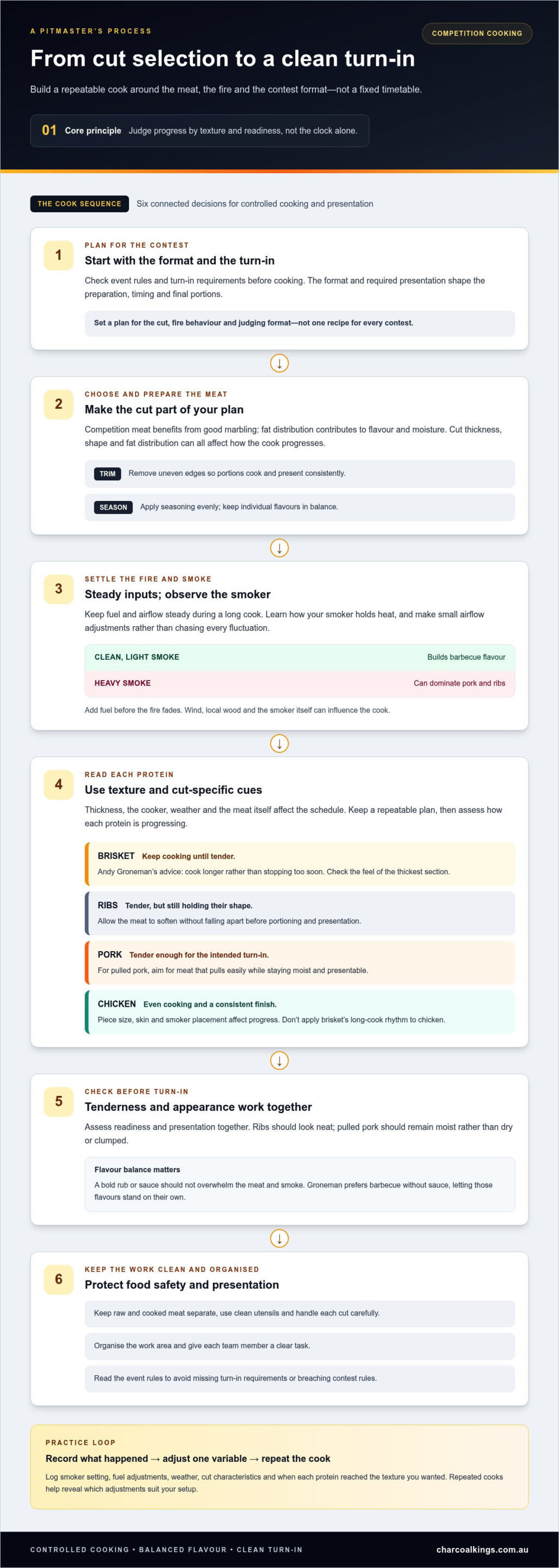
There’s no ideal temperature and cooking time for every competition cook. The cut’s thickness, fat distribution, smoker, weather and required turn-in time all affect the schedule. Build a repeatable plan, then judge each protein by its progress and texture instead of copying another pit’s timetable.
Set a plan for each protein
Brisket: Keep cooking until the meat is tender. Andy Groneman advises cooking brisket longer rather than stopping too soon. Check the feel of the thickest section before planning the rest period.
Ribs: Track tenderness and shape together. The meat should soften without falling apart before the team can portion and present it. Rib thickness and the cooker’s heat affect how long this takes.
Pork: Consider the cut and intended turn-in style. Meat for pulled pork needs to become tender enough to pull, while staying moist and presentable.
Chicken: Aim for even cooking and a consistent finish. Piece size, skin and smoker placement affect how quickly the cook progresses. Don’t apply brisket’s long-cook rhythm to chicken.
Control the clock through observation
Keep a cook log for every practice session. Record the smoker setting, fuel adjustments, weather, cut characteristics and when each protein reached the texture you wanted. These notes help the team compare cooks without assuming every one will take the same time. Use the log to schedule trimming, seasoning, cooking and resting around the contest’s turn-in sequence.
Check the cook deliberately rather than repeatedly opening the smoker. Each opening can disturb the heat and make progress harder to assess. For brisket, Groneman’s key reminder is not to call it done too early. For ribs, pork and chicken, judge readiness by the cut and intended presentation. The schedule guides the team, but the meat’s progress determines the final call.
How do pitmasters build and balance competition BBQ rubs, marinades and sauces?
Build flavour in layers, then taste how each one works with the meat. Andy Groneman recommends adding celery salt and cumin to barbecue. Start with a simple rub, apply it evenly, and note how its salt, spice and sweetness complement the cut. Aim for a distinct flavour profile, not seasoning that overwhelms pork or ribs.
Balance matters more than piling on ingredients. Groneman says competition barbecue should be tender and balanced, with no single flavour dominating. Test a small batch before using it for a full cook. Taste the finished meat, not just the dry mix: smoke, rendered fat and the cut itself all affect how the seasoning comes through.
Use the same restraint with marinades and sauces. A marinade should support the meat’s flavour, not bury it, and its seasoning should work with the rub. Treat sauce as an optional finishing choice, not an automatic step. Groneman typically prefers barbecue without sauce, so taste a sample first. A well-seasoned rib with clean smoke may need nothing more.
For repeatable competition results, record your seasoning choices and change one thing at a time:
- Write down the rub ingredients and the cut being cooked.
- Apply the same blend evenly across comparable portions.
- Taste one portion without sauce, then compare another with a light finish.
- Record whether salt, sweetness, heat or smoke dominates the bite.
This approach makes flavour decisions easier to repeat and refine. Keep the tasting focused: check the first impression, the meat’s natural flavour and the finish. If cumin or celery salt leads every bite, reduce its prominence next time. If sauce masks the smoke, serve less or leave it off. For your next cook, explore BBQ rubs, sauces and cures as tools for testing a balanced flavour profile.
Charcoal Kings: Hardwood Lump Charcoal
Charcoal Kings offers Hardwood Lump Charcoal for pitmasters building a repeatable live-fire routine. Choosing fuel and a smoker that suit your method gives you a consistent setup for practising fire management and focusing on the meat, smoke and timing. Charcoal Briquettes, Binchotan Charcoal, and BBQ Grills and Smokers are also available for different barbecue approaches.
Keep your setup consistent between practice cooks. This makes it easier to compare results and identify which changes come from technique rather than equipment or fuel. Choose what suits your cooking style, then use the same setup to refine your process.
Visit Charcoal Kings online to explore the range.
Build a Competition Style That’s Your Own
Turn practice into a recognisable barbecue style. Decide what you want people to remember, such as clean smoke, a distinctive seasoning choice or a confident finish. Develop that identity intentionally, then keep refining how it comes through on the plate. A signature cook should reflect your judgement, not simply copy another pitmaster’s method.
Treat bbq competition secrets from Australian pitmasters as ideas to test, not fixed rules. Charcoal Kings offers Hardwood Lump Charcoal, Charcoal Briquettes and Binchotan Charcoal. Choose a fuel suited to your cooking approach and keep your setup consistent as you develop your own style.
Contact Charcoal Kings about competition BBQ and explore the options for your next practice cook.
Keep learning, trust your palate and bring your own fire to the next competition.
Frequently Asked Questions
What techniques do Australian BBQ competition pitmasters use to win?
Successful teams build a repeatable process around the contest format and turn-in schedule. They practise the full workflow, from preparation and fire management to portioning and presentation, so the final hand-off stays organised. Keep a cook log of changes to seasoning, fuel and placement. This helps you identify which adjustments improved an entry instead of changing several variables at once.
Which cuts of meat are most commonly used in Australian BBQ competitions?
Competition cooks often work with brisket, pork, ribs and chicken, although categories vary by event. Pork shoulder suits pulled barbecue, while ribs offer portions teams can trim and present consistently. Lamb shoulder is another flavourful option for pulled dishes. Before planning a cook, match the cut to the category and consider its shape, marbling and how it will be served.
What are the meat presentation and judging criteria in Australian BBQ competitions?
Judging criteria vary by competition, but appearance, tenderness and flavour deserve close attention. Present portions neatly, with consistent sizing and no loose scraps to distract from the meat. Keep seasoning and smoke balanced so they support, rather than overpower, the cut. Read the event’s turn-in instructions carefully, since presentation requirements and judging formats differ.
What BBQ pits, smokers and fuels do Australian competition teams use, and what do they cost?
Competition setups can include charcoal grills and smokers, paired with fuels such as hardwood lump charcoal or briquettes. The right setup depends on your cooking style, desired fire control and available space for a long cook. Equipment and fuel costs vary by type, size and construction, so there’s no single price that suits every team. Compare the setup with your regular practice needs before choosing.