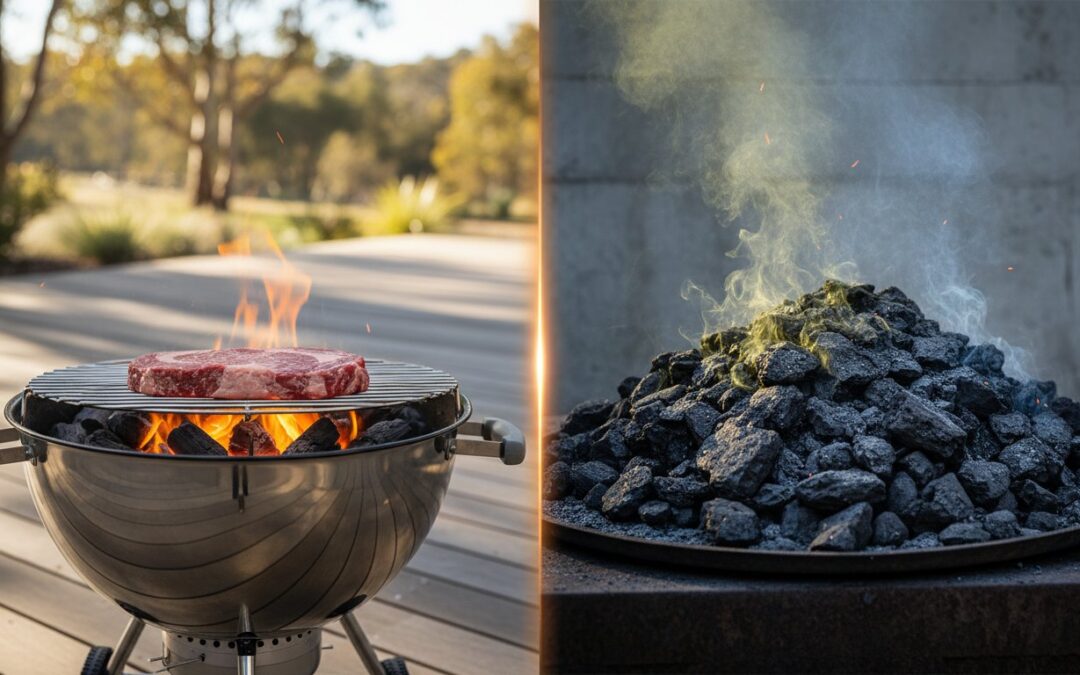
It’s a common point of confusion for many grillers: is there really a difference between the coal used for heating and the fuel you put in your barbecue? The answer is a definitive yes, and understanding this distinction is critical. Using the wrong fuel is more than a simple mistake-it’s a risk to your food’s flavour and your family’s health. While they may look similar, household coal is a fossil fuel loaded with impurities, while premium bbq charcoal is a natural product made from pure hardwood, specifically for cooking.
This guide cuts through the smoke. We will give you the straightforward facts on safety, performance, and flavour. You’ll understand why one fuel creates a clean, high-performance heat perfect for searing a steak, while the other can release toxic chemicals. We’ll also explain why investing in quality charcoal is the best decision for your grill and your guests. By the end, you’ll have the confidence to choose the right fuel, every time.
The Critical Difference: Why One Cooks and One Kills Flavour
Let’s get straight to the point: BBQ charcoal is made for cooking. Mineral coal is not. Using the wrong one isn’t just a simple mistake-it’s a dangerous decision that will ruin your food and potentially your health. The fundamental difference lies in their origin and purpose. BBQ charcoal is purified wood, crafted for flavour and heat. Mineral coal is a raw fossil fuel, dug from the earth and loaded with impurities.
To better understand this concept, watch this helpful video:
For a quick overview, this table breaks down the essential differences between the two fuels.
| Attribute | BBQ Charcoal | Mineral Coal |
|---|---|---|
| Fuel Type | Natural Fuel | Fossil Fuel |
| Source | Natural Hardwood | Mined Sedimentary Rock |
| Main Use | Cooking & Grilling | Industrial Power & Heating |
| Cooking Safety | Safe When Used Correctly | Highly Toxic & Unsafe |
| Flavour Profile | Clean, Natural & Smoky | Acrid, Chemical & Bitter |
BBQ Charcoal: The Quick Summary
Premium bbq charcoal is the result of burning natural hardwood in a low-oxygen environment. This process, known as pyrolysis, transforms the wood into nearly pure carbon, burning off volatile compounds like water, sap, and methane. For a deeper look into its production, this article explaining What is Charcoal? is a great resource. The end product is a fuel designed specifically for performance and flavour.
- Made from 100% natural hardwood.
- Designed specifically for clean, high-heat cooking.
- Adds a desirable, smoky flavour to food.
- Burns hot and steady with minimal harmful impurities.
Mineral Coal: The Quick Summary
Mineral coal is a fossil fuel, a sedimentary rock mined from the ground that formed over millions of years. It is primarily used to power industrial plants and heat buildings. It is completely unsuitable for cooking because it contains a dangerous mix of sulfur, heavy metals, and other toxic chemicals that release poisonous fumes when burned.
- A mined fossil fuel, not a wood product.
- Used for industrial power generation.
- Releases sulfur dioxide and other hazardous chemicals.
- NEVER use mineral coal for cooking under any circumstances.
What is BBQ Charcoal? The Heart of Authentic Grilling
True bbq charcoal is not coal; it’s the pure carbon essence of real wood, crafted for one purpose: superior flavour. The creation process, known as pyrolysis, involves heating natural hardwood to extreme temperatures in a low-oxygen environment like a kiln. This intense heat burns off water, sap, and other volatile compounds without combusting the wood itself. What remains is almost pure carbon-a clean, potent fuel source. It’s crucial to remember that even clean-burning charcoal is for outdoor use only, as all charcoal combustion produces emissions that underscore the dangers of carbon monoxide in enclosed spaces.
The Making of Lump Charcoal
Natural lump charcoal is the purist’s choice. We start with real pieces of premium hardwood, which are then carbonised in a kiln. This method results in irregularly shaped chunks that retain the original character of the wood. Because it’s all-natural and free from additives, lump charcoal lights faster, burns hotter, and produces significantly less ash than manufactured alternatives. It’s the key to achieving that authentic, high-heat sear.
What About Charcoal Briquettes?
Charcoal briquettes offer consistency. They are manufactured by compressing charcoal dust, wood scraps, and other raw materials with a natural binder, typically starch, to hold their uniform pillow shape. This uniformity ensures they burn at a very predictable and even temperature for a long period, making them a reliable option for low-and-slow cooking where stable heat is paramount.
The Flavour Profile: Clean Smoke
Because premium lump charcoal is simply carbonised wood, it imparts a clean, authentic smoky flavour to your food. There are no chemicals, binders, or fillers to interfere with the taste-just the pure essence of the hardwood. The specific type of wood used, such as ironbark or gidgee, can introduce subtle and distinct flavour notes, elevating your barbecue from a simple meal to a genuine culinary experience.
Ready to taste the difference? Explore our range of 100% natural hardwood charcoal.
What is Mineral Coal? A Fuel for Forges, Not Food
First, a critical point: mineral coal is not charcoal. While they might look similar to the untrained eye, using them interchangeably is a dangerous mistake. Mineral coal is a fossil fuel, a sedimentary rock dug from the earth, formed over millions of years from compressed plant matter. Its primary purpose is industrial-powering plants and firing massive furnaces. It has absolutely no place in your grill or smoker.
Think of it like the difference between drinking water and seawater. Both are water, but one is clean and essential for life, while the other is loaded with salts and impurities that would make you sick. The same logic applies here. Premium bbq charcoal is the clean water; mineral coal is the toxic seawater.
Formation and Composition: A Toxic History
Unlike charcoal, which is a man-made product created by heating natural hardwood in a low-oxygen environment, mineral coal is a product of ancient geology. The immense pressure and heat that created it also trapped a host of undesirable elements within its structure. While the fundamental difference between charcoal and mineral coal is their origin, the most important distinction for any grill master is purity.
Mineral coal is loaded with dangerous impurities that are released when burned. These include:
- Sulfur: Creates acrid smoke and toxic compounds.
- Mercury: A potent neurotoxin.
- Arsenic: A well-known poison.
- Other heavy metals: Lead, cadmium, and more.
Burning this material releases these chemicals as toxic fumes and leaves behind an unsafe, contaminated ash.
Why It’s Dangerous for Cooking
Using mineral coal for cooking is a guaranteed way to ruin your food and risk your health. The thick, foul-smelling smoke it produces is not a flavour enhancer; it’s a delivery system for harmful chemicals that get deposited directly onto your meat and vegetables. This not only creates a disgusting, bitter flavour but also introduces toxins into your meal.
The high sulfur content is particularly nasty. When burned, it can create sulfuric acid within the smoke, which is both corrosive and hazardous to inhale. For a clean burn, exceptional flavour, and peace of mind, always stick to a premium, all-natural bbq charcoal designed specifically for cooking.
Head-to-Head: The Ultimate Fuel Comparison
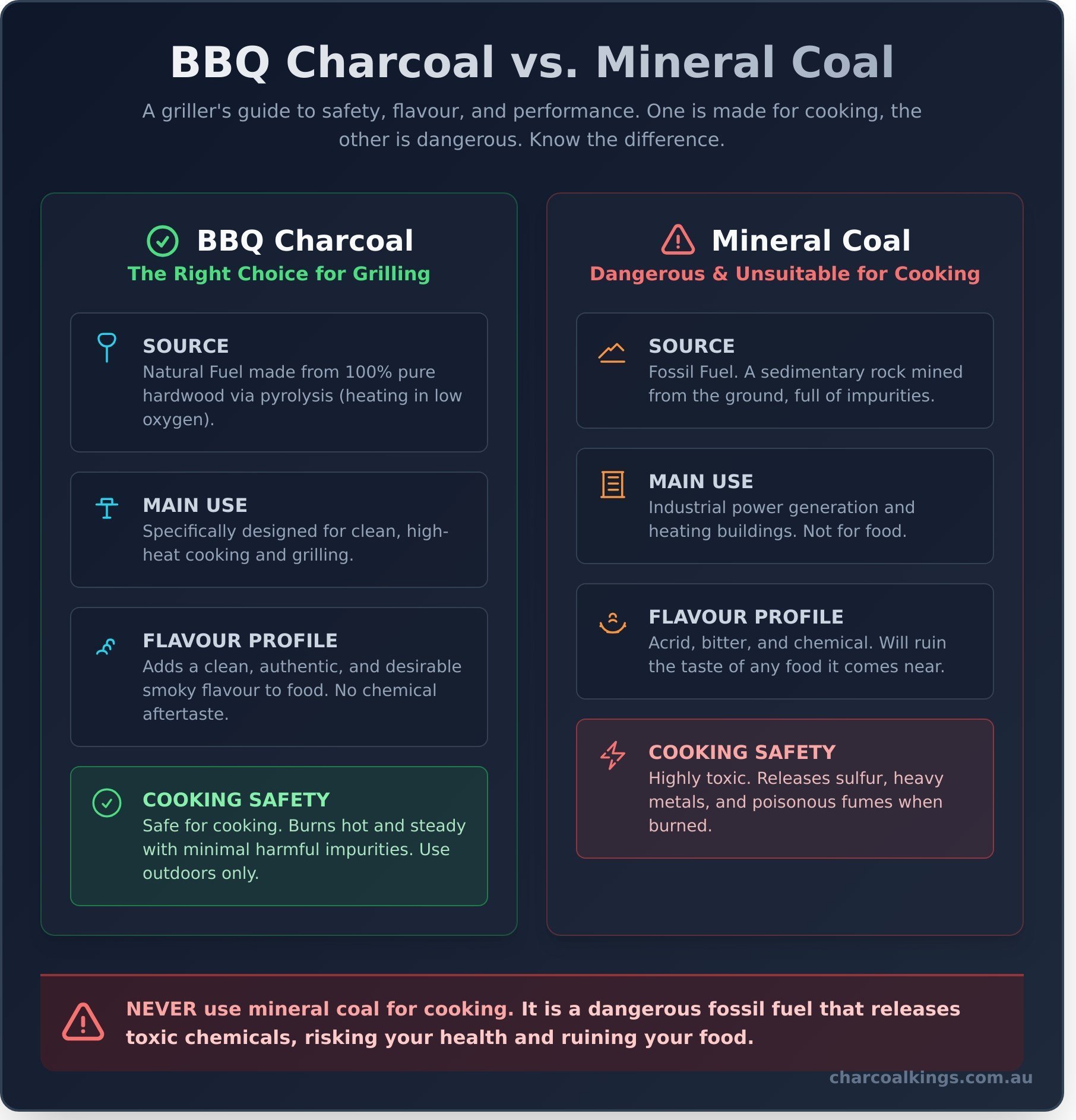
When it comes to grilling, the fuel you choose is everything. It’s not just a source of heat; it’s a core ingredient that defines the final result. To understand why one is essential for cooking and the other is dangerous, let’s break down the critical differences between authentic BBQ charcoal and industrial mineral coal. For anyone serious about their food, the choice is clear.
Safety & Health Impact
This is the most critical distinction. Premium bbq charcoal is produced by carbonising natural hardwood in a low-oxygen environment. This process removes impurities, resulting in a clean, stable, and food-safe fuel. It contains no additives, chemicals, or binders.
Mineral coal, however, is a fossil fuel mined from the earth. It is loaded with impurities like sulfur, mercury, and arsenic. When burned, it releases these toxic compounds into the air and, consequently, onto your food.
WARNING: Never use mineral coal (heating coal) for cooking, grilling, or barbecuing. It releases toxic fumes and contaminants that are hazardous to your health and will render food inedible and unsafe.
Flavour & Aroma
The fuel is the first flavour you add to your cook. Natural hardwood charcoal imparts a subtle, authentic smoky taste that enhances the natural character of meat and vegetables. It’s the signature aroma of true, primal barbecue.
This principle of using natural, burning materials to create a specific atmosphere extends beyond cooking. For those who appreciate the unique, earthy scent of a traditional fire, some artisans capture this essence in other forms. For a fascinating example from Ireland, you can learn more about Aureal Aromatics.
In stark contrast, mineral coal produces a harsh, acrid smoke laced with chemicals. This will completely ruin your food with a bitter, industrial taste. The difference isn’t subtle; it’s the difference between a delicious meal and a dangerous one.
Heat Performance & Control
Control is king in barbecue. Natural lump charcoal lights relatively quickly and is incredibly responsive to airflow. Opening your grill’s vents feeds the fire for a perfect steak sear, while closing them down allows for precise temperature management for low-and-slow cooking. This responsiveness gives you complete command over your cook.
Mineral coal is difficult to ignite and burns at extreme, often uncontrollable temperatures. This brute-force heat offers no nuance, making it impossible to use for skilled cooking techniques.
Ash & Smoke Production
A clean burn means better performance and easier cleanup. High-quality bbq charcoal produces a very small amount of fine, powdery ash, ensuring consistent airflow in your grill. Once lit and stable, it generates a thin, almost invisible “blue” smoke-the sign of pure heat. Mineral coal produces a massive volume of thick, black, sooty smoke and heavy ash that can smother the fire and block air vents, creating a messy and inefficient burn.
Making the Right Choice: Fuel Your BBQ with Confidence
The final takeaway is simple and non-negotiable: fuel designed for industrial use or home heating has no place near your food. To guarantee safety and flavour, always use a fuel specifically manufactured and labelled for cooking. The authentic ‘char’ in charcoal comes from one source only-natural hardwood, expertly converted into a pure, high-performance carbon fuel.
With that settled, the real question isn’t what to use, but which type of bbq charcoal is right for the job. The two main players are lump charcoal and briquettes, and each has its own distinct advantages.
When to Use Lump Charcoal
For pure, high-performance grilling, nothing beats natural lump charcoal. Made from 100% hardwood, it lights faster, burns hotter, and responds quickly to oxygen adjustments, giving you precise control. This makes it the ultimate fuel for achieving a perfect crust and authentic wood-smoke flavour.
- Ideal for high-heat searing of steaks, chops, and burgers.
- Perfect for when you want a pure, natural hardwood flavour infusion.
- The top choice for ceramic cookers like Kamados that excel at high temperatures.
When to Use Briquettes
Briquettes are the workhorse of low-and-slow barbecue. Their uniform size and composition deliver a remarkably stable and predictable burn, holding a consistent temperature for hours on end. This reliability removes guesswork and is a massive advantage for long cooks.
- Excellent for long, slow cooks like brisket, ribs, or pork shoulder.
- Provides a very stable and predictable temperature for hours.
- Great for beginners who are learning temperature control on a kettle grill.
Get the Best of Both Worlds
You don’t have to choose just one. Many seasoned pitmasters use a hybrid method to maximise performance and flavour. By laying down a solid base of briquettes for consistent, long-lasting heat and then topping it with lump charcoal before the food goes on, you get an extra kick of high heat and superior flavour. This technique combines unwavering reliability with the authentic taste of real hardwood fire.
Ready to grill like a pro? Shop premium BBQ charcoal now.
The Clear Choice for Authentic BBQ
When it comes to the fuel for your grill, the difference is clear and critical. Mineral coal is an industrial product, loaded with chemical impurities that are unsafe for cooking and guaranteed to ruin the flavour of your food. True barbecue, rich with authentic smoky taste, demands a purpose-made fuel. That fuel is premium bbq charcoal, crafted from natural wood to enhance your cooking, not contaminate it.
Making the right choice is simple. Professionals across Australia-from top restaurants and food services to dedicated backyard grill masters-trust Charcoal Kings for consistent, high-quality results. We provide only premium, 100% natural hardwood charcoal. With absolutely no chemicals or additives, you get a clean, steady, and long-lasting burn that lets the true flavour of your food shine through.
Ready to master the grill? Get Sizzlin’! Shop our 100% Natural Hardwood BBQ Charcoal.
Elevate your grill game and taste the difference for yourself.
Frequently Asked Questions
Can you use mineral coal in a BBQ if you wrap the food in foil?
No. Never use mineral coal for cooking. Mineral coal contains sulfur, heavy metals, and other toxic impurities that are released as poisonous gases when burned. Wrapping food in foil offers no meaningful protection from these airborne contaminants. Using mineral coal will ruin your food’s flavour and poses a serious, direct health risk to anyone nearby. Stick to fuel designed specifically for cooking.
Is BBQ charcoal the same as activated charcoal?
They are not the same product. BBQ charcoal is made by burning wood in a low-oxygen environment, creating a high-performance fuel for grilling. Activated charcoal is processed further at extreme temperatures to create a porous structure for medical and filtration use. The two are not interchangeable. Never use activated charcoal for grilling, and never ingest barbecue charcoal for any reason.
What happens if I accidentally use mineral coal for my BBQ?
Using mineral coal will produce thick, foul-smelling smoke loaded with dangerous chemicals. This acrid smoke will impart a harsh, chemical taste to your food, rendering it completely inedible. More importantly, you and your guests will be exposed to toxic fumes that are unsafe to inhale. If you have used mineral coal, extinguish it safely, dispose of it, and thoroughly clean your entire grill before its next use.
Why does my charcoal spark so much when lighting?
Excessive sparking is typically caused by moisture or low-quality wood. If charcoal has absorbed moisture from humid storage, the trapped water turns to steam and pops aggressively. Lower-grade charcoal made from resinous softwoods can also cause significant sparking. For a clean and stable light, always use premium, 100% natural hardwood lump charcoal that has been kept in a dry, sealed container.
Is lump charcoal better for the environment than briquettes?
Yes, in most cases. Quality lump charcoal is a pure, natural product made from carbonised hardwood with zero additives. In contrast, many briquettes contain binders, fillers like coal dust, and chemical accelerants to aid lighting. Choosing an all-natural bbq charcoal like lump means you are burning pure wood. This results in a cleaner burn with less ash and no unwanted chemical residue in the air or your food.
How do I know if I’m buying real hardwood lump charcoal?
Check the bag for clear, direct language. It should state “100% Natural Hardwood Lump Charcoal” and ideally list the wood species. A quality product will feel lumpy in the bag, with a variety of piece sizes, not uniform shapes. Avoid products with vague marketing terms or a list of additives, binders, or fillers. A reputable brand will always be transparent about its product being pure, natural, and chemical-free.