
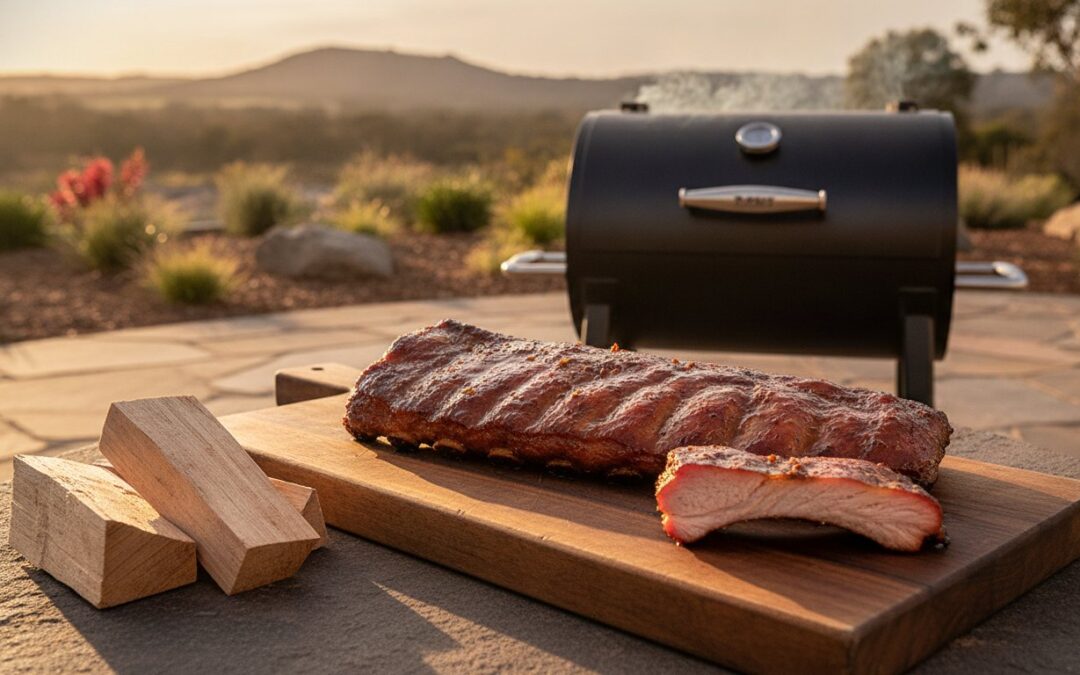
Apple wood is the universal gateway smoking wood; its high sugar content creates a forgiving, sweet smoke that is impossible to overdo. While heavy hitters like mesquite can turn a pork shoulder bitter in minutes, using apple smoking wood provides a mild, fruity profile that enhances rather than masks your hard work. Most pitmasters reach for apple when they want a reliable, subtle finish on poultry or ribs. However, achieving that perfect, clean smoke ring without burning through your fuel supply too quickly requires more than just tossing a few random logs on the fire.
You’ve likely dealt with the frustration of an overpowering smoke taste or wood that disappears before the meat even reaches the stall. We’re here to fix that. This guide will help you master the art of using apple wood to achieve the perfect balance of sweetness and smoke for your next cook. We will cover the critical differences between chips and chunks, how to identify certified heat-treated wood that meets current 2026 biosecurity regulations, and the technical requirements for 90% species purity. It’s time to stop guessing and start cooking with the confidence of a seasoned pro.
Key Takeaways
- Discover how the high natural sugar content in apple tree sap creates a distinctly sweet smoke profile through caramelization.
- Master the industry-standard pairing of apple smoking wood with pork and poultry to achieve a perfect golden finish.
- Learn to select the right wood form, including chunks, chips, or splits, to ensure your BBQ hardware performs with maximum efficiency.
- Debunk the soaking myth and understand why using dry, seasoned wood is essential for a clean, professional-grade smoke.
- Identify high-quality wood by checking bark condition and weight to avoid the pitfalls of unseasoned or additive-filled fuel.
What is Apple Smoking Wood? Understanding the Mild, Sweet Profile
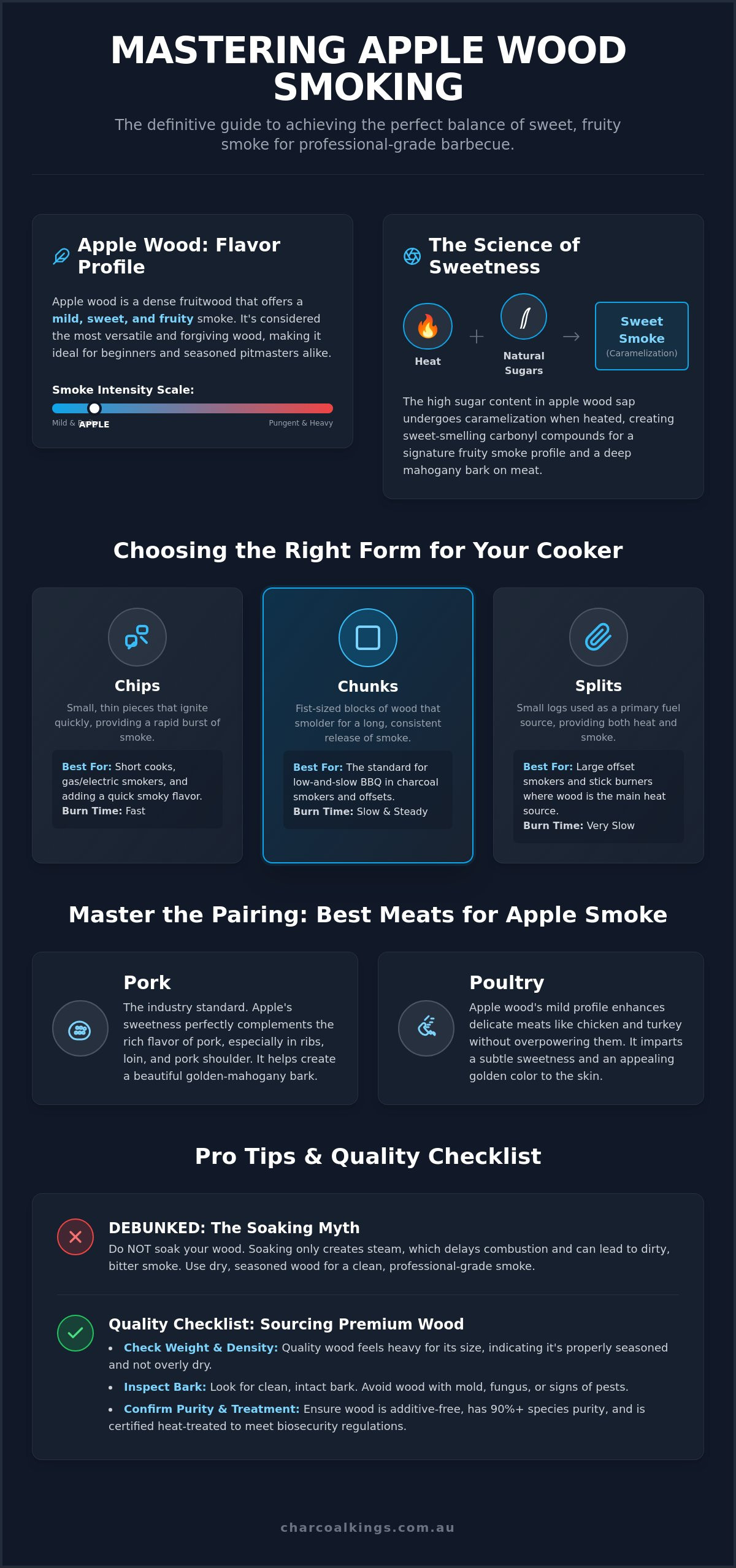
Apple wood is a dense, heavy fruitwood harvested from Malus domestica trees. It is a fundamental fuel in the low-and-slow barbecue community because of its high density and reliable burn rate. Unlike softer woods that flare up and vanish, apple wood provides a steady, consistent heat source. This makes apple smoking wood an essential fuel for long cooks where temperature stability is the priority. The density of the wood ensures that it lasts throughout the duration of a brisket or pork butt cook, providing a slow release of aromatic compounds rather than a sudden burst of smoke that can lead to uneven flavour profiles.
The smoke produced is light and fruity; it carries a distinct sweetness that permeates the meat without the aggressive “bite” found in stronger hardwoods. This wood is widely considered the most versatile entry-level option for beginners. It is forgiving. You can use a significant amount without ruining the meal with acrid flavours. Beyond the taste, apple wood offers a significant visual advantage. The high sugar content in the wood sap reacts with the meat proteins to create a deep, rich mahogany bark. This visual finish is a hallmark of professional-grade BBQ, transforming a simple piece of meat into a centerpiece.
To see how these principles apply in a practical setting, watch this helpful video:
The Flavour Profile: Sweetness Over Intensity
Apple wood sits on the milder end of the smoke spectrum. While heavy hitters like Ironbark or Hickory provide a pungent, earthy punch, apple offers a subtle, nuanced aroma. The process of smoking food requires a precise balance between heat and flavour; apple wood provides exactly that. It won’t overpower delicate proteins like turkey or fish, making it a safe choice for multi-meat cooks. Because it burns cleanly, you avoid the bitter creosote taste often found in resinous woods.
Why Pitmasters Choose Fruitwood
Australian pitmasters use fruitwoods to elevate the natural flavours of premium local meats. Apple wood is highly versatile across various heat ranges. It performs consistently in small offsets and large commercial pits alike. It serves as an ideal companion to Hardwood Lump Charcoal, adding complexity to the base heat without suffocating the fire. Using additive-free apple smoking wood ensures the wood’s natural sweetness complements the savoury profile of the meat rather than fighting against it.
The Science of Smoke: Why Apple Wood Delivers Signature Sweetness
The sweetness of apple smoking wood is not a marketing myth; it is a direct result of the tree’s biological makeup. Apple trees possess a high concentration of natural sugars and starches within their sap. When you introduce heat, these sugars undergo thermal decomposition within the smoke plume. This process, known as caramelisation, creates the fruity and mild aromatic compounds that define the wood’s profile. Unlike heavy hardwoods that rely on pungent phenols, apple wood releases a high volume of sweet-smelling carbonyls. These compounds settle on the meat, providing a subtle glaze-like finish that you won’t find with oak or mesquite.
Understanding the science of smoking meat reveals that smoke is a complex mixture of gases and particles. For fruitwoods, the interaction with meat surface moisture is critical. A moist surface, often maintained through spritzing, allows the water-soluble components of apple smoke to bond effectively with the proteins. This prevents the smoke from simply bouncing off the meat. Because apple wood is dense, it maintains a steady burn rate. This high energy density allows for a long-lasting, smouldering burn that is ideal for low-and-slow sessions. It prevents the temperature spikes that lead to the production of bitter, heavy smoke.
Lignin and Cellulose: The Building Blocks of Flavour
Wood polymers break down into specific aromatic compounds during combustion. While hardwoods like Ironbark are rich in lignin that produces heavy, earthy phenols, fruitwoods contain higher levels of cellulose. These polymers degrade into sweet carbonyl compounds. This is why apple wood produces more vanillin and fruity esters than traditional oaks. During combustion, the thermal degradation of fruitwood polymers releases a high concentration of oxygenated compounds, specifically syringol and vanillin, which define its unique aromatic profile. These compounds are responsible for the “dessert-like” aroma that fills the air during an apple wood cook.
The Maillard Reaction and Smoke Absorption
The sugars in apple wood smoke accelerate the Maillard reaction on the meat’s surface. This chemical reaction between amino acids and reducing sugars creates the complex flavours and dark mahogany colours of a professional bark. The nitrogen dioxide in the smoke also reacts with the myoglobin in the meat to produce a distinct pink smoke ring. Best results occur before the meat surface reaches 60°C, as smoke absorption decreases once the exterior dries out and the bark sets. For a clean, scientific approach to your next cook, consider the premium smoking wood options available at Charcoal Kings. Using a pure, additive-free fuel ensures these chemical reactions happen exactly as nature intended.
Apple Wood Chunks, Chips, or Splits: Choosing the Right Form
Selecting the correct physical form of your apple smoking wood is as vital as the species itself. Your hardware dictates the wood size. A large offset smoker requires different fuel management than a ceramic Kamado or a kettle grill. Using the wrong size leads to inefficient combustion and fluctuating temperatures. One of the most common mistakes in backyard BBQ is soaking wood before use. We recommend using wood dry. Soaking creates steam, which lowers the temperature of the coals and delays the release of clean smoke. Dry wood ignites predictably and produces the thin blue smoke necessary for professional results.
For maximum efficiency, layer your wood with premium hardwood lump charcoal. This combination provides a stable heat base from the charcoal while the apple wood provides the aromatic profile. Following expert tips for smoking wood, you should aim for a ratio that doesn’t overwhelm the charcoal’s clean heat. A typical low-and-slow session requires only two to three well-placed pieces of fruitwood to achieve a deep flavour profile.
Wood Chunks for Low and Slow
Fist-sized wood chunks are the standard for most backyard pitmasters. They are ideal for Kamados, Kettle BBQs, and Bullet Smokers. Chunks offer a “set and forget” benefit; they typically provide a steady stream of smoke for 60 to 90 minutes. Placement is strategic. Placing chunks directly on hot coals provides immediate smoke for the start of the cook when the meat is most receptive. Burying them within the charcoal allows them to ignite later as the fire spreads. This extends the smoke duration without you needing to open the lid and lose heat.
Wood Chips and Mini-Splits
Wood chips are designed for short cooks. They ignite almost instantly and provide a 20 to 30 minute burst of flavour. Use these in gas BBQ smoker boxes or for quick-searing steaks where you want a hint of fruitwood aroma. Mini-splits are a specialized form. These are roughly the size of a large carrot and suit small offset smokers or wood-fired pizza ovens. They provide more surface area than chunks, allowing for rapid combustion and high heat. Managing smaller pieces requires more attention. You must add them frequently to maintain a consistent smoke plume. Using high-quality, additive-free apple smoking wood in these smaller forms prevents the acrid taste associated with bark-heavy or unseasoned wood.
Master the Pairing: Which Meats Benefit Most from Apple Smoke?
Choosing the right protein for your apple smoking wood is the difference between a good meal and a professional-grade result. Apple wood is the industry standard for specific proteins because its chemical profile doesn’t clash with the vinegar-based or mustard-based sauces common in Australian BBQ. While heavy woods like Ironbark are excellent for beef brisket, they can easily ruin more delicate meats. Apple wood’s mild, fruity smoke is versatile enough to work across almost any protein, but it truly shines when paired with meats that have a natural sweetness or a high fat content that needs a gentle aromatic lift.
Pork and Poultry: The Heavy Hitters
Pork is the undisputed partner for apple wood. The high fat content in pork shoulder and spare ribs requires a smoke that cuts through the richness without adding a bitter aftertaste. Apple wood’s high sugar content provides a sweet counterbalance to the rendered fat, helping to build a complex flavour profile during a 10 to 12-hour cook. For ribs, apple wood contributes to a sticky, mahogany bark that looks as good as it tastes. It is also the preferred choice for bacon curing; the subtle sweetness complements the salt-cured belly perfectly.
Poultry requires a careful touch. The thin skin of chickens and turkeys absorbs smoke rapidly, making them susceptible to over-smoking. Using a heavy hardwood often results in skin that tastes like ash. Apple wood produces a light, clean smoke that results in a golden-brown finish while keeping the delicate breast meat juicy. If you are smoking a whole turkey for a large gathering, apple wood is the safest choice to ensure the smoke remains a background note rather than the dominant flavour. We recommend maintaining a consistent temperature of 135°C to ensure the skin crisps while the smoke penetrates effectively.
Beyond the Basics: Beef, Fish, and Veg
While beef usually calls for heavy hardwoods, apple wood is a sophisticated alternative for leaner cuts or when you want the natural beef flavour to remain prominent. It provides a softer finish than the intense heat and clean burn of Binchotan charcoal. For seafood, apple wood chips are excellent for cold smoking salmon. The fruity notes enhance the natural oils in the fish without cooking it. Hard cheeses like cheddar also benefit from a two-hour cold smoke with apple wood; it adds a layer of complexity without causing the cheese to sweat or melt.
Vegetables absorb smoke faster than meat due to their high water content. Smoking corn on the cob, bell peppers, or even whole onions with apple smoking wood adds a sweet, earthy dimension to your side dishes. Don’t be afraid to experiment with blending. Mixing apple with Oak provides a sturdy heat base and deeper smoke profile, while blending it with Cherry wood produces a vibrant red bark that is highly sought after in competition BBQ circles. Ready to elevate your next cook? Explore our range of premium smoking woods today to find the perfect match for your pit.
Sourcing Premium Apple Wood: Purity and Quality Standards
Sourcing high-grade apple smoking wood is the final step in securing a successful cook. Many suppliers sell “green” wood, which is timber that hasn’t been properly dried. Green wood contains up to 50% moisture, leading to a smouldering fire that produces thick, white, bitter smoke. Seasoning is a non-negotiable process that involves air-drying the wood for 6 to 12 months. High-quality apple wood should have a light tan or cream-coloured interior. It should feel significantly lighter than freshly cut wood but still retain enough density to provide a long burn. Check the bark; it should be tight and free from white fungus or excessive rot.
Properly sourced wood ensures your fire burns efficiently. When wood is seasoned correctly, it ignites faster and stays at a consistent temperature. This reliability is essential for low-and-slow sessions where you don’t want to constantly adjust air vents to compensate for wet fuel. Look for wood that has been screened to eliminate loose bark and fines, as these smaller particles burn off instantly and contribute nothing to the flavour profile.
Seasoning and Moisture Content
For the best results, aim for a moisture content between 15% and 20%. This range is the sweet spot for clean combustion. If the moisture is too high, the energy of your fire is wasted evaporating water rather than releasing aromatic compounds. If it’s below 10%, the wood burns too quickly and loses its signature sweetness. You can perform a simple “clack” test to check seasoning. Strike two pieces of wood together; seasoned wood produces a sharp, high-pitched “clack,” while green wood results in a dull thud. Never use treated, stained, or painted timber. These materials contain toxic chemicals like arsenic or lead that are lethal when inhaled or absorbed by meat.
The Charcoal Kings Advantage
We maintain a strict standard for every bag of fuel we supply. Our commitment to purity means our smoking woods are 100% natural and entirely free from chemical additives or binders. We focus on providing professional-grade fuel for the Australian market, ensuring our products are sourced from managed orchards for consistent performance. This no-nonsense approach guarantees that the only thing you taste is the authentic, fruity profile of the wood. We support the Australian BBQ community with expert advice and high-performance products that meet the rigorous demands of both hobbyists and pros.
Proper storage keeps your fuel in peak condition. Store your wood in a cool, dry area, ideally off the ground on a pallet to prevent moisture wicking. Avoid airtight plastic containers which can trap humidity and encourage mould growth. Instead, use breathable crates or mesh bags to allow for airflow. By following these standards, you ensure your fuel performs exactly when you need it. Upgrade your next cook with our range of smoking woods and experience the difference that professional-grade purity makes.
Elevate Your Next Low-and-Slow Session
Mastering the use of apple smoking wood transforms a standard weekend cook into a professional-grade BBQ experience. You now understand how the high sugar content in fruitwood sap creates that signature sweetness and deep mahogany bark. By selecting properly seasoned chunks and avoiding the common mistake of soaking your fuel, you ensure a clean, efficient burn that lasts throughout the cook. Whether you are aiming for a competition-ready smoke ring on pork ribs or a golden finish on poultry, the right fuel makes the difference.
We provide the technical expertise and high-performance fuel needed to achieve these results every time. Our products are 100% natural and contain no additives or chemicals. We offer expert technical support to help you dial in your setup and provide Australia-wide shipping to get you back to the pit faster. It is time to stop guessing and start producing the clean, sweet smoke your hard work deserves.
Shop Premium Apple Smoking Wood Chunks and take full control of your flavour profile today. Get your fire started and enjoy the results.
Frequently Asked Questions
Do I need to soak apple wood chunks before smoking?
You don’t need to soak wood chunks. It is a common myth that delays clean combustion. Wet wood must evaporate all absorbed water before it can smoulder, which causes your pit temperature to fluctuate and produces acrid steam instead of flavourful smoke. Use dry, seasoned chunks to ensure a predictable, clean, and professional-grade burn from the moment they hit the coals.
Is apple wood stronger than cherry wood for smoking?
Apple wood is generally milder and sweeter than cherry wood. While both are fruitwoods with high natural sugar content, cherry is prized specifically for the deep, vibrant red colour it imparts to the meat’s surface. Apple is the superior choice when you want a subtle, fruity aroma that enhances the protein without competing with your rubs or sauces.
Can I use wood from my own apple tree for BBQ?
You can use wood from your own apple tree provided it is properly seasoned and hasn’t been treated with chemical pesticides. Freshly cut “green” wood contains too much moisture for a clean burn and will produce bitter results. You must air-dry the wood for 6 to 12 months until the moisture content reaches the 15-20% range required for quality BBQ.
How many apple wood chunks should I use for a 5kg pork butt?
Use three to four fist-sized chunks of apple smoking wood for a 5kg pork butt. This quantity provides sufficient smoke for the first three to four hours of the cook when the meat is most receptive to flavour. Adding more wood after the bark has set is usually unnecessary and can lead to an overpowering taste that masks the meat’s natural quality.
Does apple wood go bad or lose its flavour over time?
Apple wood does not expire if it is stored in a dry, well-ventilated environment. It only loses its utility if it is exposed to moisture, which leads to rot, soft spots, and mould growth. If the wood feels spongy or shows visible signs of fungus, discard it immediately. Clean, dry wood will retain its aromatic compounds and performance characteristics for several years.
What is the difference between apple wood chips and apple wood chunks?
The primary difference is the burn duration and the intended cooking method. Wood chips are small fragments that ignite almost instantly, making them suitable for short grilling sessions or gas smoker boxes. Chunks are larger, fist-sized pieces that provide a steady smoke release for 60 to 90 minutes. This makes chunks the standard choice for low-and-slow charcoal cooks.
Can I mix apple wood with other types of smoking wood?
You can absolutely mix apple wood with other varieties to create a custom smoke profile. Pairing it with a stronger hardwood like Hickory adds a savoury, earthy punch to the apple’s natural sweetness. Mixing it with Oak provides a more consistent heat base for long-duration cooks without overpowering the delicate fruit notes that apple wood provides to the bark.
Is apple wood suitable for high-heat grilling or just low-and-slow?
Apple wood is suitable for both high-heat grilling and traditional low-and-slow smoking. During high-heat grilling, use wood chips to provide a rapid burst of fruity flavour before the meat finishes cooking. For low-and-slow sessions, chunks are the superior choice because they smoulder slowly at lower temperatures and provide a sustained aromatic presence over many hours.