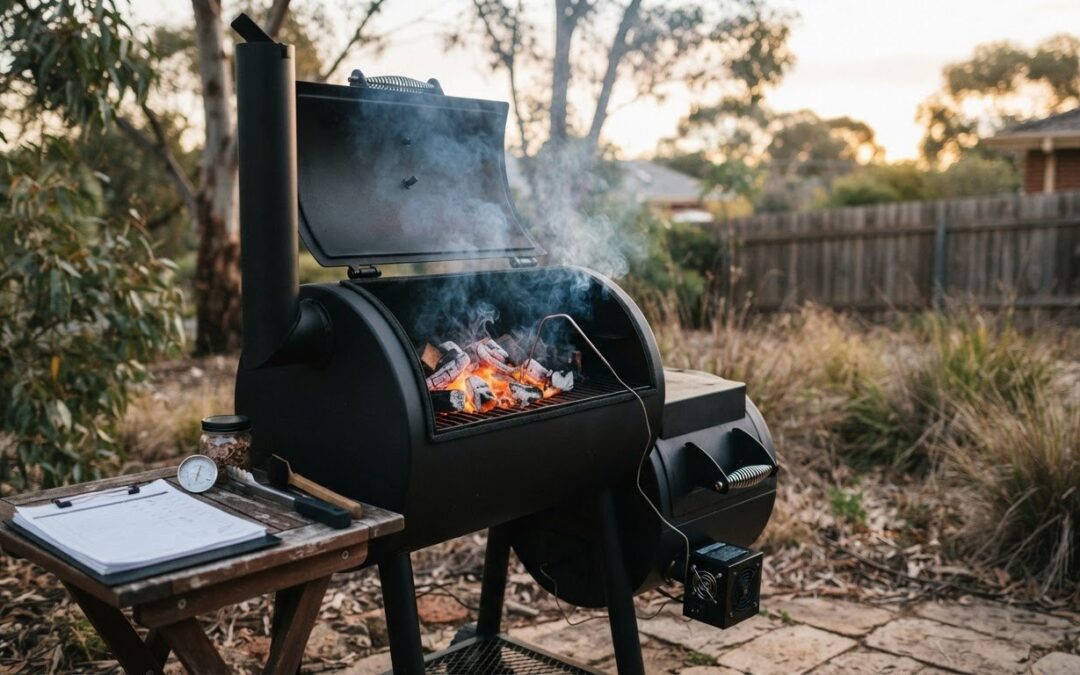
More vent adjustments won’t necessarily make a charcoal smoker hold steady. If temperatures keep climbing and dipping during a long cook, the cause may be inconsistent airflow, heat escaping through gaps, or a thermometer that isn’t reading the cooking zone accurately. The best advanced smoker mods for temperature stability start with finding the problem, not adding hardware at random.
Temperature swings are frustrating, especially when every adjustment seems to create a new one. A fan controller can help manage airflow, while a suitable gasket may reduce unintended leaks. Baffles or tuning plates can address uneven heat, and accurate grate-level readings help you tell whether a change is working. No single modification fixes every cooker. Fuel choice supports a stable setup, but it can’t replace sound airflow control.
This guide compares practical airflow, heat-retention and measurement upgrades, with steps for installing and tuning them in line with your smoker’s instructions. You’ll also learn how to build a repeatable charcoal setup, make one adjustment at a time and record the results. The goal is steadier cooks and more control, without making your smoker harder to manage.
Key Takeaways
- Diagnose whether airflow, heat loss, fuel behaviour or probe placement is driving temperature swings before choosing a modification.
- Match advanced smoker mods for temperature stability to the problem, and weigh each option’s trade-offs and compatibility with your smoker.
- Test changes methodically: record a baseline, adjust one variable at a time and compare results under similar cooking conditions.
- Use consistent fuel loading and deliberate fire management as part of a complete setup, not as a guarantee of steady temperatures.
- Choose lump charcoal or briquettes to suit your cooking approach, then use repeatable checks to refine your charcoal routine.
Why advanced smoker mods for temperature stability start with diagnosis
Temperature stability doesn’t mean a perfectly motionless gauge. It means keeping variation controlled around your chosen cooking target. A brief dip after lifting the lid differs from repeated rises and falls during an undisturbed cook. Airflow, fuel behaviour, heat escaping through the cooker, leaks and probe placement can all affect your readings. Before choosing advanced smoker mods for temperature stability, work out which factor is most likely responsible. A fan won’t fix a misplaced probe, and sealing a leak won’t correct a faulty gauge.
An insulated smoker build is one example of a design approach focused on retaining heat.
Identify the pattern before choosing a smoker modification
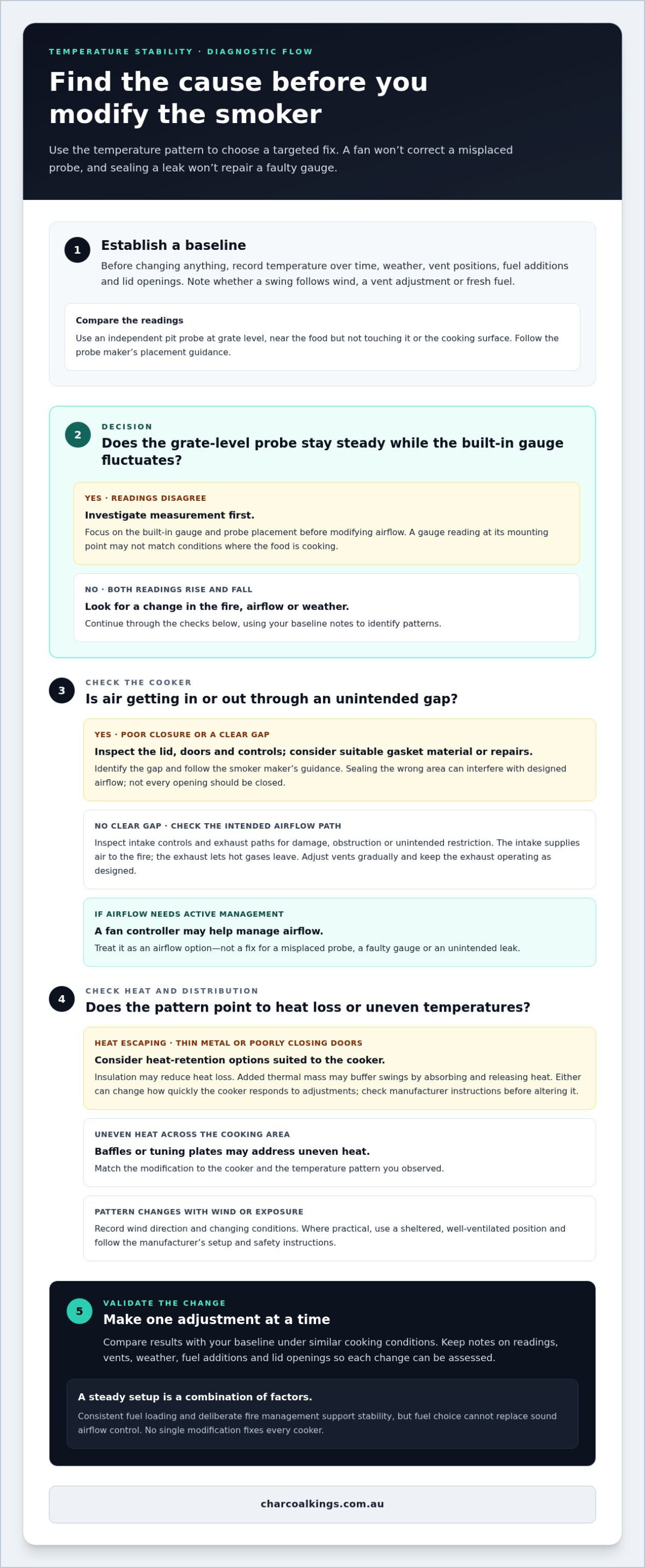
Start with a baseline cook before changing the cooker. Record the temperature over time, weather conditions, intake and exhaust vent positions, and when you add fuel. Note lid openings and whether a swing follows a gust of wind, a vent adjustment or fresh fuel. This log turns vague frustration into a pattern you can investigate. For example, if the temperature rises after each fuel addition, review your loading and fire-management routine before changing the vents.
Compare the built-in gauge with an independent pit probe positioned at grate level, near the food but not touching it or the cooking surface. Follow the probe maker’s placement guidance. If readings differ consistently, investigate measurement before modifying airflow. Temperature instability is a changing cooking environment; an inaccurate thermometer is a faulty or misleading measurement of it. If the independent probe stays steady while the built-in gauge fluctuates, focus on the gauge. If both readings rise and fall together, look for a change in the fire, airflow or weather.
Check the smoker design and cooking setup first
Inspect the lid and doors for poor closure, and check intake controls and exhaust paths for damage, obstruction or unintended restriction. Look for obvious gaps, but don’t assume every trace of escaping smoke identifies the main cause. Smoke movement can help show how air travels; probe readings indicate whether the cooking temperature is changing.
Outdoor conditions matter too. In Australian backyards, a breezy or exposed position can make fire management less predictable, and conditions may shift during a long cook. Note wind direction and changes alongside your temperature readings. Where practical, place the smoker in a sheltered, well-ventilated position while following the manufacturer’s setup and safety instructions.
On an offset, the firebox, cooking chamber and exhaust form a connected airflow path. Understanding what offset smokers are and how they work can help you recognise how a change in one part of the cooker affects the rest. For a broader overview of hot and cold smoking as cooking methods, see Smoking (cooking). Diagnose the pattern first, then choose a modification that addresses what you recorded.
How airflow, heat loss and measurement affect smoker temperature
A charcoal fire needs oxygen to keep burning. The intake vent controls how much air reaches the fuel, while the exhaust provides a path for hot gases and smoke to leave the cooker. Restricting the intake can reduce combustion; unnecessarily restricting the exhaust can interfere with the smoker’s intended draft and may lead to poor airflow. Change either control gradually, then observe the result before adjusting again.
Stable airflow depends on a balanced path: the intake supplies air, and the exhaust lets hot gases leave. A vent setting won’t tell the whole story if air is also entering through a damaged door or escaping through an unintended gap. Those leaks bypass the controls, making deliberate adjustments less predictable.
Airflow modifications: vents, dampers and leak control
Adjustable intake controls let you make small, deliberate changes to the air feeding the fire. Keep the exhaust operating as designed rather than treating a blocked outlet as a temperature fix. Exhaust-stack shape and position can influence draft, so any change should suit the cooker’s design. Before modifying the stack, check the manufacturer’s guidance and consider how the proposed change could affect the full airflow path.
Leak control serves a different purpose from vent adjustment. Dampers manage intended airflow; gaskets or repairs address air that slips past a lid or door. Before adding seals, identify where the gap is and follow the smoker maker’s guidance on suitable materials and installation. Sealing the wrong area can interfere with designed airflow, so don’t assume every opening should be closed.
Heat retention and temperature measurement
Thin metal surfaces and poorly closing doors can let heat escape, particularly when outdoor conditions change. Insulation may reduce heat loss, while added thermal mass may buffer temperature swings by absorbing and releasing heat. Both approaches can change how quickly the cooker responds to adjustments. Check the manufacturer’s instructions before altering the cooker, and assess whether a modification suits its construction and use.
Readings also depend on what and where you measure. A built-in gauge gives a quick indication at its mounting point, which may not match the temperature at the food. A grate-level pit probe tracks conditions where the cook is happening. A food probe measures the food’s internal temperature, not the smoker’s air. Placement matters: a sensor close to the fire, touching metal or exposed to direct radiant heat can report a different reading from one positioned in the cooking zone.
These distinctions help narrow the right advanced smoker mods for temperature stability: tune airflow for combustion, address unwanted heat loss, and improve measurement before assuming one upgrade will solve everything. For a complete setup, explore charcoal and smoker gear alongside sound airflow practices.
Compare advanced smoker mods by the temperature problem they solve
The right modification depends on the pattern you’ve diagnosed. A smoker that responds poorly to vent adjustments has a different problem from one that loses heat through gaps or gives inconsistent readings. Use this comparison to shortlist options, not as a promise of a particular result. Check the smoker manufacturer’s instructions before changing vents, adding insulation or fitting a controller.
| Problem | Modification category | Likely benefit | Trade-off | Compatibility check |
|---|---|---|---|---|
| Intake control feels imprecise | Adjustable intake damper | Allows more deliberate airflow changes | Still requires monitoring and tuning | Confirm fit and intended airflow direction |
| Draft is poor or inconsistent | Exhaust control or stack adjustment | May help restore a more suitable draft | Changes can disrupt the cooker’s normal airflow | Follow smoker-specific exhaust guidance; don’t block the outlet |
| Air bypasses the vents | Leak repair or suitable gasket | Helps airflow respond to intended controls | Incorrect sealing can interfere with designed airflow | Check closure points and approved materials |
| Heat escapes through the body | Insulation or added thermal mass | May reduce heat loss or buffer swings | Can change response time and add installation demands | Check construction, weather tolerance and safe clearances |
| Fire needs frequent manual correction | Fan-assisted temperature controller | Can regulate airflow in response to temperature readings | Adds power, setup and probe-placement requirements | Verify smoker, fan and controller compatibility |
Choose airflow changes when combustion control is the issue
If a damper is stiff, damaged or offers little usable adjustment, an appropriate adjustable intake may make small changes easier to manage. Repairing a leak has a different purpose: it helps stop air bypassing the intended controls. Exhaust adjustments should preserve the smoker’s designed path for gases to leave. Vent drilling or welding is permanent, so confirm the design guidance before cutting. Reversible repairs are easier to assess and undo.
Choose heat-retention or control upgrades for different symptoms
Insulation may suit a cooker that sheds heat readily, but material choice and placement matter. Consider outdoor weather tolerance and clearance from combustible surfaces, and give the smoker maker’s instructions priority. A fan-assisted controller can make airflow corrections based on a pit probe, but it needs a suitable power source and setup. A PID controller isn’t automatically right for every charcoal smoker: the cooker must support its control method, fan arrangement and temperature-sensing setup.
Use the table to narrow the options, then test one change at a time. Start with reversible adjustments where possible. Permanent alterations can affect airflow, clearances and how the cooker behaves, so treat them as design changes rather than quick fixes. The most effective advanced smoker mods for temperature stability address a specific cause while keeping the full airflow and measurement system in view.
Install and tune smoker modifications with a repeatable test process
A modification is only useful if it solves the problem you observed. Test changes methodically, and keep a simple log so you can compare the cooker’s behaviour before and after. Weather, fuel and cooking conditions can make tests difficult to compare, but clear notes help separate a genuine improvement from a one-off fluctuation.
Make one change at a time and test its effect
Use this sequence for each adjustment. Keep the test focused, and don’t change several settings at once.
- 1. Document the baseline. Before modifying anything, note the vent positions, fuel arrangement, probe location and temperature pattern. Record ambient conditions, including wind exposure and weather changes during the cook.
- 2. Choose one change. Adjust a single vent setting or install one suitable modification. If you change the intake, add a gasket and reposition a probe together, you won’t know which change affected the result.
- 3. Test under comparable conditions. Use a similar cooker setup and cooking approach where practical. Keep probe position consistent, and log lid openings, fuel additions and adjustments. A different wind direction or ambient temperature can affect the comparison, so record those differences rather than treating the test as like-for-like.
- 4. Record the response. Track how the pit temperature changes over time, not just a single reading. Allow readings to settle after an adjustment before making another one. Rapid corrections can cause oversteering, where one change prompts another before its effect is clear.
- 5. Decide what to do next. Compare the new pattern with your baseline. Keep the change if it addresses the original symptom without creating a new control problem. If the result is unclear, repeat the test or return to the previous setup before trying another variable.
Check safety, fit and compatibility before a permanent mod
Follow the smoker manufacturer’s instructions for approved accessories, materials and clearances. Avoid drilling, wiring or fabrication based on a generic guide; a change that suits one cooker can interfere with another’s design or safe operation. Before each cook, check that probes and cables are secure, clear of hot surfaces and positioned away from moving parts. Use powered controllers only as directed by their manufacturer.
Reliable testing starts with sound fire management. Build a repeatable routine by following your smoker’s instructions for lighting, loading and managing charcoal before judging what a modification changes. Fuel selection is another part of the setup, but it can’t replace controlled airflow or careful testing.
Use the same method to evaluate advanced smoker mods for temperature stability: establish a baseline, isolate one change and keep a record. Once your test points to a suitable fuel and smoker setup, explore charcoal and smoker gear to support your next cook.
Build a stable charcoal-smoker setup with the right fuel and final checks
Once you’ve addressed a specific cause of temperature swings, keep the rest of the setup consistent. Fuel choice, loading and fire management all affect how a charcoal smoker behaves, but none can guarantee a steady temperature on its own. Treat fuel as one part of the system, alongside airflow, heat retention and accurate readings.
Make fuel and fire management part of the system
For useful comparisons, stick with the same fuel type and a similar loading method where practical. Lump charcoal consists of hardwood pieces that vary in shape; briquettes offer a more uniform format. Either may suit your approach. Choose lump if you prefer cooking with hardwood pieces, or briquettes if a consistent shape makes it easier to repeat a familiar arrangement. Neither is universally best, and neither replaces deliberate vent control.
Changing fuel types during a test, or adding fuel at a different point in each cook, makes results harder to compare. Record what you use, how you arrange it and when you add more. Keep smoking wood separate in your notes: it’s a flavour choice, not a temperature-stability modification. Start with the smoker maker’s instructions for fuel use and fire management.
Know when the setup is stable enough for a cook
A practical goal isn’t a perfectly fixed reading. It’s a cooker that responds predictably: small control adjustments produce gradual, understandable changes, and the temperature remains manageable around your chosen target. Repeatability matters more than eliminating every brief fluctuation. Keep successful vent positions, fuel arrangement, probe placement and relevant weather conditions in a simple cook log, then use those notes to recreate the setup.
Before cooking, run through this final checklist:
- Airflow: Intake and exhaust paths are clear, and controls move as expected.
- Fuel: Use the planned type and arrangement; note any additions during the cook.
- Probe: Position the pit probe consistently in the cooking zone, clear of food and metal.
- Weather: Record wind exposure and changing outdoor conditions that may affect the test.
- Results: Review the temperature pattern and settings from previous cooks, then change one thing at a time.
This repeatable routine helps you judge whether advanced smoker mods for temperature stability are working as intended, or whether the next adjustment should target a different part of the setup. For your next cook, Explore charcoal and BBQ gear to find fuel and smoker equipment that fits your approach.
Make your next cook a more controlled one
Your next improvement doesn’t have to start with a major rebuild. Choose one change that addresses a clear temperature-control issue, then use your cook log to decide whether it earns a permanent place in your setup. That measured approach helps you get more from advanced smoker mods for temperature stability without adding complexity you don’t need.
Keep refining the details that make your smoker predictable, from the fuel you load to the gear you rely on. Charcoal Kings supplies hardwood lump charcoal, briquettes and smoking woods, with BBQ smokers and accessories alongside its charcoal products. Fuel is one part of the system, but the right setup begins with your cooker and how you manage it.
Explore charcoal and BBQ gear at Charcoal Kings for fuel, smokers and accessories to support your next cook. Choose the products that suit your setup, make deliberate adjustments, and build confidence through a routine you can repeat.
Frequently Asked Questions
Can I use advanced temperature-control modifications on any charcoal smoker?
No. Suitability depends on the smoker’s construction, airflow design and manufacturer guidance. A fan controller designed for one cooker may not attach or regulate airflow correctly on another, while a vent change can affect a drum, kettle or offset differently. Check the appliance instructions and accessory requirements before fitting anything. Start with a reversible option where possible, then test it on your smoker before using it for a long cook.
Does a smoker modification remove the need to monitor a long cook?
No. Keep monitoring the pit and food, even if a modification reduces manual adjustments. A controller can’t identify every issue, such as a probe that has shifted or a fire that needs attention. Check the cooker after opening the lid, adding fuel or noticing a change in conditions. Continue to follow safe operating practices throughout the cook, and don’t treat remote readings as a substitute for checking the smoker itself.
Will a temperature controller fix every charcoal smoker temperature swing?
No. A controller adjusts airflow based on its probe, so it may not resolve swings caused by a poorly placed sensor, air leaks or a cooker design that doesn’t suit the device. Before buying or fitting one, confirm the smoker and controller are compatible and follow both sets of instructions. Include the controller in a supervised test cook first. Advanced smoker mods for temperature stability work best when they address a cause the cooker actually has.
Is it safe to drill new vents into a smoker to improve temperature control?
Don’t drill new vents based only on a generic guide. Cutting can affect the smoker’s structure, airflow and heat exposure, and may affect its warranty. Check the manufacturer’s instructions before considering any permanent alteration. If a proposed change involves fabrication or electrical components, use appropriate expertise and follow applicable safety requirements. Test any approved modification outdoors, under supervision, and in line with the appliance instructions before relying on it during a cook.
How often should I check my smoker thermometer against a separate probe?
Compare readings when you set up a new smoker, change probe placement or suspect a gauge is inaccurate. Put the independent probe at a representative cooking position, then allow readings to settle before comparing them. A built-in gauge and a grate-level probe may differ because they measure separate parts of the chamber. Follow the probe manufacturer’s calibration and care instructions, and use the same probe position for later checks.
Can wind affect temperature stability even after I modify my smoker?
Yes. Wind can affect airflow near the intake and exhaust and contribute to heat loss, so a modification won’t remove every weather-related change. In an Australian backyard, note whether the smoker is exposed or sheltered and whether the breeze shifts during a cook. Where practical, choose a sheltered outdoor position that preserves safe clearance and ventilation. Comparing cooks in similar conditions makes it easier to judge whether a modification helped.