The snags are ready, the mates are on their way, but your charcoal is giving up the ghost. It’s a common, frustrating problem that leaves even seasoned grillers asking, why is my charcoal not staying lit? You’ve wasted time, potentially another bag of premium charcoal, and now the entire barbie is at risk. This isn’t about luck or some secret technique passed down through generations; it’s about understanding the fundamentals of a good fire.
Forget the wasted effort and the disappointment of a failed cook. This no-nonsense guide is your expert diagnosis. We will cut through the misinformation to pinpoint the three core reasons your fire is failing you. We’ll then arm you with a foolproof, repeatable method using quality natural hardwood charcoal to achieve a consistent, long-lasting burn. By the end of this article, you’ll have the confidence and knowledge to light your grill perfectly, every single time. It’s time to take control of the flames.
Key Takeaways
- The #1 cause of a dying fire is often your fuel. Discover the simple test to see if your charcoal has absorbed moisture and is sabotaging your cook.
- Your grill’s vents are the accelerator for your fire. Learn the correct way to use both top and bottom vents for consistent, high heat and complete control.
- Your lighting method is critical for generating enough initial heat. We’ll show you the professional technique that guarantees a strong start without the chemical taste of lighter fluid.
- Understanding the Fire Triangle (Heat, Fuel, Oxygen) is the key to diagnosing why is my charcoal not staying lit every single time.
The Fire Triangle: Understanding Why Your Charcoal Goes Out
The frustration of a dying fire is a familiar one. You’ve done everything right, but your coals just won’t cooperate. If you’re asking yourself, “why is my charcoal not staying lit?”, the answer almost always comes down to basic fire science: The Fire Triangle. Every successful fire, from a campfire to the premium lump charcoal in your grill, requires three things to burn: Heat, Fuel, and Oxygen. When your charcoal goes out, one of these critical elements is missing or insufficient. This guide is your diagnostic tool to pinpoint the failure and fix it for good.
Before we break down the elements, see how these principles apply in a real-world scenario.
Understanding that triangle is the first step. Now, let’s move beyond frustration and start troubleshooting like a professional. The problem with your fire is either the fuel you’re using or the oxygen it’s receiving. By identifying which element is failing, you can apply the correct fix and get back to grilling with consistent, reliable heat.
Element 1: The Fuel Problem
Your charcoal is the heart of the fire, but not all fuel is created equal. The issue could be that your charcoal is damp from improper storage, low-quality and full of fillers, or simply the wrong type for your specific cook. Poor fuel struggles to generate enough initial heat and cannot sustain it. Understanding what charcoal is made of reveals why moisture and additives are the enemies of a long, consistent burn. We will cover fuel quality in-depth in the next section.
Element 2: The Oxygen Problem
Charcoal needs to breathe. A fire starved of oxygen will suffocate and die out, no matter how good your fuel is. This is the most common reason why charcoal is not staying lit for beginners and pros alike. The culprit is usually a lack of airflow caused by closed or improperly set vents, a thick bed of old ash blocking air from below, or arranging your charcoal so tightly that air cannot circulate. This is a simple mistake, but it’s also the easiest to fix once you know what to look for.
Diagnosis Step 1: Is Your Fuel Sabotaging Your Fire?
Before you blame your technique or your barbecue, inspect your fuel. The most common reason a fire fails is poor quality or damp charcoal. If you’re constantly asking why is my charcoal not staying lit, the answer is often found in the bag itself. Charcoal is porous and acts like a sponge, absorbing moisture directly from the humid air common across Australia. This forces your coals to waste precious energy boiling off water instead of generating grilling heat, a fundamental principle in the science of combustion. A weak, smoky, and frustrating fire is the result.
Lump Charcoal vs. Briquettes: Key Differences in Performance
Not all charcoal is created equal. Cheap briquettes are often manufactured with fillers and chemical binders to hold their uniform shape. While consistent in size, they produce a significant amount of ash that can smother your fire by blocking essential airflow. For reliable performance, premium lump charcoal is the superior choice.
- Lump Charcoal: 100% natural hardwood. Burns hotter and cleaner with minimal ash. The irregular shapes create better airflow for a more consistent fire.
- Briquettes: Made from compressed sawdust with binders. Burns uniformly but produces excessive ash, which can choke the coals and stall your cook.
For a fire that lights easily and burns strong, always choose a 100% natural hardwood lump charcoal.
Proper Charcoal Storage: The Easiest Way to Guarantee a Good Fire
Protect your investment and guarantee performance with proper storage. Never leave a bag of charcoal open to the elements or sitting on a concrete floor, which can leech moisture. Instead, transfer your fuel into a sealed, waterproof container and store it in a dry place like a garage or shed. If you suspect your charcoal is damp, try spreading it on a tarp in direct sun for a few hours to dry it out.
Can Charcoal Be Too Old?
While charcoal doesn’t technically expire or go bad like food, its performance degrades significantly over time. Old charcoal that has been stored improperly for months or years will have absorbed a lot of moisture, making it incredibly difficult to light and keep burning. Starting with a fresh, dry bag of high-quality lump charcoal solves half the problem before you even strike a match.
Diagnosis Step 2: Are You Suffocating Your Coals?
Think of oxygen as the accelerator pedal for your fire. Without a steady, reliable supply, even premium natural hardwood charcoal will smoulder, cool, and die out. A lack of airflow is one of the most common and frustrating answers to the question, “why is my charcoal not staying lit?”.
On any standard kettle grill or smoker, your vents are the key to controlling this airflow. They are not just for show. Understanding their function is non-negotiable for mastering your fire.
- Bottom Vents: These are the intake. They feed fresh oxygen directly to the burning coals from below. More air here means a hotter, faster-burning fire.
- Top Vents: This is the exhaust. It pulls hot air and smoke up and out of the grill, which in turn helps draw fresh air in through the bottom vents. It is your primary tool for temperature regulation.
The cardinal rule is simple: always start the lighting process with all vents fully open to maximise airflow when the fire is most vulnerable.
Mastering Your Vents for Maximum Airflow
Before you even think about lighting your charcoal, your first job is a physical inspection. Empty the ash catcher and sweep out any old ash from the bottom of your grill. A clogged ash screen or a full pan of old debris will physically block the vents, effectively choking your fire before it even starts. When you light charcoal with all vents wide open, you create a powerful ‘chimney effect’. Cool, oxygen-rich air is drawn in through the bottom, superheating the coals, and the resulting hot air is pulled out through the top. This constant draw is fundamental to how fire actually works; it’s a self-sustaining reaction that requires a clear path.
Arranging Charcoal for Proper Airflow
The physical arrangement of your fuel is just as critical as your vents. Whether you use a chimney starter or build a pile directly in the grill, never pack the charcoal down tightly. Each piece needs breathing room. The irregular shapes of natural lump charcoal are perfect for this, creating natural gaps and channels for air to circulate freely and fuel the combustion process. This is another reason why a two-zone fire is so effective-by banking your hot coals to one side, you naturally create an open, organised structure that promotes superior airflow compared to a scattered, flat layer.
Diagnosis Step 3: Perfecting Your Lighting Technique
How you light your fuel is the foundation of your entire cook. A weak, inconsistent start will inevitably lead to a fire that struggles and dies out. If you’re constantly asking “why is my charcoal not staying lit?”, your lighting method is a primary suspect. The goal is to generate a powerful, self-sustaining core of heat that spreads evenly through the rest of the fuel.
First, abandon the lighter fluid. It imparts a harsh, chemical flavour to your food and burns off far too quickly to properly ignite dense, natural hardwood charcoal. It provides a flash of heat, not the deep, penetrating fire required for a stable cook.
The Foolproof Chimney Starter Method
The chimney starter is the most reliable and cleanest way to guarantee perfectly lit charcoal every time. It uses the principle of convection to create intense heat quickly and evenly. There are no shortcuts to a great fire.
- Step 1: Fill the chimney starter with your desired amount of premium lump charcoal. Do not overfill.
- Step 2: Place one or two natural firelighters or some crumpled newspaper on the grill’s charcoal grate and light them.
- Step 3: Position the chimney starter directly over the lit firelighters. The flames will be drawn upwards through the charcoal.
- Step 4: Wait. This is not a step to be rushed. Allow 15-20 minutes for the charcoal to light properly.
Knowing When Your Coals Are Ready
Patience is critical. One of the most common lighting mistakes is dumping the coals from the chimney too early. This is a major reason why your charcoal is not staying lit, as the partially lit coals on top will quickly smother the properly lit ones at the bottom, extinguishing your fire before it even begins.
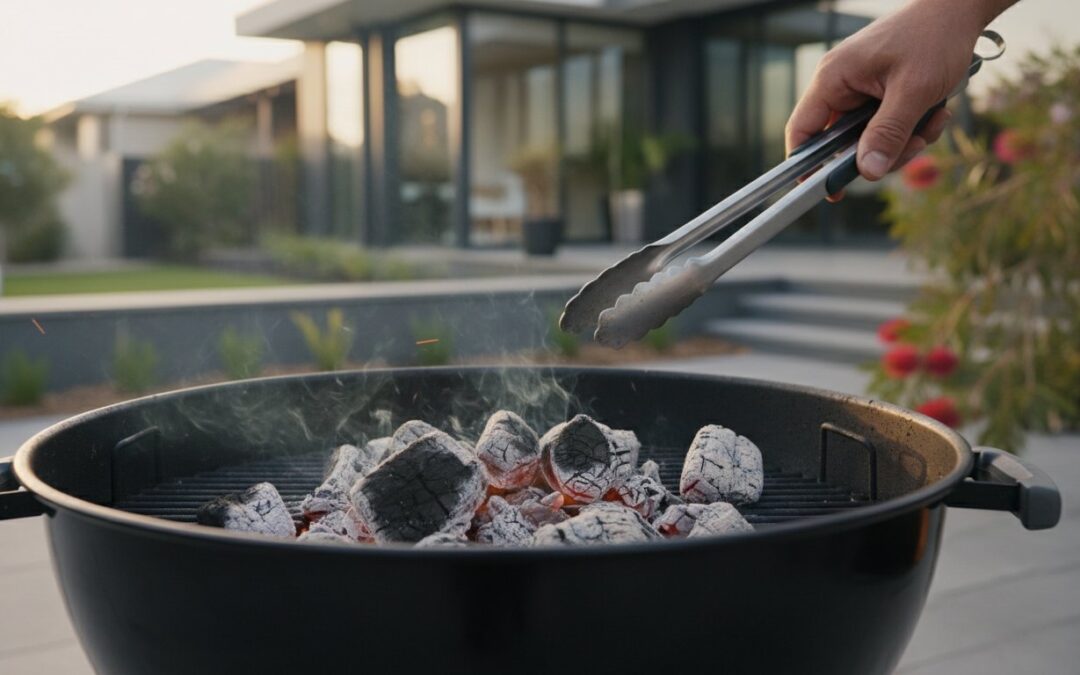
Look for these clear visual cues before you pour the coals into your grill. You need to see a thin layer of white or grey ash covering the top layer of charcoal in the chimney. Peeking through the vents, you should also see a brilliant orange glow from the embers deep inside. When the top coals are ashed over, you have a self-sustaining fire ready for cooking.
Your Checklist for a Fire That Never Fails
We’ve diagnosed the common culprits behind a fire that fizzles out. To eliminate the guesswork for good, use this simple checklist before every cook. Following these steps systematically addresses the most frequent reasons people ask, “why is my charcoal not staying lit?” and ensures you build a strong, reliable fire from the start.
Pre-Cook Checklist
Run through these three critical points before you even think about putting food on the grill. Getting them right is 90% of the battle.
- Fuel Check: Is my charcoal bone-dry and stored correctly? Am I using a premium, all-natural hardwood lump charcoal or a high-quality briquette? Avoid cheap briquettes loaded with fillers and binders that inhibit airflow and burn inconsistently.
- Airflow Check: Are my barbecue’s bottom and top vents completely open? Is the ash catcher or firebox clear of old ash and debris that can choke the fire from below?
- Method Check: Am I using a chimney starter to light a sufficient amount of charcoal? Have I waited for the top coals to be mostly covered in a layer of white-grey ash before pouring them into the grill? Patience here is key.
Stop Fighting Your Fuel. Start Grilling.
You can perfect your technique and keep your grill spotless, but if your fuel is poor, you will always be fighting an uphill battle. The easiest way to guarantee a consistent, long-lasting fire is to start with superior fuel. Think of it not as an expense, but as a critical investment in a successful cookout.
Controlling fuel quality is the single most effective solution for anyone wondering why is my charcoal not staying lit. Our premium hardwood lump charcoal is 100% natural and professionally kiln-dried for a pure, reliable burn without the chemical additives. It delivers the consistent, high heat you need to stop troubleshooting and start grilling.
Shop our premium charcoal and experience the difference a quality foundation makes.
Master Your Fire: The Final Word on Lasting Coals
The frustration of a dying fire can ruin any barbecue. By now, you have the expert diagnosis. The answer to why is my charcoal not staying lit almost always comes down to mastering the fire triangle: unrestricted airflow to let your coals breathe, a patient lighting technique to establish a solid heat base, and most importantly, superior fuel. A fire is only as good as the charcoal it burns. Low-grade, chemical-filled briquettes or damp lump charcoal will always sabotage your efforts, no matter how perfect your setup.
It’s time to eliminate the guesswork and take control of the most critical variable. Stop fighting your fuel. Get a consistent burn every time with our premium hardwood charcoal. Our 100% Natural Hardwood Lump Charcoal is meticulously crafted to perform, giving you a fire that burns hotter, longer, and cleaner. It is the trusted choice for retail, wholesale, and food service professionals across Australia for one simple reason: it delivers consistent, reliable results.
Armed with this knowledge and the right fuel, you’re no longer just lighting a grill-you’re commanding the fire. The perfect cook is now within your grasp.
Frequently Asked Questions
How do I know if my charcoal has gone bad or is damp?
Damp charcoal is a primary reason why your charcoal is not staying lit. It will have a dull, matte appearance, feel heavy, and may produce excessive white smoke or a hissing sound when lit. Quality, dry charcoal is shiny, feels light, and ignites with a crisp sound. To guarantee a reliable fire, always store your premium natural charcoal in a sealed, waterproof container in a dry area like a garage or shed, away from the Aussie humidity.
Is it okay to add more charcoal while I’m cooking?
Yes, adding charcoal during a long cook is standard practice. For best results, light the new charcoal in a chimney starter first. Once it is ashed over, add it to the lit coals in your grill. This technique maintains a consistent cooking temperature and prevents the bitter smoke that unlit charcoal produces. Dumping fresh charcoal directly onto your food can smother the fire and ruin the flavour profile you’re working to create.
Why does my charcoal spark so much when I light it?
Sparking is caused by the rapid release of trapped air and moisture from the original hardwood. While some sparking is normal for natural lump charcoal, an excessive amount indicates high moisture content or lower-quality fuel with impurities. Premium, properly cured hardwood charcoal is denser and contains less moisture, resulting in a cleaner, more stable burn with minimal sparking. This ensures a safer and more predictable grilling experience from the start.
Can I reuse charcoal that hasn’t fully burned out?
Absolutely. Reusing partially burned charcoal is an efficient way to get the most from your fuel. After you finish cooking, close all the vents on your grill. This cuts off the oxygen supply and extinguishes the coals, preserving them for next time. Before your next cook, simply shake the excess ash from the old pieces and add them to a fresh batch of lump charcoal. This method ensures you use every last bit of high-quality fuel.
How long should it take for charcoal to be ready in a chimney starter?
Using a chimney starter, your charcoal should be ready for cooking in approximately 15 to 20 minutes. The visual cue is a layer of light grey ash covering the top layer of charcoal, with a strong orange glow visible deep inside the chimney. Pouring the coals too early is a common mistake that leads to a weak fire that struggles to stay hot. Patience at this stage is key to establishing a solid, long-lasting heat source.
What’s the best way to light charcoal without a chimney?
The pyramid method is the most effective technique without a chimney. Stack your charcoal in a pyramid shape on the charcoal grate. Tuck one or two natural firelighters into the base of the pile and light them. The pyramid structure promotes airflow, allowing the fire to catch and spread upwards through the coals. Once the coals at the top are covered in grey ash, you can carefully spread them out to create your cooking zones.
Why does my charcoal burn out so fast?
Charcoal that burns too quickly is typically caused by two factors: excessive airflow or poor-quality fuel. If your grill vents are fully open, the fire will burn extremely hot and consume the charcoal rapidly. Adjust your vents to control the temperature and extend the burn time. Additionally, low-density charcoal or briquettes with fillers burn out fast. Using a premium, natural hardwood lump charcoal provides a much longer, more consistent burn.