
You’ve prepped the perfect brisket, dialled in the smoker, and settled in for a 12-hour cook. But there’s a nagging worry: will the fire last? Waking up to refuel, battling temperature spikes, and cleaning out ash-clogged vents are the enemies of great barbecue. The secret to mastering your smoker isn’t constant babysitting; it’s superior fuel. Choosing the right long burning charcoal for low and slow cooking is the single most important decision you’ll make for achieving that set-and-forget confidence every pitmaster craves. It’s the difference between a frustrating cook and a flawless result.
This guide cuts through the smoke. We’re breaking down the science behind what makes charcoal burn longer and cleaner. You’ll learn how to identify premium hardwood lump and briquettes, understand the impact of density and carbon content, and ultimately, select the perfect fuel for a stable, all-day burn. It’s time to master the fire, stop wasting money on inferior charcoal, and produce consistently incredible barbecue without losing sleep.
Key Takeaways
- The secret to a long, stable burn isn’t magic-it’s science. Discover how charcoal density, carbonization, and piece size directly impact its performance in your smoker.
- Go beyond the basic lump vs. briquettes debate. Learn which fuel type is truly engineered for endurance to maintain stable heat during marathon cooks.
- Select the ultimate long burning charcoal for low and slow by identifying the specific Australian hardwoods known for their superior density and extended burn times.
- Double your charcoal’s burn time without adding more fuel. Master advanced fire management techniques designed for maximum efficiency and stable, all-day heat.
Why Your Charcoal Burns Out: The Low and Slow Challenge
You’ve sourced a prime-grade brisket from your local butcher, spent hours on the rub, and cleared your weekend. The last thing you need is your fuel giving up halfway through an 18-hour cook. The core challenge of low and slow barbecue isn’t just heat; it’s endurance. Maintaining a rock-solid 110-120°C for the better part of a day separates the masters from the amateurs. Constant refueling with cheap, fast-burning charcoal is a recipe for disaster, ruining expensive cuts of meat and wasting your time.
To get your fuel setup right from the start, this video explains the fundamental ‘less is more’ approach:
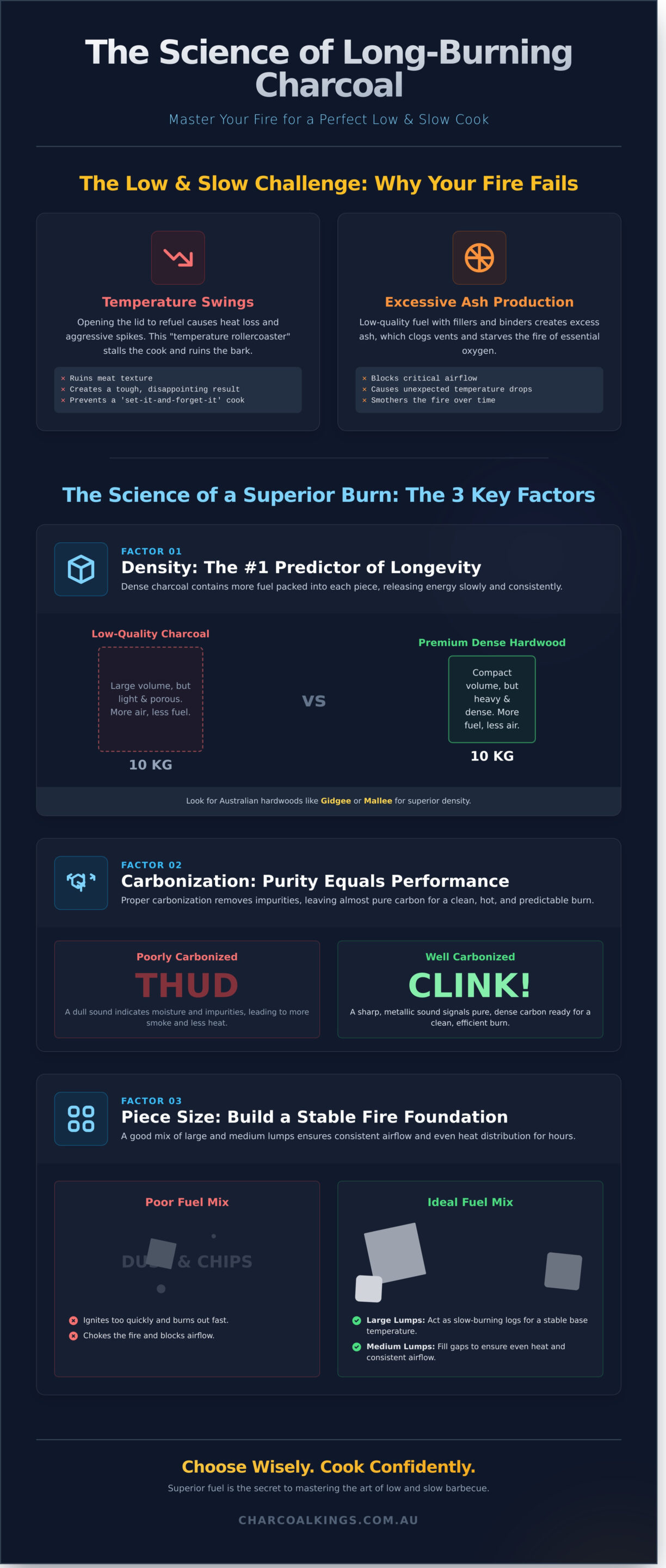
Temperature Swings: The Enemy of Perfect Bark
Every time you open that smoker lid to add more fuel, you lose critical heat and moisture. Your cooker’s temperature plummets, only to spike aggressively as the new charcoal ignites. This temperature rollercoaster ruins the texture of your meat, leading to a stalled cook and a tough, disappointing result. The ultimate goal is a true ‘set it and forget it’ experience, which is only possible with a premium, long burning charcoal for low and slow that provides stable, predictable heat for hours on end.
Ash Production and Its Impact on Airflow
The other silent killer of a long cook is excessive ash. Low-quality charcoal is often packed with fillers, binders, or is made from softwood that hasn’t been properly carbonized. Understanding The Science of Charcoal production reveals why premium hardwood creates so little waste. This excess ash builds up in your firebox, clogging air vents and slowly starving the fire of oxygen. A choked fire is a dying fire, causing your temperatures to drop off unexpectedly. A key feature of superior smoking fuel is minimal ash production, ensuring consistent airflow and stable temperatures from start to finish.
The Science of a Long Burn: Density, Carbonization, and Size
Choosing the right charcoal isn’t guesswork. It’s about understanding the physical properties that separate premium fuel from fast-burning filler. Knowing what to look for-by sight and by feel-makes you a smarter buyer and a better pitmaster. The secret to a consistent 12-hour cook lies in the science of the wood itself, delivering the performance you need for a perfect result every time.
Density: The Number One Factor for Longevity
The single most important trait for a long burning charcoal for low and slow is density. Dense Australian hardwoods like Gidgee or Mallee contain more wood fibre-and therefore more fuel-packed into every single piece. This means a denser charcoal releases its energy slowly and consistently over many hours. A simple test? Pick up a bag. A 10kg bag of premium, dense lump charcoal will often feel heavier and more compact than a bag of the same weight filled with lighter, porous wood. You are paying for fuel, not air.
Carbonization Level: Turning Wood into Pure Fuel
Proper carbonization is what transforms raw wood into pure, high-performance fuel. The process, detailed in the science of charcoal-making, uses intense heat in a low-oxygen environment to burn off water, sap, and other volatile compounds. What’s left is almost pure carbon. More carbon means a cleaner, hotter, and more predictable burn with less smoke. You can often identify well-carbonized charcoal by its sound; when two pieces are knocked together, they should produce a sharp, metallic “clink,” not a dull thud.
Piece Size and Consistency: Fueling for the Long Haul
A bag full of dust and tiny chips is useless for a serious cook. For truly long burns, you need a good mix of large and medium-sized lumps to create a stable and efficient fire.
- Large Lumps: These are your foundation. They act like slow-burning logs, providing a stable base temperature for hours on end.
- Medium Lumps: These fill in the gaps between the larger pieces, ensuring even heat distribution and consistent airflow through your cooker.
Too many small pieces will ignite quickly, burn out fast, and choke your fire by blocking vital airflow. This leads to frustrating temperature spikes and eventual flameouts. Always inspect a bag for minimal dust and a healthy ratio of large, usable pieces of charcoal.
Fuel Showdown: Lump vs. Briquettes for Marathon Cooks
When your cook stretches past the eight-hour mark, fuel selection isn’t just a preference-it’s a critical part of your strategy. The debate between lump charcoal and briquettes is a classic, but for endurance cooking, the differences are magnified. We’re breaking down which fuel source has the stamina for a true marathon, providing the best long burning charcoal for low and slow performance.
Hardwood Lump Charcoal: The Natural Choice
Made from pure, carbonised hardwood with no additives, lump charcoal is the purist’s fuel. Its high carbon density means it burns hotter and cleaner than its manufactured counterpart. The quality of lump is directly tied to the wood it’s made from and its production process; key charcoal quality characteristics like fixed carbon content and low volatile matter are what deliver a long, efficient burn with minimal ash.
- Pros: High heat potential, very low ash production, and a clean, natural wood smoke flavour.
- Cons: Irregular shapes and sizes can create air gaps in your firebox, leading to unpredictable temperature spikes if not managed carefully.
- Best For: Experienced pitmasters who prioritise a pure flavour profile and are comfortable managing an active fire.
Charcoal Briquettes: The Consistency Kings
Briquettes are manufactured by compressing charcoal dust and other materials with a binder. Their uniform, pillow-like shape is their greatest asset, allowing them to be stacked neatly for a remarkably stable and predictable burn that is easy to control.
- Pros: Consistent size provides a very steady, reliable temperature, making them incredibly easy to manage.
- Cons: Can produce significantly more ash, which can choke out a fire in some smokers. Binders in lower-quality brands can impart an off-flavour.
- Best For: Beginners, set-and-forget cooks, or those using methods like the “snake method” in a kettle grill where uniformity is paramount.
| Feature | Lump Charcoal | Briquettes |
|---|---|---|
| Burn Time | Variable, but premium is longer | Consistent and predictable |
| Temp Stability | Can spike without management | Very stable |
| Ash Production | Very Low | High |
| Flavour Profile | Clean, natural smoke | Neutral to chemical (brand dependent) |
The Verdict for Low & Slow
For the ultimate marathon cook, premium hardwood lump charcoal is the undisputed champion. Denser, high-quality lump provides the ideal combination of burn time, efficiency, and clean flavour that professionals demand. While briquettes offer excellent stability, their higher ash content can be problematic in smokers that lack robust airflow, potentially smothering the fire over many hours. However, they remain a solid choice for certain setups and for those who value predictability above all else.
Ready to fuel your next marathon cook with the best? Explore our range of premium hardwood lump charcoal.
Australia’s Heavyweights: Top Hardwoods for Low and Slow
When it comes to authentic low and slow barbecue, the fuel you choose is just as critical as the cut of meat. Not all hardwood charcoal is created equal. Australia is home to some of the world’s densest timbers, which produce a superior long burning charcoal for low and slow cooking. These premium hardwoods deliver the sustained, consistent heat required to break down tough collagens into tender, flavourful masterpieces over many hours.
Gidgee Charcoal: The Undisputed Long-Burn Champion
Often hailed as one of the densest woods on the planet, Gidgee (Acacia cambagei) is the pinnacle of performance. This premium charcoal produces an incredibly hot, stable, and long-lasting burn with minimal smoke and ash. Its clean combustion makes it the perfect fuel for marathon cooks like a 12-hour brisket or a full pork shoulder, where consistent temperature control is non-negotiable.
Mallee Root Charcoal: The Reliable All-Rounder
Sourced from the root ball of the Mallee Eucalyptus, this charcoal is another exceptionally dense and reliable fuel. It provides a very consistent, long burn that pitmasters can depend on for hours. Mallee Root imparts a slightly milder, more subtle smoke flavour compared to Gidgee, making it a fantastic all-purpose choice for everything from lamb shoulders and beef ribs to whole chickens.
Ironbark and Red Gum: Other Notable Contenders
Beyond the top two, other Australian hardwoods offer excellent performance. Both Ironbark and Red Gum are premium options that provide great results for low and slow cooking, giving you more choice based on availability and flavour preference.
- Ironbark: Known for its high heat output and a distinct, classic smoke flavour that pairs perfectly with beef. Its burn time is impressive, though slightly shorter than Gidgee.
- Red Gum: A popular and widely available choice, Red Gum offers a solid burn time and a balanced, medium smoke flavour that complements a wide variety of meats, especially lamb and pork.
Choosing between these heavyweights often comes down to the flavour profile you’re after and the duration of your cook. For the ultimate endurance, Gidgee is unmatched. For versatility, Mallee is a workhorse. To achieve authentic barbecue results, always start with 100% natural, chemical-free premium hardwood charcoal that respects both the food and the fire.
Fire Management Techniques to Double Your Burn Time
Selecting a premium fuel is only half the battle. To truly master the art of barbecue, your technique must be as refined as your charcoal. The right fire arrangement is crucial for maximising efficiency, minimising fuel consumption, and achieving a rock-solid temperature for hours on end. Using the correct method with a quality long burning charcoal for low and slow cooking will transform your results.
These proven techniques are designed specifically for extended, stable burns in different types of smokers.
The Minion Method: For Kettle and Kamado Smokers
This “set and forget” method creates a slow, controlled burn that can last over 12 hours. It works by lighting only a small amount of charcoal, which gradually ignites the surrounding unlit fuel.
- Step 1: Fill your charcoal basket with unlit Charcoal Kings lump charcoal or briquettes, leaving a small well in the centre.
- Step 2: Place 8-10 fully lit coals into the well you created.
- Step 3: Add your wood chunks on top of the unlit charcoal around the lit coals. They will begin to smoulder as the fire slowly spreads, providing consistent smoke throughout the cook.
The Snake Method: Ultimate Control for Long Cooks
Perfect for overnight cooks in a kettle grill, the Snake Method provides a very slow, predictable, and long-lasting fire. You are essentially building a long fuse of charcoal that burns from one end to the other.
Arrange your briquettes in a C-shape around the inside edge of the grill, typically two briquettes wide and two high. Place wood chunks along the top of the snake. Light 6-8 coals and place them at one end of the snake to start the slow burn.
Mastering Your Vents for Fuel Efficiency
Your vents are your temperature control. Think of the bottom vent as the accelerator-it controls the amount of oxygen feeding the fire. The top vent acts as the exhaust and is used for fine-tuning your temperature.
The key is making small adjustments and waiting 10-15 minutes to see the effect before adjusting again. Chasing temperatures with wide-open or fully closed vents is a common mistake. Choking the fire by closing the vents too much creates bitter, dirty smoke and wastes fuel. A clean, efficient fire requires consistent airflow, ensuring you get the most out of your long burning charcoal for low and slow setup. Pair these techniques with our premium natural hardwood charcoal for unbeatable performance.
Master the Marathon Cook: Your Final Word on Fuel
Mastering the art of barbecue comes down to controlling your heat for the long haul. We’ve explored how fuel density and smart fire management are the twin pillars of a successful marathon cook. Remember that dense, properly carbonised lump charcoal will always outperform light, airy alternatives, and techniques like the Minion Method are essential for extending your fire. Ultimately, sourcing the best long burning charcoal for low and slow cooking is the foundation for predictable, delicious results every time.
Don’t let inferior fuel compromise your cook. Trust the brand used by competition pitmasters across Australia. At Charcoal Kings, we provide 100% natural hardwood charcoal with no chemicals or artificial binders-just pure, consistent heat you can rely on for hours. Ready to fuel your next masterpiece? Shop our premium Gidgee and Mallee charcoal for your next long cook.
Take control of your fire and let the results speak for themselves.
Frequently Asked Questions
How much charcoal do I need for a 12-hour brisket cook?
For a 12-hour cook in a standard kettle or offset smoker, plan on using 6-8kg of quality hardwood charcoal. A more efficient ceramic kamado-style cooker may only require 4-5kg. The key is using a dense, premium charcoal and arranging it using the Minion or snake method. This ensures a controlled, steady burn for the entire duration without the need to refuel and disrupt your cook.
Can I mix lump charcoal and briquettes for a long cook?
Yes, mixing lump and briquettes is a proven technique for long cooks. This method leverages the strengths of both: briquettes provide a uniform shape and a predictable, steady burn, while lump charcoal adds authentic hardwood flavour and higher heat potential. This blend creates an excellent long burning charcoal for low and slow cooking, giving you consistent temperature control and superior taste. A common method is a briquette base with lump charcoal layered on top.
Does adding smoking wood affect the burn time of my charcoal?
Adding smoking wood has a minimal impact on your charcoal’s overall burn time. Wood chunks and chips combust faster than dense charcoal but are used for flavour, not as the primary fuel source. Your charcoal provides the sustained heat. The most significant factor affecting burn time is airflow management. A well-managed fire with premium charcoal will burn for hours, regardless of the addition of a few wood chunks for that perfect smoky flavour.
How do I safely add more charcoal mid-cook if I absolutely have to?
To add charcoal safely, never add unlit fuel directly to your fire. This creates acrid smoke and causes a significant temperature drop. The correct method is to light a small amount of charcoal in a separate chimney starter until it is fully ashed over. Wearing high-quality, heat-proof gloves, quickly open your smoker, add the lit coals strategically, and close the lid immediately to minimise heat loss and maintain a clean burn.
Is more expensive charcoal really worth it for low and slow BBQ?
Absolutely. A premium bag of natural hardwood charcoal, which might cost A$40-A$60 in Australia, is a worthwhile investment. Cheaper charcoal often contains fillers, burns faster, and produces excessive ash that can clog vents and disrupt airflow. High-quality, long burning charcoal for low and slow cooks is denser and more energy-efficient, providing a more stable temperature for longer. This means less fuel used and less management, delivering superior results and better value per cook.
How can I tell if my charcoal has gone bad or absorbed moisture?
Charcoal that has absorbed moisture will be difficult to light. Key signs include excessive hissing, popping, and sputtering once it finally ignites. Good, dry charcoal should have a sharp, almost metallic or glassy sound when two pieces are clinked together. If it sounds dull with a thud, or if it feels soft and crumbles easily, it has likely gone bad. Always store your charcoal in a sealed, waterproof container to ensure peak performance.