The great charcoal debate rages on at every Aussie barbecue. You hear one thing from a mate, another on a forum, and you’re left staring at the bags in the aisle, wondering what’s best. The central question always comes down to taste: is lump charcoal better than briquettes for flavour? Many are concerned about a potential chemical aftertaste from binders in briquettes, while others question if premium natural lump is truly worth the extra cost for a simple snag sizzle. This confusion ends here. We’re cutting through the noise with straight facts from the experts.
In this guide, we deliver the final verdict. We will break down the science behind how each fuel creates its unique flavour profile, from the pure wood smoke of lump to the consistent heat of briquettes. You will learn precisely which fuel to choose for the perfect result, whether you’re searing a steak at high heat or slow-smoking a brisket for hours. Forget the guesswork and conflicting advice. It’s time to understand your fuel, master your fire, and unlock the best possible taste from your grill.
Key Takeaways
- The answer to whether lump charcoal is better than briquettes for flavour depends entirely on what you’re cooking and your desired outcome.
- Discover the science of authentic BBQ taste-it’s less about the charcoal’s smoke and more about how it interacts with meat drippings.
- Make an informed choice by comparing fuels on key performance factors beyond flavour, including burn time, heat control, and ash production.
- Understand exactly what’s in your bag; the difference between all-natural hardwood and briquettes with binders can impact your cook.
The Source of the Sizzle: Understanding What You’re Burning
The great Australian BBQ debate starts long before the meat hits the grill. It begins with your fuel. Every decision impacts the final flavour on the plate, and your choice of charcoal is the foundation. To truly settle the question of is lump charcoal better than briquettes for flavour, you must first understand exactly what you’re burning. The source material and manufacturing process directly dictate heat, smoke, and ultimately, taste. Not all charcoal is created equal.
This video offers a great visual breakdown of the two contenders:
What is Lump Charcoal?
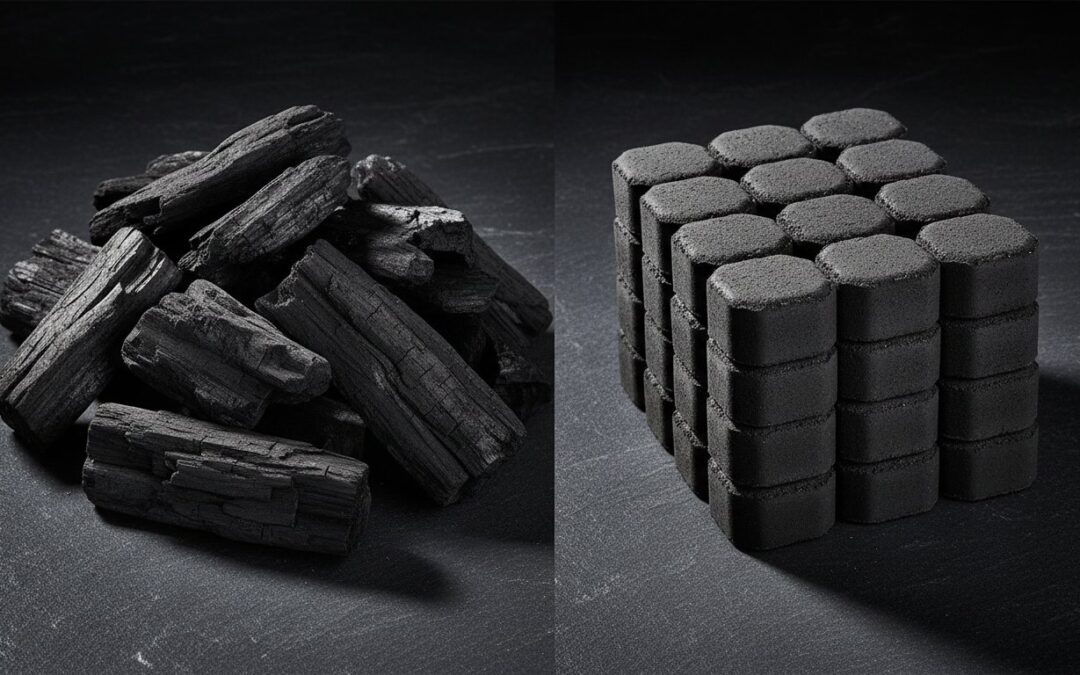
Lump charcoal is the original, purest form of barbecue fuel. This is charcoal in its most primal state-100% natural hardwood, such as Australian Mallee or Gidgee, that has been carbonized. The process involves burning wood in a sealed, low-oxygen environment, a technique known as pyrolysis which strips out water and impurities. You can learn more about the science of what charcoal is right here. Because it’s made from whole pieces of wood, you’ll notice irregular shapes and sizes in every bag. Most importantly, premium lump charcoal contains zero additives, binders, or fillers. The flavour it produces comes purely from the wood it was made from.
What are Charcoal Briquettes?
Charcoal briquettes are manufactured for consistency and control. They are made by compressing materials like charcoal dust and wood scraps with a binder. Their uniform, pillow-like shape is their greatest asset, ensuring a predictable, even, and long-lasting burn. This makes them a reliable choice for low-and-slow cooks where maintaining a steady temperature is critical. While old stories of chemical aftertaste persist, it’s a myth for modern, high-quality products. Premium briquettes now use natural, food-safe starch binders, engineered for stability and a clean burn without interfering with the food’s flavour.
The choice boils down to a fundamental difference: the raw, variable nature of pure wood versus the engineered consistency of a manufactured fuel. Understanding this distinction is the first step in deciding which fuel source will deliver the flavour profile you’re aiming for.
The Science of Smoke & Flavour: How Charcoal Imparts Taste
To determine is lump charcoal better than briquettes for flavour, it’s crucial to understand where that classic barbecue taste actually comes from. Contrary to popular belief, it’s not just the smoke from the fuel. The signature flavour of grilled food is created when fat and juices from your meat drip onto the hot coals. This vaporisation process, known as pyrolysis, creates flavourful smoke that rises and coats the food. Understanding the science of charcoal grilling reveals that the primary job of your fuel is to provide clean, consistent heat to make this happen. However, the fuel itself does contribute a subtle background note, and this is where the two types of charcoal differ.
Lump Charcoal’s Flavour Profile: Pure & Simple
Premium lump charcoal is simply carbonised natural hardwood. Because it contains no additives or binders, it imparts a flavour profile that is pure and authentic. It’s the closest you can get to cooking over a real wood fire, offering a clean, subtle smokiness that enhances the taste of your food without dominating it.
- Authentic Wood Smoke: Burns with a light, pleasant smoke that complements everything from steak to vegetables.
- Subtle Flavour Notes: The specific type of Australian hardwood used, such as Gidgee or Mallee, can introduce unique and mild background flavours.
- Natural and Chemical-Free: Delivers pure taste without the risk of any chemical or acrid aftertaste.
Briquettes’ Flavour Profile: Neutral & Consistent
High-quality briquettes are engineered for one primary purpose: delivering steady, predictable heat. They are designed to be a neutral heat source, providing a blank canvas so the flavour of your food and any added smoking woods can take centre stage. This consistency is their greatest strength.
- Neutral Burn: Top-tier briquettes burn with minimal flavour or aroma, ensuring they don’t interfere with your cooking.
- Clean Burn is Key: It is essential to let briquettes light properly and become fully covered in white ash. Lighting them improperly is what can cause off-putting smells from binders.
- Avoid Low Quality: Cheaper briquettes often use chemical binders that can produce an unpleasant, acrid smoke. Stick to premium, natural products.
The X-Factor: The Role of Smoking Woods
When you’re smoking a brisket or pulled pork for hours, the dominant smoke flavour comes from the wood chunks or chips you add, not the base fuel. In these situations, the question of is lump charcoal better than briquettes for flavour becomes less important than which fuel provides better heat management. Briquettes excel here, offering a long, stable burn that allows smoking woods to smoulder perfectly. Lump can also be used, creating a layered profile by combining its natural smoke with the added wood, but it requires more temperature management.
The Verdict: Which Charcoal Is Best for Your Cook?
The debate over is lump charcoal better than briquettes for flavour often misses the most important factor: the cook itself. There is no single correct answer, only the right tool for the job. To achieve premium results, you must match your fuel to your cooking style. The key is to consider the required heat, the necessary burn time, and the flavour intensity you want to achieve.
By selecting the right charcoal, you control the outcome and guarantee a superior taste every time. We break down the best fuel for each common barbecue scenario.
For High-Heat Searing (Steaks, Burgers, Chops)
Winner: Lump Charcoal.
For a perfect steakhouse crust, natural lump charcoal is king. It burns significantly hotter than briquettes, delivering the intense, direct heat needed for a deep char. Its clean, subtle smoke from pure hardwood enhances the natural flavour of the meat without overpowering it. Lump also responds instantly to oxygen changes in your vents, giving you precise control over the temperature for flawless results.
For Low & Slow Smoking (Brisket, Ribs, Pulled Pork)
Winner: Briquettes (for consistency).
When you need to maintain a steady 120°C for hours on end, briquettes are the most reliable choice. Their uniform shape guarantees a long, predictable, and stable burn. This makes temperature management straightforward, especially for beginners. While experienced pitmasters can use lump for a more distinct woody base flavour, the consistency of premium briquettes ensures your brisket cooks perfectly without constant adjustments.
For Everyday Grilling (Sausages, Chicken Wings, Veggies)
Winner: It’s a tie.
For a casual weeknight barbie, the choice comes down to personal preference. Briquettes offer unmatched ease of use and reliability, getting the job done with no fuss. Lump charcoal, on the other hand, provides a slightly more authentic ‘cooked over fire’ taste that can elevate simple foods. On quick-cooking items like snags and wings, the flavour difference is less pronounced, making either fuel a solid choice for a great result.
Beyond Flavour: Other Key Differences to Consider
While the debate over is lump charcoal better than briquettes for flavour is central to any barbecue discussion, it’s not the whole story. The best fuel for your grill depends on what you’re cooking, how you like to cook, and your budget. Performance factors like burn time, temperature control, ash production, and cost are just as critical. Choosing the right charcoal makes the entire cooking experience smoother and more predictable.
Let’s break down the practical differences head-to-head.
Burn Time & Temperature Control
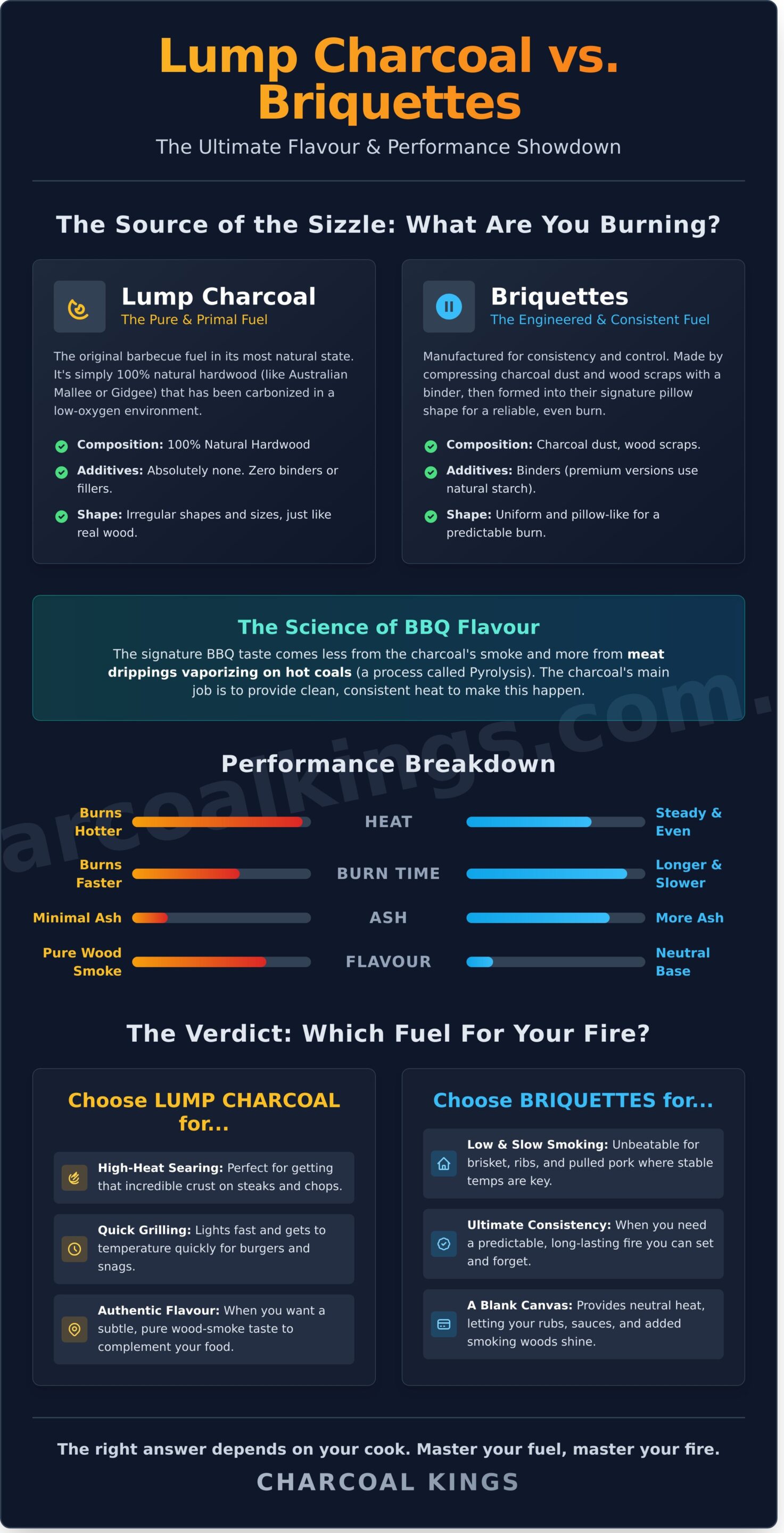
Lump charcoal, made from pure carbonised hardwood, burns hotter and faster. This makes it ideal for achieving a powerful sear on steaks or cooking anything that needs high, direct heat. However, it requires more active management of your grill’s vents to maintain a stable temperature. Briquettes are the opposite; they burn cooler but for a much longer, more consistent period, making them the reliable choice for low-and-slow cooks like brisket and pork shoulder.
Ash Production & Airflow
Here, lump charcoal has a clear advantage. As a 100% natural product, it produces very little ash. This is crucial for long cooks, as the heavy ash from briquettes can clog vents and choke your fire, leading to temperature drops. Less ash also means significantly easier cleanup. If you value clean burning and minimal maintenance, lump is the superior performer.
Cost & Consistency
Briquettes typically win on price and accessibility. A standard bag from your local hardware store is often more affordable, with a bag costing as little as A$10-A$15. They are also uniform in size and shape, guaranteeing a predictable burn. A bag of lump charcoal, while offering premium performance, can contain an inconsistent mix of large chunks and small, fast-burning fragments. This is why investing in high-quality, graded lump charcoal ensures you get usable fuel, not a bag of dust.
Ultimately, deciding if lump charcoal is better than briquettes for flavour and performance comes down to matching the fuel to the job. For high-heat searing and clean burning, lump is king. For steady, long-lasting heat on a budget, briquettes get the job done.
The Charcoal Kings Recommendation: Fuel for Flavour Kings
At Charcoal Kings, we believe the secret to incredible barbecue isn’t just about picking one fuel over another; it’s about using the right fuel for the job. Our passion is sourcing and supplying premium, natural charcoal that delivers exceptional results, every single time. So, when it comes to the question of is lump charcoal better than briquettes for flavour, our expert answer is: it depends entirely on your goal for the cook.
The good news is that with our range, you can’t make a wrong choice. We ensure both our lump and briquette products are 100% natural and completely free from the chemicals, glues, and fillers that can ruin the taste of your food. We’ve eliminated the risk of low-quality fuel, so you can focus on what matters most-creating a masterpiece on the grill.
Choose Our Premium Hardwood Lump for Pure Taste
When you want the authentic, clean flavour of the wood and your food to be the star of the show, our lump charcoal is the undisputed champion. Made from the best Australian hardwoods, it burns hot and clean, imparting a subtle, smoky essence without overpowering your carefully chosen meats and rubs. It’s the ideal choice for high-performance ceramic grills like Kamados, where superior airflow and precise temperature control are essential for the perfect sear.
Ready for a clean burn and authentic flavour? Shop Premium Lump Charcoal.
Choose Our Natural Briquettes for Flawless Consistency
For those long, lazy Sunday smoking sessions, consistency is king. Our natural briquettes are engineered for unmatched reliability. Formed with 100% natural, food-grade binders, they provide a clean, neutral, and incredibly steady burn for hours on end. You get all the benefits of a uniform shape and predictable heat without any of the nasty chemical aftertastes found in inferior brands. This makes them the go-to fuel for flawless low-and-slow results every time.
Need reliable heat for your next long cook? Shop Natural Charcoal Briquettes.
Ultimately, deciding if lump charcoal is better than briquettes for flavour comes down to application. With Charcoal Kings, you have a professional-grade tool for every scenario. Choose lump for purity and intense heat; choose briquettes for endurance and stability. Either way, you’re fuelling your grill with Australia’s best.
Fuel for Flavour Kings: The Final Word
The debate between lump charcoal and briquettes ultimately comes down to a single, critical factor: taste. While briquettes offer consistency, pure lump charcoal delivers a hotter, cleaner burn that imparts an authentic, smoky flavour without unwanted additives. So, when asking is lump charcoal better than briquettes for flavour, the evidence points to a clear winner for those who prioritise genuine wood-fired results.
At Charcoal Kings, we stake our reputation on this principle. We provide only 100% Natural Australian Hardwood charcoal, guaranteed to be free from chemicals or binders. It’s this commitment to purity and performance that makes our charcoal the trusted choice for top restaurants and pitmasters Australia-wide. You get nothing but pure heat and exceptional flavour, every single time.
Don’t compromise on the heart of your barbecue. Shop our range of premium natural charcoal and taste the difference. It’s time to cook like a king.
Frequently Asked Questions
Can you mix lump charcoal and briquettes together?
Yes, mixing lump charcoal and briquettes is a common and effective technique. This method combines the distinct benefits of both fuel types. The lump charcoal provides the high heat and natural hardwood smoke flavour, while the briquettes deliver a consistent, long-lasting burn. For a long cook, use a base of briquettes for stability and add lump charcoal on top for that authentic barbecue taste. This hybrid approach gives you excellent control over temperature and flavour.
Do all briquettes add a chemical taste to food?
Not all briquettes will add a chemical taste, but many lower-quality brands do. This is caused by the artificial binders, fillers, and chemical accelerants used in their manufacturing. To avoid this, always choose a premium, 100% natural briquette made from compressed hardwoods with a natural starch binder. Properly lighting your briquettes until they are fully ashed over is also critical to burn off any potential off-flavours before you begin cooking.
Is lump charcoal harder for beginners to use?
Lump charcoal can present a slight learning curve for beginners. Its irregular shapes and sizes mean it can burn less predictably than uniform briquettes, requiring more attention to vent control for stable temperatures. However, the superior performance and flavour are worth the effort. Start with smaller cooks to get a feel for how your grill responds. Mastering lump charcoal is a key step for any serious barbecue enthusiast looking for the best results.
Does lump charcoal spark and pop more than briquettes?
Yes, natural lump charcoal tends to spark and pop more than briquettes. This is a normal characteristic of pure, carbonised hardwood. The sparks are caused by trapped pockets of gas and moisture being released as the wood heats up. While it can be surprising at first, it is a sign of a natural, chemical-free product. Always exercise caution when lighting and handling your charcoal, and keep the lid on your grill as much as possible.
How do I light briquettes properly to avoid bad flavours?
The best method to light briquettes and avoid bad flavours is using a chimney starter. Never use lighter fluid, as its chemical taste will penetrate your food. Fill the chimney with briquettes, place natural firelighters underneath, and light them. Wait around 20 minutes until the top briquettes are covered in a layer of white ash. This signals they are fully lit and any binders have burned off completely, leaving you with a clean-burning fuel source.
Is one type of charcoal better for a Weber Kettle or a Kamado grill?
For ceramic kamado grills, lump charcoal is the superior choice. It burns hotter and produces very little ash, which is crucial for preventing airflow blockages during long cooks. A Weber Kettle is more versatile and performs well with both. Many find that when asking is lump charcoal better than briquettes for flavour, the answer is a clear yes, making it a top choice for searing steaks on a Kettle. Briquettes, however, provide reliable consistency for longer cooks like roasts.