
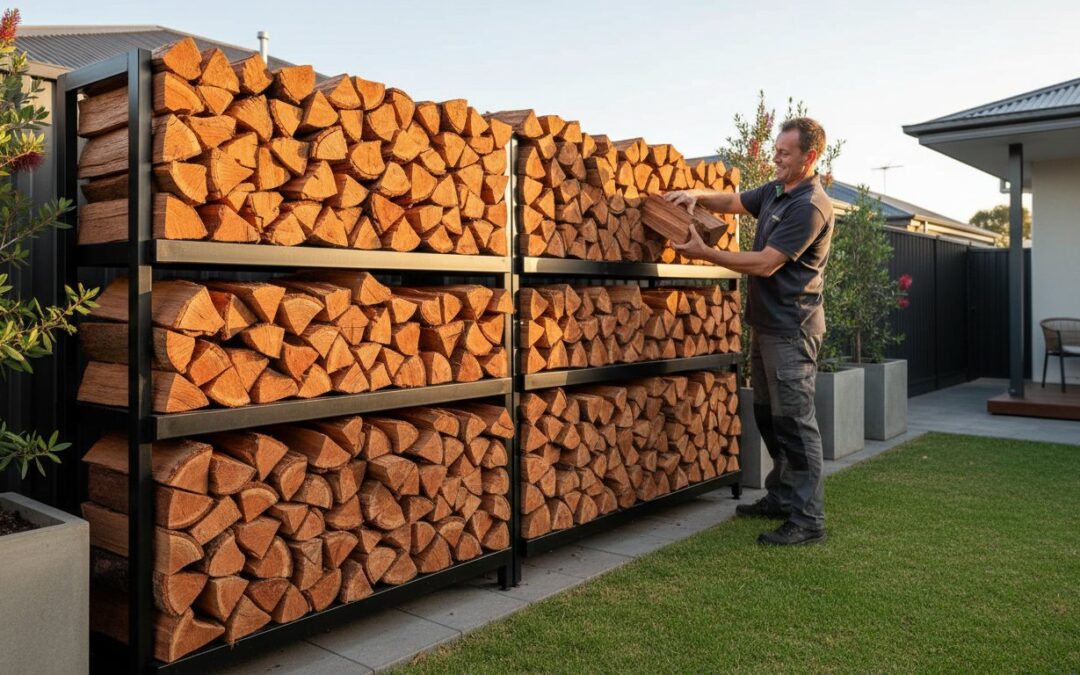
A poorly built woodpile is more than just an eyesore. It’s a recipe for mouldy, rotten fuel that smokes instead of sizzles, and an unstable hazard that invites unwanted guests like termites, spiders, and even snakes into your Aussie backyard. The perfect stack of wood, however, is the foundation of any great fire. It’s the critical difference between a frustrating, smoky burn and a powerful, clean-burning flame that delivers consistent, reliable heat for your smoker or fireplace.
For those handling larger volumes of timber, professional equipment such as Firewood Processors can automate the cutting and splitting process, ensuring consistent sizing for optimal stacking and seasoning.
This guide delivers the expert method. Forget the guesswork and collapsing piles for good. We will walk you through the essential, step-by-step process to build a sturdy, efficient wood stack that maximises airflow and protection. You’ll learn how to achieve perfect seasoning for faster drying, protect your wood investment from weather and pests, and guarantee a supply of premium fuel for a hotter, longer, and cleaner burn every single time.
Why Proper Stacking is Non-Negotiable for Quality Firewood
A well-built stack of wood is more than just a tidy pile; it’s a fuel-processing station designed for one critical purpose: seasoning. The goal isn’t simply storage, but to systematically reduce the moisture content of your firewood. Freshly cut “green” wood is heavy with water, often containing up to 50% moisture. For a high-performance fire, you must get that figure below 20%.
Properly seasoned wood delivers maximum heat and minimal creosote buildup. In contrast, unseasoned wood smoulders, struggles to burn, and clogs your flue with a dangerous, tar-like residue. The difference in performance is not subtle-it’s fundamental.
To see these principles in action, watch this practical overview of the process:
The Science of Seasoning: Airflow is Everything
Seasoning is the natural process of drying wood, and the key ingredient is constant airflow. A correctly built stack allows wind to circulate around every single log, pulling moisture out. Sun and wind are your best allies; the sun provides warmth to help release the moisture, and the wind carries it away. The time it takes varies-dense Australian hardwoods like Ironbark can take over a year, while others might be ready in six to nine months, depending on your local climate.
Common Problems from Poor Stacking
A poorly constructed stack of wood is a liability. Trapped moisture and a lack of airflow create the perfect environment for problems that ruin your fuel and create hazards. Common issues include:
- Mould and Rot: Damp, stagnant conditions will cause your wood to decay, making it useless as fuel.
- Pest Infestations: A messy, damp pile is an open invitation for termites, spiders, and rodents.
- Unstable Piles: An improperly stacked pile can collapse, creating a serious safety risk for people and pets.
- Wasted Fuel: Wood that hasn’t seasoned correctly produces a smoky, inefficient fire that wastes your time and money.
The Benefits of a Well-Seasoned Woodpile
The payoff for good stacking is significant. A well-seasoned woodpile delivers a superior fire every time. Understanding the fundamentals is key, and this comprehensive guide to firewood is an excellent resource for a deeper dive. The direct benefits are clear:
- Faster Ignition: Dry wood catches fire easily and quickly, without excessive kindling or frustration.
- More Heat (BTUs): Energy isn’t wasted boiling off internal moisture, so more heat radiates into your space.
- Cleaner Burn: Less smoke means fewer harmful emissions and less dangerous creosote buildup in your chimney.
- Appliance Longevity: A clean burn protects your fireplace, wood stove, or BBQ from corrosive residue, extending its life.
Before You Stack: Location, Foundation, and Preparation
Proper preparation is half the battle won. Before you even think about building your stack of wood, getting the groundwork right is non-negotiable. A well-chosen location and a solid foundation will prevent the most common issues-rot, pests, and unstable piles-ensuring your firewood seasons efficiently. This is the professional approach to guaranteeing you have premium, dry hardwood ready to burn. First, a simple but critical rule: always wear heavy-duty gloves to protect your hands from splinters and any unwanted pests hiding in the bark.
Choosing the Perfect Location
Where you build your wood stack directly impacts how quickly and effectively it seasons. The ideal spot is an open area that receives maximum direct sunlight and is exposed to prevailing winds. This combination is nature’s kiln, accelerating the drying process. For safety and pest management, position the stack at least 5-10 metres away from your house or any other wooden structures to deter termites, spiders, and rodents from making a home near yours. Also, consider accessibility-you’ll need to get to it easily, even in wet weather. Before you start, it’s wise to check with your local council for any specific regulations or setback requirements for storing firewood in your area.
Building a Solid Foundation
The cardinal rule of stacking firewood is simple: never stack wood directly on the ground. Direct contact with soil invites moisture, which leads to rot and decay from the bottom up. It also provides a direct highway for termites and other insects. A solid, elevated foundation is essential for airflow and protection.
- Use sturdy timber pallets, concrete blocks, or treated pine bearers to create a level base.
- Ensure your foundation is perfectly level to prevent your stack from becoming unstable and tipping over.
- This single step is the most effective way to prevent your bottom layer of wood from becoming useless.
Sizing and Splitting Your Wood Correctly
Whole logs can take years to season properly. Splitting your wood is essential to expose the interior grain to sun and air, dramatically cutting down drying time. Aim for consistency in length to make building a stable and interlocking stack of wood much easier. Smaller splits not only season faster but also allow for superior airflow throughout the entire pile. This isn’t just for convenience; it’s about performance and safety. As outlined in the EPA’s best wood burning practices, burning properly seasoned wood is cleaner, more efficient, and produces more heat. That process starts right here, with correctly sized and split timber.
Step-by-Step Stacking Methods for a Rock-Solid Pile
Once you have your wood split, building a stable and efficient pile is the next critical step. The goal of any stacking method is simple: maximise airflow. Proper air circulation around every log is what separates perfectly seasoned firewood from a damp, mouldy mess. If you’re new to this, start with a smaller pile to master the technique before building a larger stack of wood.
Method 1: The Classic End-Pillar Stack
This is the most common and reliable method for a reason-it’s straightforward and incredibly stable. It’s the perfect starting point for anyone learning how to season wood.
- Build the Pillars: At each end of your desired stack location, create two sturdy pillars by alternating the direction of the logs in a criss-cross pattern.
- Fill the Gap: Stack your firewood in a single, neat row between the two pillars.
- Stay Parallel: Ensure all logs in the main row are parallel to each other to maintain airflow and stability.
Method 2: The German Holz Hausen (Round Stack)
For those with a larger volume of wood, the Holz Hausen is a masterpiece of efficiency. This circular, self-supporting stack of wood creates a chimney effect, drawing air up through the centre of the pile for exceptional drying. Start with a circular base about 1.5 to 2 metres in diameter. Stack the wood in a circle with the bark-side facing up, angling each piece slightly downwards towards the outside. This clever design helps it shed rain naturally while promoting constant airflow.
Stacking Against a Wall or Fence: The Do’s and Don’ts
Stacking directly against a solid structure is not recommended. It traps moisture against the wall and the wood, slowing down seasoning and potentially attracting termites and other pests to your home or fence. This moisture build-up is the biggest obstacle when you need to properly season firewood. If you must use a wall for support, follow these rules:
- DO leave a gap of at least 15cm between the wood and the structure.
- DO use bricks or treated pine as spacers to allow air to circulate behind the pile.
- DON’T let the stack touch any part of your house, shed, or fence.
A well-built stack is the foundation of quality fuel. Ensuring your wood is perfectly seasoned means you get a hotter, cleaner burn every time. Need the right fuel for your next cook-up? Check out our range of quality firewood and smoking chunks.

Covering Your Wood Stack: To Cover or Not to Cover?
One of the most common points of confusion for anyone seasoning firewood is whether to cover the pile. The answer depends on your climate and your method, as covering your wood improperly can do more harm than good. The sole purpose of a cover is to shed rain and snow, preventing moisture from re-saturating the top layers of your wood. In many of Australia’s drier, sun-drenched regions, a well-placed stack of wood might not need a cover at all, especially during dry seasons.
However, for those in areas with consistent rainfall, a cover is essential for efficient seasoning. The key is to protect the wood from precipitation while maximising exposure to sun and air.
The Golden Rule: Top Cover Only
This is the most critical principle of covering firewood. Never wrap the sides of your woodpile in a tarp. While it might seem like a good way to protect it, wrapping the entire pile traps the moisture that evaporates from the wood. This creates a humid, stagnant environment-the perfect breeding ground for mould and fungus, which will ruin your fuel. The cover should act as a simple roof, allowing the sides to breathe freely.
Best Materials for Covering Your Woodpile
You don’t need a complex solution, just an effective one. Your goal is a durable, waterproof barrier that can be angled for runoff. The best materials are practical and built to last.
- Corrugated Iron: A classic Aussie choice. A single sheet is rigid, long-lasting, and can be easily sloped to direct water away from your stack of wood.
- Heavy-Duty Tarp: A quality, thick tarp is a flexible option. Secure it over the top third of the pile, leaving the bottom two-thirds of the sides exposed.
- Dedicated Firewood Covers: If you use a rack, a purpose-built cover provides a perfect fit, often with built-in ventilation to ensure proper airflow while keeping the top dry.
Securing Your Cover Against Wind and Weather
A loose cover is useless. Use heavy items like bricks, rocks, or timber offcuts to weigh down the edges of your corrugated iron or tarp. Bungee cords are ideal for securing a cover to a metal or wooden rack. Ensure it’s held down firmly, but don’t seal it so tightly that air can’t circulate underneath. It’s always wise to check on your cover after strong winds or a heavy storm to make sure it’s still in place and doing its job.
Stacking & Storing in Australian Conditions
Stacking wood in Australia presents unique challenges. Our climate, from the dry heat of the interior to the coastal humidity, demands a specific approach. A well-seasoned woodpile isn’t just for the winter fireplace; it’s about year-round readiness for the perfect BBQ or smoker session. Proper technique ensures your fuel is dry, clean, and ready to perform when you are.
Managing Pests: Spiders, Snakes, and Termites
Your stack of wood can become a prime habitat for unwanted guests. Redbacks, snakes, and termites are common issues, but they can be managed with simple, non-chemical precautions. Safety and prevention are your primary tools.
- Keep it clear: Maintain a perimeter of at least one metre around the stack, free from long grass and debris where pests can hide.
- Get it off the ground: An off-ground foundation is your best defence against termites and ground moisture. Use pallets, bricks, or a purpose-built rack.
- Practise caution: Always wear thick gloves and sturdy boots when collecting wood. Never reach into gaps blindly.
- Avoid chemicals: Never use chemical pesticides or termiticides on wood you intend to burn for cooking or heating. The fumes can be highly toxic.
Dealing with High Humidity and Unexpected Rain
In humid regions like coastal Queensland and New South Wales, airflow is everything. Moisture in the air can significantly slow the seasoning process and promote mould growth. During the wet season, a solid top cover that allows the sides to breathe is essential. For extremely damp climates, consider building smaller, separate piles to maximise air circulation to every log.
Choosing the Right Australian Hardwoods for Stacking
Australia is home to some of the world’s best hardwoods for fuel, including premium varieties like Ironbark and Red Gum. These timbers are incredibly dense, which means they burn hotter and longer, but they also require more time to season properly-often up to two years. For these dense woods, a properly constructed stack of wood with maximum airflow isn’t just a good idea; it’s non-negotiable for achieving the low moisture content needed for a clean, efficient burn. Get the best Australian hardwood for your BBQ from Charcoal Kings.
Build a Better Burn: The Final Word on Stacking Wood
Mastering the art of stacking firewood is the difference between a smoky, frustrating fire and a clean, powerful burn. It comes down to a few core principles: choosing a location with maximum sun and airflow, building on a solid off-ground foundation, and using a proven method for stability. A well-built stack of wood isn’t just tidy-it’s your guarantee of perfectly seasoned, high-performance fuel ready for any Australian season.
Of course, a perfect stack deserves premium wood. As Australia’s trusted supplier of premium BBQ fuels, Charcoal Kings provides the quality natural hardwood you need for a superior burn. All our wood is free from chemicals, backed by expert advice to ensure you achieve the perfect result every time. Don’t settle for less. Get Sizzlin’! Shop our premium range of firewood and smoking woods now.
Frequently Asked Questions About Stacking Firewood
How long does it take for firewood to season properly in Australia?
In Australia, seasoning time depends on the wood type and climate. Dense hardwoods like Ironbark or Red Gum typically require at least 12 to 18 months to season properly. Softer woods may be ready in 6 to 12 months. In drier, hotter regions, the process is faster than in humid coastal areas. The goal is to reduce moisture content to below 20% for a clean, efficient burn. A properly built stack with good airflow is essential for this process.
Should I stack firewood with the bark facing up or down?
For the best results, stack the majority of your wood with the bark facing down. This allows moisture to escape more easily from the cut surface of the log. However, for the very top layer of your woodpile, it is beneficial to place the pieces bark-side up. This creates a natural roof, helping to shed rain and protect the rest of the pile from the elements, ensuring the wood below stays as dry as possible during the seasoning process.
How high can I safely stack a freestanding woodpile?
For a freestanding stack of wood without end supports, do not exceed a height of 1.2 metres. Stacking higher creates an unstable pile that can easily topple over, posing a significant safety risk. If you are using a dedicated firewood rack or stacking between two sturdy posts, you can go higher, but always ensure the base is wide and the structure is stable. A well-built, secure pile is crucial for both safety and efficient drying.
Is it okay to store seasoned firewood in a garage or shed?
Yes, storing fully seasoned firewood in a garage or shed is an excellent way to keep it dry and ready for use. However, never store unseasoned or ‘green’ wood indoors, as the poor ventilation will trap moisture and promote mould and rot. Also, be aware that wood can harbour pests like spiders or termites. It is wise to keep the woodpile elevated off the floor and away from direct contact with walls to minimise this risk.
What’s the difference between seasoned and kiln-dried firewood?
The primary difference is the drying method. Seasoned wood is dried naturally by air and sun over many months, reducing moisture to around 20%. Kiln-dried wood is placed in a large oven to rapidly force the moisture out, typically bringing it down to 10-15% in just a few days. Kiln-dried wood burns hotter and cleaner due to its lower moisture content and is free of pests, but it comes at a premium price compared to traditionally seasoned firewood.
Can I stack different types of wood together in the same pile?
Absolutely. There is no issue with mixing different wood species in the same stack. The main thing to remember is that denser hardwoods will take significantly longer to season than softer woods. A practical approach is to organise your pile accordingly. Place the longer-seasoning hardwoods at the back or bottom of the stack, allowing them the extra time they need, while keeping faster-seasoning woods at the front for earlier access and use.