
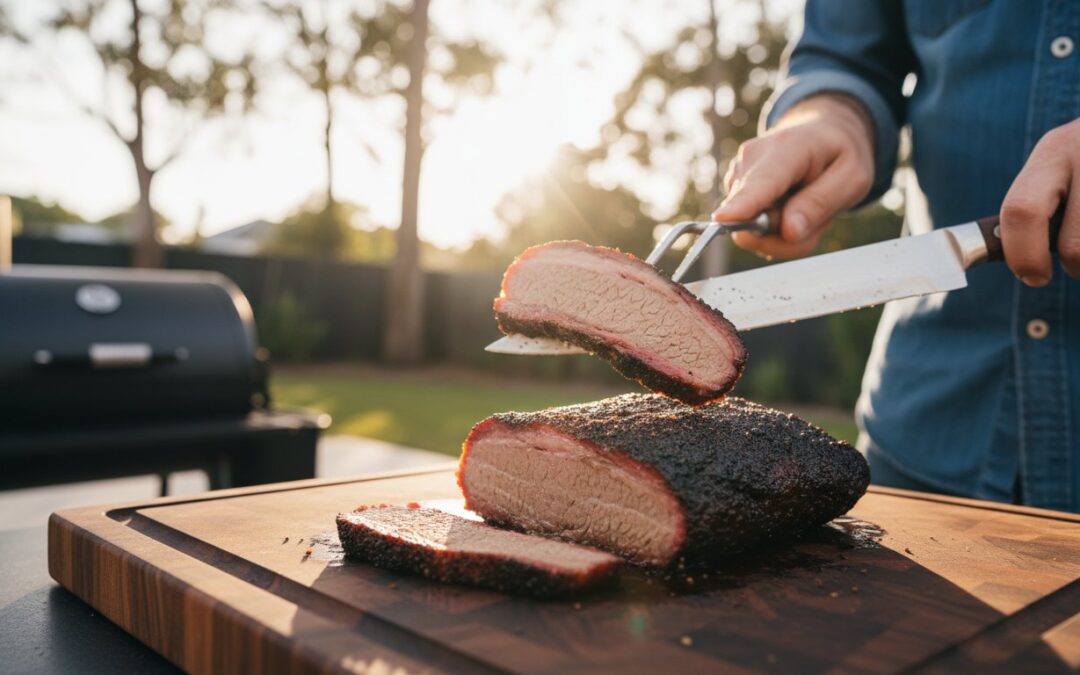
There are few things in barbecue more frustrating than dedicating 12+ hours and a small fortune on a premium cut of Aussie beef, only to slice into a dry, tough brisket. It’s a gut-wrenching moment that wastes time, money, and confidence. If you’re tired of the guesswork and conflicting advice, you’ve come to the right place. We’re here to give you the definitive, no-nonsense method for how to prevent dry brisket when smoking. This guide will put an end to disappointing cooks and the embarrassment of serving subpar BBQ to your mates and family.
Forget the myths and master the fundamentals. We will walk you through every critical step, from selecting the perfect brisket with the right fat content to nailing your trim and seasoning. You’ll learn proven techniques for temperature control, stalling management, and the crucial resting phase that transforms a good brisket into a great one. By the end of this guide, you will have the confidence and skill to produce a perfectly tender, incredibly juicy brisket with a rock-solid bark, every single time. Get ready to impress.
Key Takeaways
- Your fight against dry brisket begins at the butcher. Selecting a cut with superior marbling is the most critical first step for a juicy result.
- Master your fire by maintaining a stable ‘low and slow’ temperature. Wild temperature swings are a primary cause of tough, dry meat.
- Learn the three active techniques for how to prevent dry brisket when smoking. Using a water pan, spritzing, and wrapping are essential tools during the cook.
- Don’t ruin a perfect cook in the final moments. The secret to ultimate juiciness lies in resting the meat properly and slicing against the grain.
Foundation First: How Meat Selection and Prep Prevents Dryness
The battle for a juicy brisket is often won or lost long before it hits the smoker. Knowing how to prevent dry brisket when smoking starts at the butcher shop. The quality of the meat and the precision of your prep work are the absolute cornerstones for a tender, moist result. Get these fundamentals right, and you’re halfway to barbecue perfection.
For a visual guide on the essentials, check out this breakdown.
Choosing the Right Cut: Marbling is Your Best Friend
In Australia, look for a whole packer brisket with a high Meat Standards Australia (MSA) grade or a good marbling score (MB 2+ is a great start). This marbling-the intramuscular fat woven through the meat-is your first line of defence against dryness. As it renders during the long cook, it bastes the meat from the inside out. A key to understanding the brisket cut is knowing that a quality piece should be flexible; if you can bend it easily, it’s a good sign of quality fat content versus a stiff, lean cut.
The Art of Trimming: Fat Cap Management
Proper trimming ensures an even cook. The goal is a consistent 1/4 inch (about 6-7mm) fat cap across the top. Too much fat insulates the meat, preventing your rub from forming a good bark and stopping the fat from rendering properly. Too little, and you lose a critical moisture source. Trim off any hard, waxy deckle fat between the point and flat muscles, and round off any sharp edges to prevent them from burning and drying out in the smoker.
Seasoning and Injecting: Building Your Flavour Armour
A solid foundation of seasoning does more than add flavour; it helps create the bark, which acts as a natural barrier to lock in moisture. Use a binder like mustard or a light oil to help your rub adhere, then apply a generous, even coat. For guaranteed moisture, consider injecting. This technique is a game-changer. A simple injection of beef broth works from the inside out, ensuring every bite is juicy and tender.
Mastering Your Fire: Why Stable Temps are Crucial for Moisture
If you’re battling tough, dry brisket, the first place to look is your fire management. Inconsistent heat is the fastest way to ruin a good cut of meat. Wild temperature swings cause the muscle fibres to repeatedly contract and expand, aggressively squeezing out precious moisture. The secret to a succulent result lies in creating a stable, low-temperature environment from start to finish. Understanding how to prevent dry brisket when smoking begins with total control over your heat source.
The ‘Low and Slow’ Zone: Your Target Temperature
The ideal temperature range for smoking brisket is 225-250°F (107-121°C). This ‘low and slow’ zone is critical because it gives the tough collagen and connective tissues time to break down into silky gelatin without cooking the exterior too quickly. High heat sears the outside, creating a dry, tough crust long before the interior is properly rendered. A reliable dual-probe digital thermometer is non-negotiable-one probe monitors the grate temperature, while the other tracks the brisket’s internal progress.
Fuel for Success: The Role of Quality Charcoal
Your fire is only as reliable as the fuel you feed it. Premium hardwood lump charcoal provides a far more stable and long-lasting heat source than cheap briquettes, which often contain binders and fillers. Consistent fuel means fewer adjustments to your smoker’s vents and a rock-solid temperature for hours. This stability is a core principle for a moist final product. Furthermore, a clean-burning, all-natural fuel produces less acrid smoke, ensuring the flavour of your bark is pure and delicious. Explore our range of premium hardwood lump charcoal.
Managing Smoke Quality for a Perfect Bark
Not all smoke is created equal. The goal is a steady stream of thin, blue smoke, which indicates a clean and efficient fire. If you see thick, billowing white smoke, your wood isn’t combusting properly. This ‘dirty’ smoke deposits a bitter-tasting creosote all over your brisket, which can also dry out the surface. To achieve that perfect smoke, always use properly seasoned hardwood chunks and ensure your fire has adequate airflow. This attention to detail is crucial throughout the cook, impacting everything from bark formation to final moisture, and works in tandem with proper wrapping and resting techniques to guarantee a perfect brisket.
Active Moisture Management: Your Toolkit During the Cook
The long, slow cook is where the magic happens. But it’s not a set-and-forget process. To actively manage moisture and guarantee a juicy result, you have a toolkit of three core techniques: the water pan, spritzing, and wrapping. Mastering these is fundamental to learning how to prevent dry brisket when smoking. Their use depends on your smoker, the weather, and the brisket itself.
The Water Pan: Creating a Humid Smoker Environment
A water pan is non-negotiable for low-and-slow cooking. It serves three critical functions. First, it adds humidity to the cooking chamber, slowing moisture evaporation from the brisket’s surface. Second, this humid environment helps smoke particles adhere to the meat, building a deeper flavour profile. Finally, it acts as a heat sink, absorbing and radiating heat to help stabilise your smoker’s temperature-a key task when using premium lump charcoal from Charcoal Kings for a long, steady burn. Always use warm water to avoid a significant temperature drop when you start.
To Spritz or Not to Spritz?
Spritzing is the act of spraying a thin liquid onto the brisket during the cook. Common liquids include apple cider vinegar, water, or beef broth. The purpose is to cool the surface of the meat, preventing the edges from drying out or burning before the centre is cooked. This also helps the bark set evenly. A solid rule of thumb is to spritz every 45-60 minutes, but only after the initial bark has formed, typically 3-4 hours into the cook.
The Texas Crutch: When and How to Wrap Your Brisket
The “stall” is a frustrating but normal part of smoking brisket, where the internal temperature plateaus around 74°C (165°F) for hours. Wrapping, known as the “Texas Crutch,” is the solution. It traps steam and moisture, pushing the brisket through the stall and significantly increasing tenderness. The material matters:
- Aluminium Foil: Creates a tight seal, steaming the meat. This produces a very tender result but can soften the bark.
- Butcher Paper: Allows the brisket to breathe, preserving a firmer, crustier bark while still retaining moisture.
The key is to wrap only when you are satisfied with the bark’s colour and texture. For a detailed breakdown of this method, the Cook’s Illustrated’s Texas-Style Smoked Beef Brisket recipe provides an excellent, tested guide. Knowing when and how to wrap is a crucial step in how to prevent dry brisket when smoking.
The Finish Line: Nailing the Rest and Slice for Maximum Juiciness
You’ve spent hours managing your fire with premium charcoal, developing a perfect bark, and rendering the fat. Do not ruin your hard work now. The final steps after the brisket leaves the smoker are where many pitmasters fail. Mastering this last stage is fundamental to how to prevent dry brisket when smoking and achieving a truly superior result.
Cook to Feel, Not Just Temperature
The target internal temperature for brisket is around 95°C (203°F), but treat this number as a guideline, not a law. The real goal is achieving what experts call ‘probe tender’. This means your thermometer probe should slide into the thickest part of the flat with almost no resistance, like probing a jar of peanut butter. Every brisket is different; one might be perfectly tender at 93°C, another might need to push to 96°C. Trust the feel, not the number.
The Critical Rest: Why You Can’t Skip It
Resting your brisket is arguably the most critical and overlooked step for ensuring a juicy final product. Slicing into it immediately off the smoker is a guaranteed way to create a dry, disappointing meal. During the long cook, muscle fibres tighten and expel moisture. The rest allows those fibres to relax and reabsorb all the rendered fat and beef juice, distributing it evenly throughout the meat.
- The Method: Keep the brisket wrapped in its butcher paper or foil. Wrap this bundle in a couple of old, clean towels and place it in a dry Esky (a ‘faux cambro’).
- The Timing: Let it rest for a minimum of one to two hours. For maximum tenderness and moisture retention, a longer rest of three to four hours is even better. This is a non-negotiable step.
Slicing for Tenderness: Against the Grain
Even a perfectly cooked and rested brisket can seem tough if sliced incorrectly. You must slice against the grain. The ‘grain’ refers to the direction the muscle fibres run. By cutting across these fibres, you shorten them, making each bite incredibly tender and easy to chew. Remember, a whole packer brisket has two muscles-the point and the flat-and their grains run in different directions. Separate them before slicing, identify the grain on each, and cut pencil-thick slices for the perfect texture.
With your brisket perfectly sliced, the only thing left is to enjoy it. A great barbecue is often paired with a refreshing drink to cut through the richness of the smoked meat. For a unique, nature-inspired option, consider the craft beverages from Aroha Drinks.
Master the Smoke: Your Final Word on Juicy Brisket
Mastering a juicy brisket is no longer a mystery; it’s a process you can control. Success starts with a quality cut and is maintained through stable temperatures and active moisture management. By focusing on these fundamentals, you now have the complete blueprint for how to prevent dry brisket when smoking. Every step, from the initial prep to the final, patient rest, plays a vital role in achieving that tender, flavourful result every pitmaster chases.
Of course, a perfect cook needs premium fuel. The clean, consistent heat from our premium 100% natural hardwood is essential for stable temperatures and a pure smoke flavour. As the trusted choice for retail, wholesale, and food service professionals, we deliver that quality right to your door with Australia-wide delivery.
Ready to elevate your cook? Get Sizzlin’! Find the perfect smoking woods for your next brisket. Fire up the smoker with confidence. A legendary brisket awaits.
Frequently Asked Questions
What’s the best internal temperature to pull a brisket from the smoker?
Focus on feel, not just temperature. While the target range is typically 93°C to 96°C (200°F to 205°F), the real indicator is when the brisket is “probe tender.” Your temperature probe should slide into the thickest part of the flat with almost no resistance, like going into a jar of room-temperature butter. This confirms the tough connective tissues have rendered into gelatin, which is essential for a moist and tender result. Pulling based on feel is the professional standard.
Should I wrap my brisket in butcher paper or aluminium foil?
Your choice depends on the bark you want. Aluminium foil, the classic “Texas Crutch,” creates a tightly sealed environment that steams the meat. This speeds up the cook and retains maximum moisture but often results in a softer bark. Pink butcher paper is breathable, allowing steam to escape. This protects the meat while preserving the firm, crunchy bark you worked hard to create. For a superior bark, use butcher paper. For speed and moisture, use foil.
Is it really necessary to rest a brisket for several hours?
Yes, a long rest is a non-negotiable step for a juicy brisket. During the cook, muscle fibres tighten and push moisture out. Resting allows those fibres to relax and reabsorb the rendered fat and juices. Slicing into a brisket too early will cause that precious moisture to spill onto the cutting board, leaving the meat dry. A minimum two-hour rest is essential, but resting for four to six hours in a dry esky will produce even better results.
I followed all the steps and my brisket is still dry. What went wrong?
Several factors can lead to a dry brisket. The most common culprit is the quality of the meat itself-a low-grade cut with poor marbling will lack the internal fat needed for moisture. Other issues include sharp temperature spikes in your smoker, pulling the brisket too early before the collagen has rendered, or not resting it long enough. A key part of how to prevent dry brisket when smoking is to control these variables: start with quality beef and maintain total control over your fire and timing.
Can you save a brisket that has already dried out?
While you can’t make it perfectly juicy again, you can definitely salvage it. The most effective method is to chop the brisket into fine pieces and mix it with a high-quality, beef-based BBQ sauce or some beef tallow. This added moisture and flavour makes for excellent brisket sandwiches, tacos, or nachos. Alternatively, you can gently reheat thick slices in a pan with some beef broth to reintroduce some moisture right before serving. Don’t throw it out; repurpose it.
Does injecting a brisket make a big difference to its moisture?
Injecting makes a significant difference. It is a pro-level technique that delivers moisture and flavour deep into the core of the meat, well beyond the reach of a surface-level rub. A simple injection of beef broth and melted beef tallow seasons the brisket from the inside out and provides a critical buffer against dryness during a long cook. If you want to know how to prevent dry brisket when smoking, injecting is one of the most reliable methods in your arsenal.