
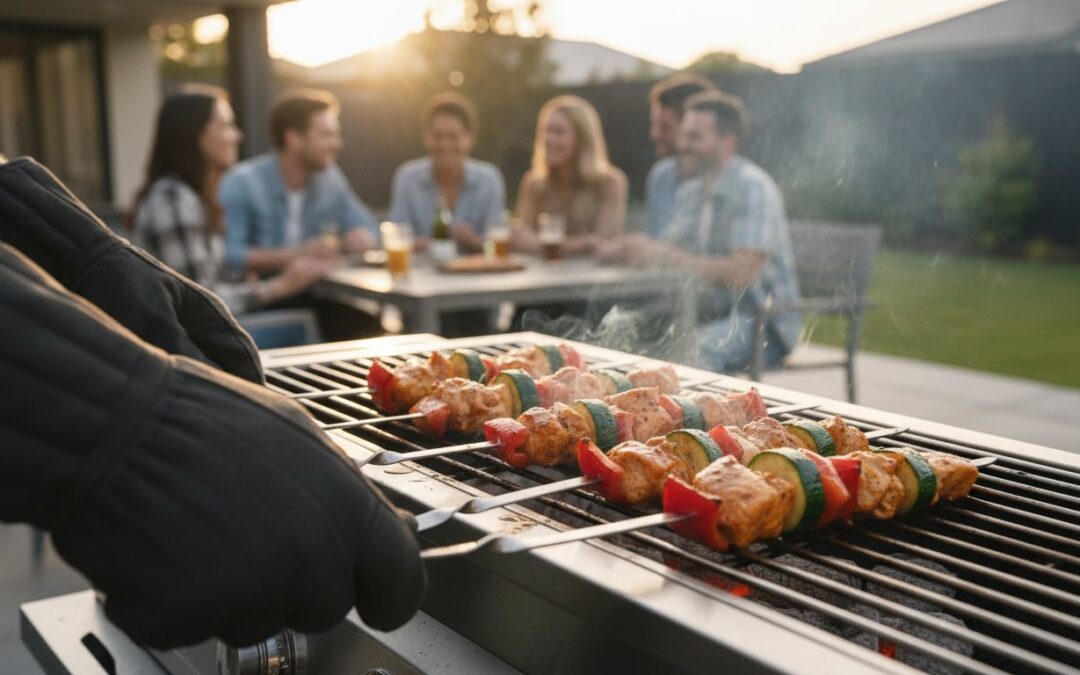
There’s nothing more frustrating than a kebab that won’t cooperate on the barbie. You meticulously prep your premium ingredients on flimsy skewers, hit the hot grill, and the food spins freely, leaving one side raw and the other burnt. Or worse, your cheap wooden skewers catch fire, incinerating the ends and leaving a bitter, ashy taste on your hard work. This isn’t just bad luck; it’s a gear problem. The wrong tool guarantees a poor result.
A master of the grill knows that quality equipment is non-negotiable. Choosing the right skewer is the foundation of a perfect kebab, giving you total control for an even, consistent cook and that signature char. It’s the difference between a frustrating mess and a flawless, crowd-pleasing meal.
This ultimate guide delivers the straight facts. We cut through the confusion, breaking down the critical differences in materials from stainless steel to bamboo. You’ll learn why flat blades are the only serious choice for preventing spin and how to select the right length and thickness for your specific BBQ. Stop wasting money on disposable options and invest in a durable, reusable set that delivers perfect kebabs, every time.
Why Your Choice of Skewer Matters for Great BBQ
A skewer is not just a stick to hold food. It is a fundamental BBQ tool engineered for performance. The right skewer ensures your ingredients cook evenly, handle easily, and develop that perfect char without falling apart. To master your grill, you must first understand your tools. This starts with knowing what is a skewer and why its design is critical to your success over hot coals.
For a solid overview of skewer grilling techniques, watch this guide:
The biggest frustration in kebab grilling is food that spins or tears when you try to turn it. This happens when you use a low-quality, round skewer with heavier or softer ingredients. A well-designed flat or squared skewer grips the food, providing the stability needed for a clean flip. This control is non-negotiable for achieving a consistent cook and those professional-grade grill marks. Your success ultimately comes down to three key factors: material, shape, and length.
The Classic Dilemma: Metal vs. Wood
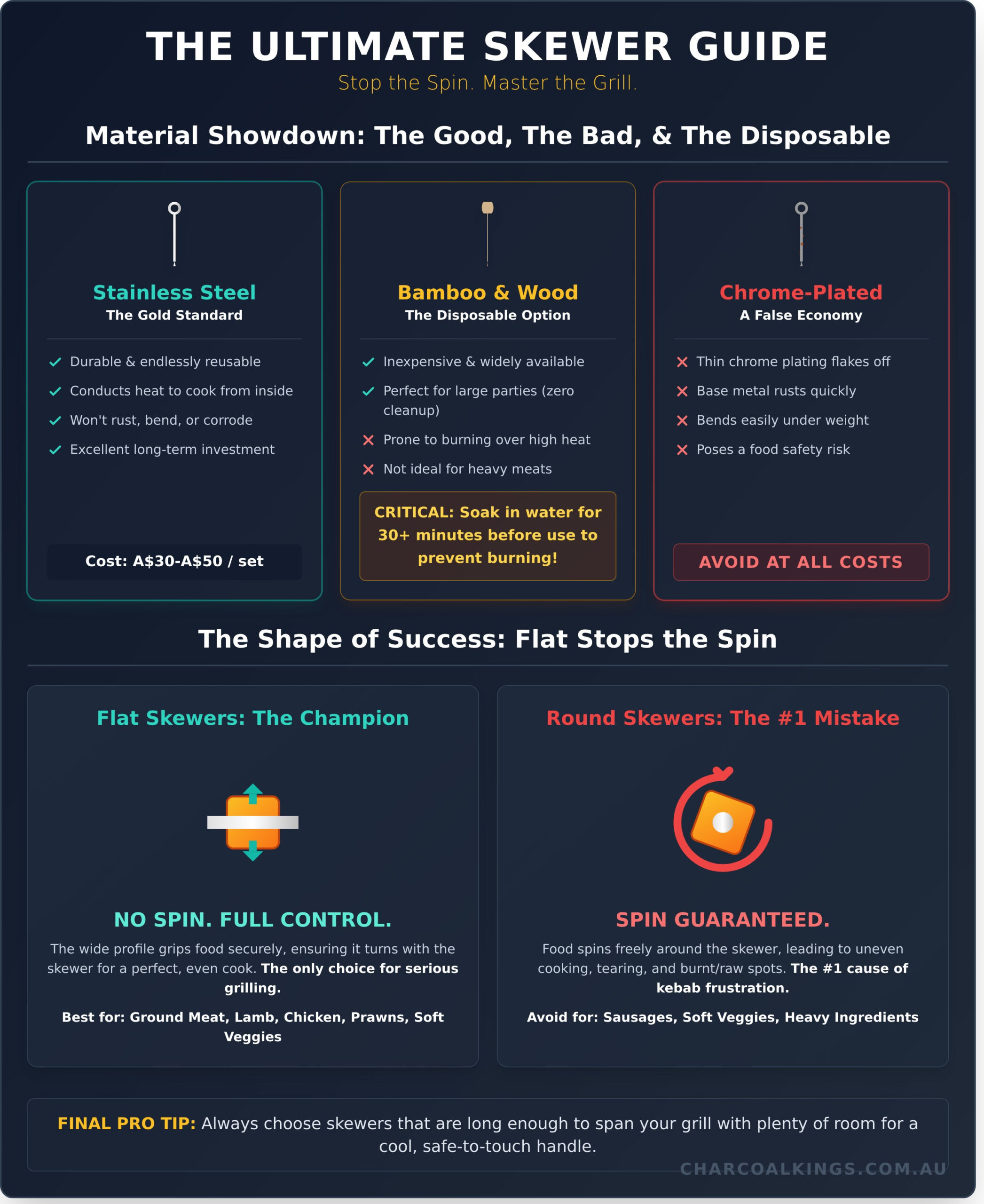
Metal skewers are a long-term investment in quality. They offer superior durability, are endlessly reusable, and conduct heat through the centre of the food for a faster, more even cook. In contrast, wood or bamboo skewers are the affordable, disposable choice, perfect for large parties and zero cleanup. While a pack of 100 bamboo skewers might only cost A$5, a premium set of reusable stainless steel skewers will save you money and reduce waste over many years of grilling.
First-Timer Mistakes to Avoid
Get straight to grilling like a seasoned pro by avoiding these common errors. A quality set of skewers is a small investment for a massive improvement in your BBQ results.
- Using round skewers for sausages or soft vegetables. This is the number one cause of spinning and tearing.
- Forgetting to soak wooden skewers. Always soak them in water for at least 30 minutes to prevent them from burning to a crisp.
- Buying skewers that are too short. Ensure there is enough length to span your grill with room for a safe, cool-to-touch handle.
- Choosing flimsy, chrome-plated metal. These cheap options bend under weight, rust quickly, and can shed their coating onto your food.
Material Matters: A Deep Dive into Metal & Wood Skewers
When you’re choosing the right tool for your grill, the material is a critical decision. It directly impacts heat conduction, long-term durability, and fundamental food safety. While a cheap option might seem fine for one cookout, focusing on longevity and performance is the only way to make a smart investment. Let’s cut through the noise and break down the main contenders: metal and wood.
Stainless Steel: The Gold Standard
For any serious BBQ enthusiast, food-grade stainless steel is the gold standard, and for good reason. These are built for high-performance grilling. They won’t rust, bend under the weight of heavy lamb souvlaki, or corrode after repeated use and cleaning. A key advantage is heat conduction; the metal heats up, helping to cook your food thoroughly from the inside out. This makes it easier to ensure everything reaches the correct internal safe grilling temperatures. While a quality set might cost A$30-A$50 upfront, they will last a lifetime, paying for themselves many times over.
Chrome-Plated Skewers: A Word of Caution
You’ll find chrome-plated skewers in many big-box stores, often at a tempting low price. We recommend you steer clear. The thin chrome plating is notoriously fragile and prone to chipping or flaking off, especially after exposure to high heat and abrasive cleaning. Once that plating is compromised, the inferior base metal underneath is exposed and will quickly rust. This not only ruins the tool but also poses a real food safety risk. They are a false economy and not recommended for serious grilling.
Bamboo & Wood: The Disposable Option
Natural wood or bamboo is the go-to disposable option, ideal for large gatherings or commercial food service where convenience is paramount. They are inexpensive and widely available. Their biggest drawback is their tendency to burn over hot coals. To prevent this, they must be soaked in water for at least 30 minutes before use. Look for versions with a flat, paddle-style handle, which brilliantly stops food from spinning when you turn them. They excel with quick-cooking items like prawns, cherry tomatoes, or marinated chicken thigh pieces-not for heavy cuts of meat that require longer cooking times.
The Shape of Success: Flat, Round, & Speciality Skewers
The material of your skewer is half the battle; its shape is the other half. The cross-section of your skewer directly impacts food stability, determining whether your ingredients turn gracefully or spin uselessly over the hot coals. Getting this choice right is fundamental to a successful BBQ.
Flat Skewers: The All-Round Champion
The undisputed champion for serious grilling is the flat skewer. Its wide, flat profile provides maximum surface area contact, gripping food securely from the inside. This design completely eliminates the frustrating spin when you turn your kebabs, ensuring an even, consistent cook every time. They are the absolute best choice for ground meat kebabs like kofta or adana. When handling ground meat, it’s not just about stability; ensuring it’s cooked through is critical. Following established USDA grilling food safety guidelines helps you hit the right internal temperatures for a safe, delicious result. Flat skewers are also superior for chunks of lamb, chicken, prawns, and softer vegetables like capsicum and zucchini. Check out our heavy-duty flat skewers for perfect kebabs.
Round or Square Skewers: When to Use Them
While flat profiles are superior for most tasks, round and square skewers have their place. They are often included in BBQ sets but are less versatile. Their main weakness is a lack of grip, allowing denser foods to rotate. They perform best with firm, sturdy foods that can grip the skewer themselves, such as:
- Whole button mushrooms
- Cherry tomatoes
- Hard cheeses like halloumi
- Thick-cut pineapple or onion
For cubed meat, they can work if the pieces are packed tightly together, but expect some potential spinning. Square profiles offer slightly more grip than perfectly round ones, but the difference is minimal.
Double-Prong & Speciality Skewers
For the BBQ enthusiast looking to master specific techniques, speciality skewers are the next step. Double-prong skewers feature two parallel tines, offering maximum stability for large, heavy, or awkward items that would tear on a single prong. They are perfect for whole fish, sausages, corn on the cob, or large pieces of chicken. Flexible wire skewers are a clever solution for maximising grill space, allowing you to coil and shape your kebabs to fit around other items on a crowded grill. These are specialist tools for those looking to expand their skills beyond the standard kebab.
Pro Tips for Skewering, Grilling, and Maintenance
Owning the right equipment is only half the battle. True mastery comes from technique. Proper preparation ensures your food cooks evenly and stays put, while correct heat management delivers that perfect char without burning. Follow these straightforward principles to elevate your kebab game and protect your gear for a lifetime of use.
Preparation is Everything: Loading Your Skewers
Success on the grill starts at the cutting board. Rushing this stage leads to inconsistent results and lost ingredients. Focus on uniformity and smart loading for a superior cook every time.
- Ensure Uniformity: Cut all ingredients-meat and vegetables-into consistent, bite-sized pieces. This is non-negotiable for even cooking.
- Leave Small Gaps: Don’t pack ingredients tightly together. Leaving a small space between each piece allows hot air to circulate, cooking everything through instead of just steaming the interior.
- Soak Wooden Skewers: If using bamboo or wood, submerge them in water for at least 30 minutes before loading. This prevents them from catching fire and burning to ash over the hot coals.
- Inject Flavour: For thicker cuts of meat like lamb or beef, a marinade injector pushes flavour deep into the centre, well beyond surface-level seasoning.
Grilling Techniques for Perfect Kebabs
Control the fire, control the flavour. Managing your grill’s heat zones is the key to achieving a perfect sear on the outside while keeping the inside juicy and tender. Avoid the common mistake of placing your food over a raging inferno and hoping for the best.
- Create a Two-Zone Fire: Bank your hot charcoal to one side of the grill. This creates a direct, high-heat zone for searing and an indirect, lower-heat zone for finishing the cook without burning.
- Grill Across the Grates: Always lay your skewers perpendicular to the grill grates. This prevents them from falling through and makes them significantly easier to turn.
- Use Proper Tools: Long-handled tongs are essential for turning. They give you precise control and keep your hands safely away from the intense heat.
- Rest Before Serving: Let your kebabs rest on a clean board for 3-5 minutes after taking them off the grill. This allows the juices to redistribute throughout the meat, ensuring maximum flavour.
Cleaning and Storing Your Investment
High-quality metal skewers are a long-term investment. Proper care is simple and ensures they remain in top condition, ready for your next barbecue. Neglect leads to rust and residue buildup that can taint your food.
- Clean While Warm: For metal skewers, cleaning is easiest when they are still warm (but cool enough to handle safely). Most food residue will wipe off with minimal effort.
- Use a Grill Brush: For stubborn, baked-on food, a stiff grill brush or a ball of steel wool will make short work of the cleanup.
- Dry Completely: Moisture is the enemy of metal. After washing, hand-dry your skewers thoroughly with a towel to prevent any chance of rust forming.
- Store Correctly: Store them flat in a drawer or hang them from a hook. This prevents them from bending or getting damaged between uses.
Upgrade Your BBQ Game with Superior Skewers
Your journey to perfect kebabs comes down to having the right tools. As we’ve covered, the material and shape of your skewer directly impact your results on the grill. Choosing a durable metal skewer over wood and, most importantly, opting for a flat design are the keys to stopping your food from spinning and ensuring a perfect, even cook every time.
This isn’t just theory; it’s the standard trusted by BBQ pros across Australia. At Charcoal Kings, we build our gear for performance. Our heavy-duty skewers are crafted from food-grade stainless steel, featuring the essential flat profile that guarantees your meat and veggies stay put. Stop settling for frustrating, unevenly cooked kebabs and equip yourself with tools designed for success.
Ready to lock in that authentic charcoal flavour with total control? Shop our range of premium stainless steel skewers and Get Sizzlin’!
Frequently Asked Questions About BBQ Skewers
How long should my BBQ skewers be?
The ideal length depends on your grill. A 25-30 cm (10-12 inch) skewer is the most versatile size, fitting most standard barbecues while leaving enough handle to grab safely. For larger grills or substantial cuts of meat, consider 38 cm (15 inch) or longer options. The key is to ensure the skewer can span the grill grate, allowing the ends to rest on the cooler edges and prevent the handle from getting too hot to manage.
How do I stop wooden skewers from burning on the grill?
Soaking is essential. Submerge your wooden or bamboo skewers in water for a minimum of 30 minutes before you thread them with food. This saturates the wood, making it resistant to catching fire over hot charcoal. For added protection, you can leave a small space between food items to improve airflow and try to position the exposed ends of the skewer away from the most intense heat. This simple step ensures your food cooks perfectly without burnt sticks.
Can you reuse bamboo or wooden skewers?
We advise against it for food safety reasons. Wooden skewers are porous and can absorb bacteria from raw meat that is difficult to eliminate with washing. They can also splinter after their first exposure to high heat, making them unsafe for a second use. For hygiene and performance, always start with a fresh set of skewers. Their low cost makes single-use the most practical and safest option for any barbecue.
Are expensive stainless steel skewers really worth the price?
Yes, for any serious grill master, a quality set is a worthwhile investment. Premium stainless steel skewers, which might cost A$30-A$50 for a set, offer superior durability and won’t rust or bend like cheaper alternatives. More importantly, flat or twisted designs prevent food from spinning when you turn them, giving you complete control for an even cook. They are a one-time purchase that will last for years of reliable performance on the grill.
What’s the best way to remove cooked food from a skewer easily?
Use a tool for a clean, professional result. The most effective method is to use the tines of a fork or a pair of tongs. Grip the end of the skewer and place the fork against the last piece of food. In one smooth motion, push the food off the skewer and onto the plate. This technique prevents food from tearing apart, keeps your hands clean, and protects you from touching a hot metal skewer.
Should I use oil on my skewers before loading them with food?
Oiling the skewer itself is not the most effective strategy. Instead, focus on oiling the food. Lightly coat your meat and vegetables with a high-smoke-point oil, such as canola or grapeseed oil, before threading them onto the skewer. This creates a non-stick barrier that prevents the food from sticking to the hot grill grates, ensuring a clean release and perfect char marks. This method puts the oil exactly where it’s needed.