
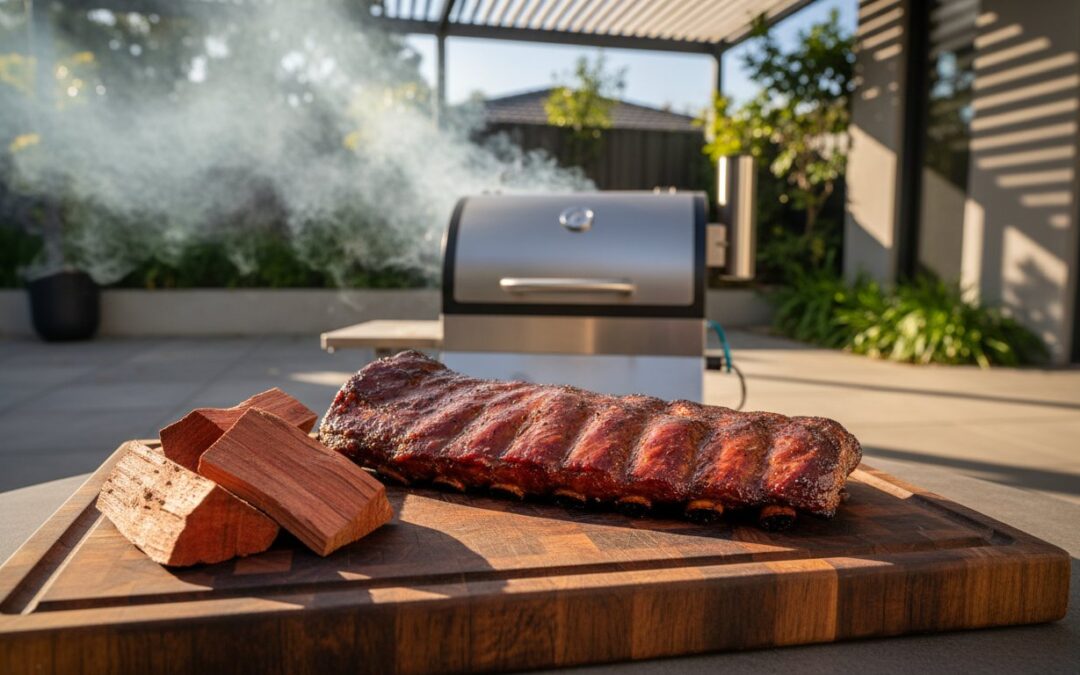
Choosing the right smoking wood is critical. Many pitmasters are unsure what flavour cherry wood delivers, which foods it complements, or how to use it without overpowering the meat. This uncertainty leads to missed opportunities for incredible flavour and colour. It’s time to master one of the most versatile woods in barbecue. This guide provides the essential knowledge for smoking with premium cherrywood wood, turning guesswork into consistent, professional results.
Here, you will discover everything you need to know. We cover the distinct sweet and fruity smoke profile of cherry, its perfect pairings with pork, poultry, and beef, and the correct techniques for using chunks versus chips. Learn the secrets to achieving that legendary deep mahogany finish on your meats and how to blend cherry with other hardwoods for complex, layered flavour. Stop wondering and start mastering a new smoking wood to elevate your BBQ game.
What is Cherry Wood? Understanding the Flavour Profile
When it comes to smoking meats, cherry wood is one of the most popular and versatile hardwoods available. A favourite among pitmasters in Australia and across the globe, it delivers a consistent and reliable performance. Unlike intensely flavoured woods such as hickory or mesquite, cherry offers a mild, subtle profile that enhances food without overpowering it. This makes it an excellent choice for both beginners learning the craft and seasoned experts seeking a balanced smoke.
To see how premium cooking wood is prepared for the smoker, check out this video:
Flavour and Aroma
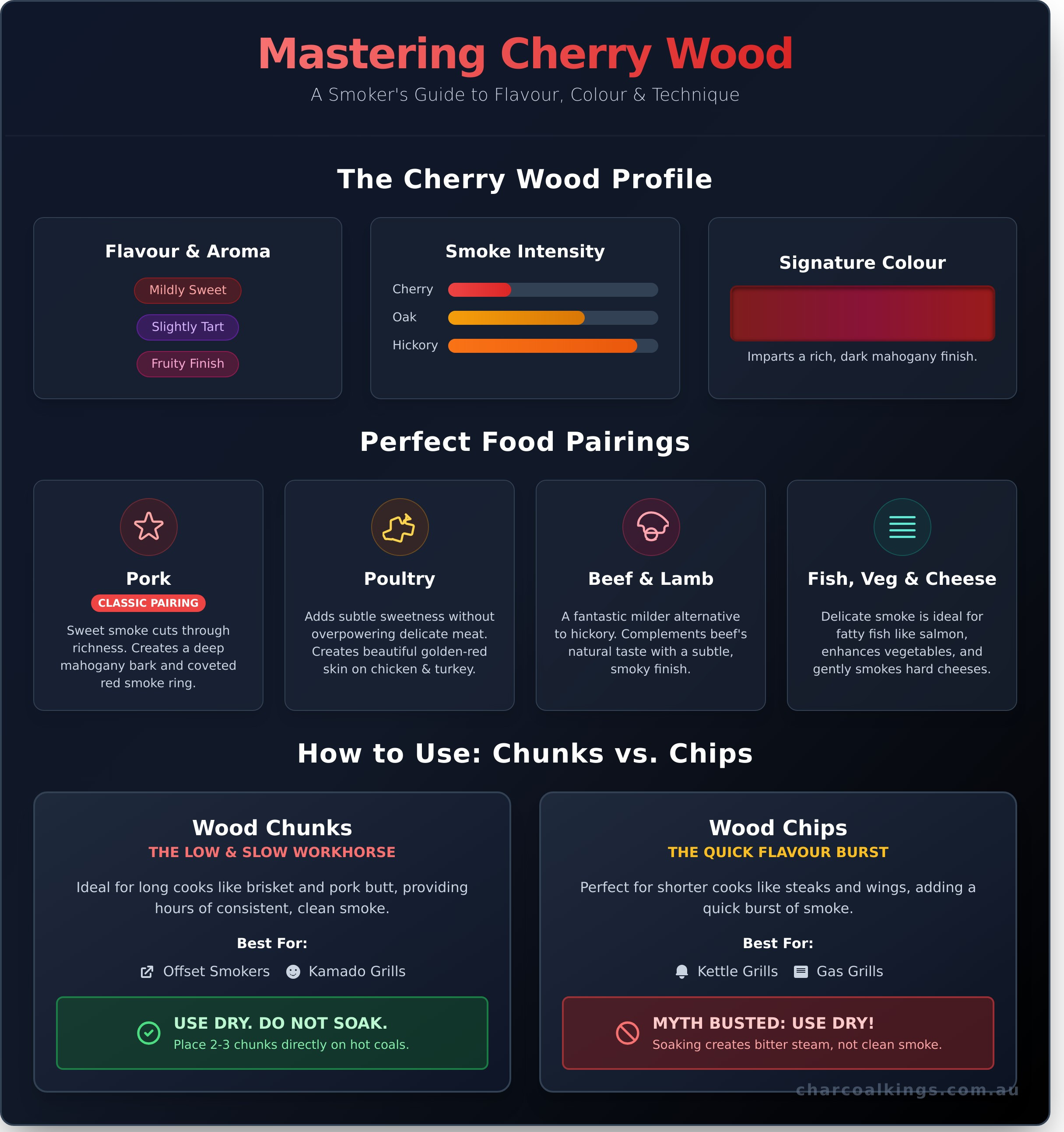
The smoke from cherrywood wood is known for its distinct character: it’s mildly sweet with a slightly tart, fruity finish. This profile makes it a genuine crowd-pleaser that pairs exceptionally well with a wide range of proteins. Because the flavour is not aggressive, it’s difficult to over-smoke your food, giving you greater control over the final result. The goal is to complement the natural taste of the meat, a core principle in the art of Smoking (cooking) where balance is key. It works well on its own or blended with other woods like oak or apple for more complex flavour layers.
The Signature Colour
Beyond flavour, the most sought-after benefit of using cherry wood is the incredible colour it produces. The smoke imparts a rich, dark mahogany finish to the exterior of the meat, creating a visually stunning ‘bark’ on brisket and pork butt or a beautiful deep red skin on poultry. This professional-grade appearance is highly prized in the competitive BBQ circuit, where presentation can make all the difference. For the backyard enthusiast, it gives everything from ribs to a whole chicken a flawless, appetising look that’s ready for the dinner table.
The Best Foods to Smoke with Cherry Wood
The mild, sweet profile of cherry wood makes it one of the most versatile smoking woods you can use. Its smoke contains compounds that complement, rather than overpower, the natural flavours of meat and produce. This subtle sweetness provides a perfect counterpoint to rich, savoury, and salty foods, creating a balanced and complex flavour profile that enhances the final product without dominating it. It’s a premium choice for achieving consistent, crowd-pleasing results.
Pork: The Classic Pairing
There’s a reason cherry is the go-to for pork. The natural sweetness of the smoke cuts through the richness of pork fat, creating a perfectly balanced taste. This is especially true for long cooks like pulled pork shoulder and pork ribs. The compounds in cherrywood wood also react with the myoglobin in the meat, helping to produce that deep, mahogany-coloured bark and the coveted red smoke ring that signals a superior barbecue result.
Poultry: Chicken and Turkey
When smoking poultry, the goal is to add flavour without overwhelming the delicate meat. Cherry excels here. Its light smoke won’t dominate chicken or turkey, instead imparting a subtle sweetness and a beautiful, golden-brown to reddish skin. It’s the ideal choice for whole roasted chickens, flavour-packed wings, or your next holiday turkey, ensuring a moist and flavourful bird every time.
Beef and Lamb
While hickory and mesquite often take the spotlight for beef, cherry offers a fantastic alternative for a milder smoke flavour. It won’t overpower the beef’s natural taste, making it an excellent partner for brisket, beef ribs, and tri-tip when you want a more subtle smoky finish. For lamb, a meat with its own strong flavour, cherry smoke complements it without clashing, adding a touch of sweetness that works exceptionally well.
Fish, Vegetables, and Cheese
Cherry’s versatility extends well beyond traditional barbecue meats. Its delicate smoke is a premium choice for a wide range of other foods:
- Fatty Fish: Adds a wonderful sweet note to salmon and trout.
- Vegetables: Enhances the flavour of corn, capsicum, and zucchini without making them bitter.
- Cheese: Provides a gentle, smoky flavour to hard cheeses like cheddar or gouda.
How to Use Cherry Wood: Chunks, Chips, or Splits?
Selecting the right form of cherry wood is the key to unlocking its full flavour potential. The choice isn’t about which is “best,” but which is correct for your smoker, your fuel setup, and your cook time. Using the wrong size can lead to overpowering, acrid smoke or a flavour that disappears too quickly. This guide provides the straightforward, practical advice you need to get it right every time.
Smoking with Wood Chunks
Cherry wood chunks are the workhorse for low-and-slow barbecue. Their density and size make them ideal for providing hours of consistent, clean smoke, perfect for long cooks like pork shoulder, brisket, or whole poultry. They are the top choice for dedicated smokers.
- Best For: Offset smokers, kamado grills (like Big Green Egg or Kamado Joe), and larger charcoal smokers.
- How to Use: Do not soak them. Simply place 2-3 cherry wood chunks directly on top of your hot, established charcoal bed. They will smoulder slowly, releasing a steady stream of sweet, aromatic smoke for a superior flavour infusion.
Using Wood Chips
Wood chips burn faster than chunks, making them perfect for adding a quick burst of smoky flavour. They are the go-to for shorter cooks on gas or charcoal kettle grills. The most common mistake is soaking them-a myth that needs busting.
Soaking wood chips only creates steam. This delays combustion, cools your coals, and produces a dirty, billowy smoke that can make your food taste bitter. For clean, quality smoke, always use your cherrywood wood chips dry. To prevent them from igniting and burning out instantly, place them in a smoker box or a foil pouch with a few holes poked in it. This allows them to smoulder properly and deliver that classic cherry flavour to steaks, chicken wings, or fish.
Working with Splits and Logs
Cherry wood splits and logs are for the serious barbecue enthusiast running a large offset smoker. In this style of cooking, the wood isn’t just for flavour-it’s the primary fuel source. Managing a fire with splits requires skill and attention, but the reward is an unparalleled depth of flavour that can’t be replicated. This method gives the pitmaster total control over heat and smoke, making it the foundation of traditional Australian and American barbecue.
No matter your setup, using premium, properly seasoned wood is non-negotiable for achieving great results. Find the perfect cherry wood chunks and chips for your grill.
Cherry Wood vs. Other Popular Smoking Woods
Understanding where cherry sits on the flavour spectrum is key to mastering your barbecue. As a mild-to-medium hardwood, it delivers a sweet, fruity smoke that’s less overpowering than robust woods like hickory or mesquite. Its unique ability to impart a deep, reddish-mahogany colour makes it a standout choice for pitmasters aiming for both exceptional taste and presentation.
Cherry vs. Apple Wood
Both are premium fruitwoods, but they serve different roles. Apple wood offers a more subtle, delicate sweetness and is a classic choice for chicken, fish, and pork loin. Cherry provides a slightly richer, more complex fruitiness and is unmatched for developing a dark, beautiful bark. While apple is for gentle flavour, cherry is for making a statement with both taste and colour, especially on pork ribs and poultry.
Cherry vs. Hickory
This is the essential mild vs. strong matchup. Hickory is a cornerstone of traditional BBQ, delivering a powerful, pungent smoke with a savoury, bacon-like profile. It’s bold and unmistakable. Use hickory when you want a classic, aggressive smoke flavour. Use cherry when your goal is to complement the meat with sweetness and rich colour, not dominate it. The choice depends entirely on the flavour profile you want to achieve.
Pro Tip: Blending Cherry for Custom Flavours
The real craft begins when you start blending woods to create a custom smoke profile. Using cherrywood wood as a base for its sweet notes and colour is a proven technique. It pairs exceptionally well with stronger woods, balancing their intensity and adding layers of complexity. We recommend you start with these proven combinations:
- Cherry and Hickory: A classic for pork ribs. The sweetness from cherry cuts through the savoury punch of hickory, creating a perfectly balanced, championship-level flavour.
- Cherry and Oak: Ideal for brisket. Oak provides a solid, medium-smoke foundation, while cherry adds that crucial layer of sweetness and helps build a stunning, dark bark.
Don’t be afraid to experiment. Mastering your own blends is what separates the amateurs from the pros. Start with a foundation of high-quality smoking woods to guarantee a clean, consistent burn. Explore our full range of premium natural smoking woods and start creating your signature flavour.
Unlock Premium Flavour with Cherry Wood
Cherry wood is a true asset in any pitmaster’s arsenal, delivering a uniquely sweet, mild smoke that enhances without overpowering. Its incredible versatility makes it the perfect choice for everything from pork and poultry to beef and vegetables, imparting a rich mahogany colour and an unforgettable depth of flavour. The key to unlocking this potential lies in the quality of your fuel.
Using premium cherrywood wood is essential for achieving a clean, consistent burn. When you’re ready to elevate your barbecue, trust the experts. Shop our range of premium, natural cherry smoking wood. We provide 100% natural, chemical-free hardwood, meticulously sourced for optimal moisture content and a clean smoke. With Australia-wide delivery straight to your door, getting the best fuel for your fire has never been easier.
Now you have the knowledge. It’s time to get smoking and create something truly exceptional.
Frequently Asked Questions About Cherry Wood
Can I use cherry wood from a tree in my garden?
We strongly advise against it. Trees in residential gardens are often treated with pesticides, fungicides, or other chemicals that are toxic when burned and will contaminate your food. Furthermore, wood must be properly seasoned (dried) to produce clean smoke. Using green or unseasoned wood results in a bitter, unpleasant taste. For safety and quality, always use premium, food-grade smoking wood from a trusted supplier.
Do you need to soak cherry wood chips before using them?
No. Soaking wood chips is a common myth that actually hinders the smoking process. Wet chips create steam, not quality smoke, which can delay cooking and make temperature control difficult. For a consistent and clean smoke flavour, place dry cherry wood chips or chunks directly onto your hot coals or in a smoker box. This method produces the thin, blue smoke that is ideal for authentic barbecue.
How much cherry wood should I use in my smoker?
Start with less than you think you need. For a standard kettle or offset smoker, two or three fist-sized chunks are sufficient for a long cook like a pork shoulder. If using chips for a shorter cook, a single handful is a good starting point. Cherry provides a noticeable flavour, and too much wood will create an acrid, overpowering smoke that ruins the meat. You can always add more wood later if necessary.
Is cherry wood good for smoking brisket?
Yes, cherry wood is an excellent choice for brisket. It imparts a beautiful dark mahogany colour on the bark and provides a mild, sweet smoke that complements the rich beef flavour without dominating it. For a more complex flavour profile, many Australian pitmasters mix cherry with a stronger local hardwood like ironbark or hickory. It is a reliable wood for achieving a premium, competition-quality result.
What is the best way to store smoking wood?
Proper storage is essential to maintain the quality of your smoking wood. Keep your wood chunks, chips, or logs in a dry, well-ventilated area that is elevated off the ground to prevent moisture absorption. A crate, mesh bag, or cardboard box in a shed or garage is ideal. Avoid storing wood in airtight plastic containers, as this can trap moisture and promote mould, ruining your premium cherrywood wood.
Will cherry wood make my food taste like cherries?
No, smoking with cherry wood will not make your food taste like the fruit itself. The name refers to the species of tree. Cherry wood produces a light, sweet, and mild fruity smoke flavour that is distinct from other woods. It enhances the natural taste of meats like poultry, pork, and beef, adding a subtle smoky character and helping to form a rich, dark-coloured bark on the exterior of the food.