There is nothing more frustrating than a barbecue held up by stubborn charcoal. Inconsistent heat, long waiting times, and the lingering taste of chemical firelighters can compromise the quality of your cook. The charcoal chimney starter is the single most effective tool for any serious grill master, guaranteeing fast, evenly lit coals without relying on unnatural additives. But simply owning one is not the whole story. To achieve a flawless barbecue, you need the right charcoal chimney starter tips to unlock its full potential.
The same principles of fire safety and regular maintenance apply to your home’s fireplace as well. Just as you maintain your grilling tools, ensuring your home’s flue is clean and in good repair is essential for safety, a task where relying on the Best Chimney Services can provide peace of mind.
This guide delivers the expert knowledge you need. We cut through the guesswork, covering everything from the fundamentals of loading and lighting to advanced techniques for precise temperature control. You will learn exactly how much charcoal you need for any cook, how to handle a hot chimney with complete confidence, and how to achieve a perfect, clean burn for superior flavour. Master the professional method for starting your charcoal grill and get hot, reliable coals every single time.
Key Takeaways
- Eliminate the chemical taste of lighter fluid. A chimney starter ensures your premium charcoal delivers pure, natural barbecue flavour.
- Master the fundamental lighting technique. Our guide details the best natural firestarters for a fast, clean, and reliable burn every time.
- Go beyond the basics with our expert charcoal chimney starter tips. Learn to adjust your method for different weather conditions to achieve consistent results.
- Perfect ignition is only half the battle. Discover how to arrange your lit coals to create precise heat zones for ultimate cooking control.
Why a Chimney Starter is Your Most Important BBQ Tool
Serious barbecue is about control. While many see a chimney starter as a simple convenience, its true value lies in the predictable power it gives you over your fire. It’s the difference between guessing and knowing. This tool is your first step towards eliminating the harsh chemical taste of lighter fluid, ensuring the only flavour your food absorbs is pure smoke and premium natural charcoal. Mastering this device is one of the most crucial charcoal chimney starter tips for achieving consistent results every time you cook.
To see exactly how this tool provides superior control, watch this quick overview:
By delivering perfectly lit, evenly burning coals for every single cook, a chimney starter removes the biggest variable in live-fire cooking. You get a reliable heat source, ready in a predictable amount of time, allowing you to focus on what matters: the food. It’s not just about starting a fire; it’s about starting the right fire, consistently.
The Problem with Lighter Fluid and Self-Lighting Coals
Relying on chemical accelerants is the fastest way to ruin a good barbecue. These methods introduce significant problems that a chimney starter solves:
- Unpleasant Chemical Residue: Lighter fluid and self-lighting briquettes leave behind a petroleum taste that taints your meat and vegetables.
- Inconsistent Lighting: It’s difficult to judge when chemically-treated coals are truly ready, often leading to a premature or uneven fire.
- Dangerous Flare-Ups: Pouring lighter fluid onto coals can result in sudden, uncontrolled flames, creating a serious safety hazard.
How a Chimney Starter Works: The Science of Airflow
The simple design of a Chimney starter harnesses a powerful law of physics: convection. The tall, cylindrical chamber acts like a flue, creating a strong draft. As the firelighters at the bottom ignite the first few coals, hot air rises rapidly. This draws cool, oxygen-rich air in through the vents at the base, superheating the coals above. This process ensures the charcoal lights evenly from the bottom up for a perfect, consistent burn.
The Perfect Light: A Step-by-Step Guide to Using Your Chimney
Using a charcoal chimney starter is the most reliable and chemical-free way to get your barbecue fired up. It guarantees evenly lit coals without the off-putting flavour of lighter fluid. Follow this straightforward process for a perfect light, every time. Mastering this technique is fundamental to controlling your cook.
Step 1: Choose Your Firestarter
The fuel you use to start your chimney matters. For a clean, odourless burn, we recommend natural firelighters or wax cubes. They are consistent and will not impart any unwanted chemical taste to your food. The classic newspaper method works, but be aware it can produce flying ash that may stick to your grill. Always place your firestarters on the lower charcoal grate, not the main cooking grate where your food will go.
Step 2: Fill the Chimney with Quality Charcoal
The amount of charcoal you use directly impacts your cooking temperature. This is one of the most practical charcoal chimney starter tips for achieving consistent results.
- For High-Heat Searing: Fill the chimney to the top for cooking steaks or burgers.
- For Low & Slow Cooking: Fill it halfway for smoking or roasting.
For superior performance and authentic flavour, nothing beats a quality hardwood lump charcoal. It burns hotter, longer, and cleaner than briquettes. Explore our premium natural lump charcoal.
Step 3: Light and Wait
Place the filled chimney directly on top of your lit firestarters on the charcoal grate. The fire will draw upwards through the coals. You will know it is working when you see orange flames licking through the top layer of charcoal. The coals are ready when the top pieces are lightly covered in a layer of grey ash. This process typically takes 15-20 minutes, depending on wind and other conditions. Patience is key.
Step 4: Pour The Coals Safely
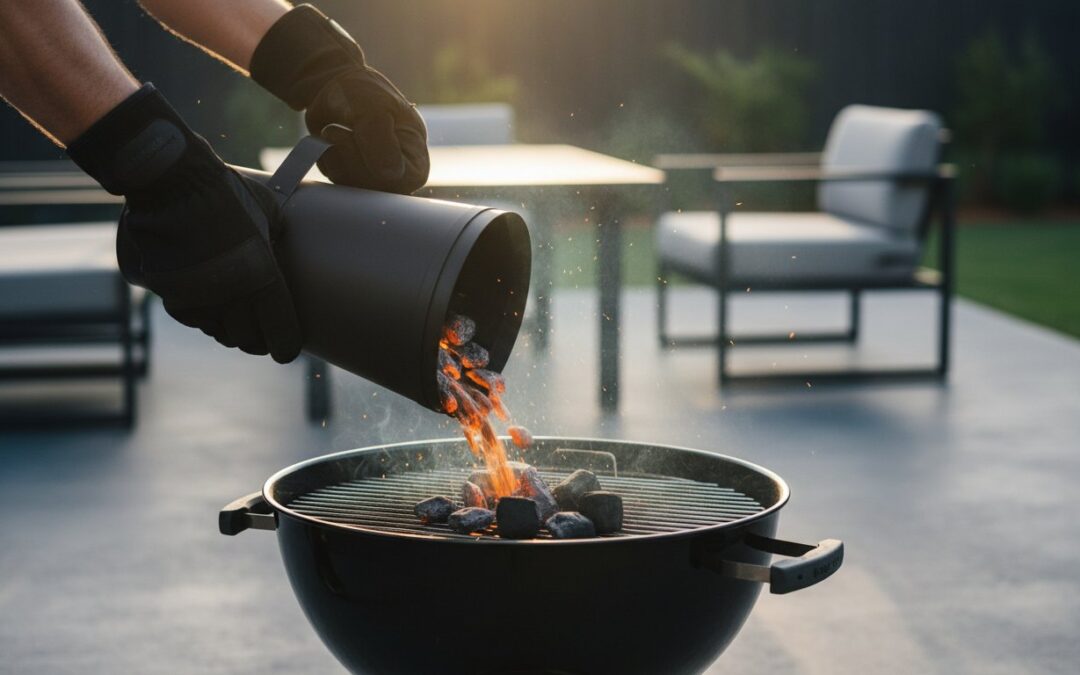
Handling a chimney full of white-hot coals demands respect and proper procedure. Always wear high-quality, heat-resistant gloves. When you are ready to pour, grip the handle firmly and use the second helper handle for stability if your model has one. Pour the coals onto the charcoal grate in a smooth, controlled motion. Pouring hot coals requires your full attention and adherence to established grilling safety tips to prevent accidents. Once empty, place the extremely hot chimney on a safe, non-combustible surface like concrete or a dedicated metal stand-never on your lawn or deck.
Pro-Level Tips to Master Your Chimney Starter
You’ve got the basics down. Now it’s time to move beyond simply lighting coals and start commanding your fire like a true pitmaster. Mastering your chimney starter is about precision, adaptability, and understanding your fuel. Once you’ve learned the fundamentals of how to use a chimney starter, these professional charcoal chimney starter tips will give you complete control over your cook, from a quick sear to a low-and-slow smoke.
Lump Charcoal vs. Briquettes in a Chimney
The type of charcoal you use directly impacts the lighting process and burn performance. Neither is better-they are simply different tools for different jobs. Understanding their characteristics is key to a predictable result.
- Natural Lump Charcoal: Made from pure hardwood, lump charcoal’s irregular shapes create more air gaps in the chimney. This leads to a faster light-up time. For best results, place larger pieces at the bottom to ensure maximum airflow.
- Briquettes: Their uniform, compressed shape provides a highly predictable and consistent burn. They may take slightly longer to light, but they deliver a steady, long-lasting heat ideal for extended cooking sessions.
Dealing with Wind and Rain
Don’t let the weather dictate your barbecue schedule. A bit of wind or rain is no match for a well-managed chimney. If it’s windy, position your body or the grill lid to create a windbreak while the paper catches fire. In high winds, be aware that the increased oxygen will cause your coals to light faster and burn hotter, so you may need to adjust your timings. A light drizzle won’t stop fully ignited coals, as the intense heat will evaporate moisture on contact.
The Partial Chimney Dump for Smoking
For low-and-slow cooking, you don’t want a full load of raging-hot coals. This is where the partial dump method comes in. Instead of filling the chimney, light only a small amount-about a quarter full. Once these coals are ashed over, pour them over a bed of unlit charcoal in your smoker or grill. This technique, the foundation of the famous ‘Minion Method’, allows the lit coals to slowly ignite the unlit ones, providing hours of steady, low-temperature heat perfect for smoking brisket, ribs, or pork shoulder.
Setting Up Your Grill for Perfect Heat Control
Using a chimney starter gets your charcoal lit quickly and evenly, but that’s only half the battle. How you arrange that fuel is what separates basic grilling from true barbecue mastery. Proper coal placement gives you ultimate control over your cook, allowing you to sear, roast, and slow-cook with precision. These advanced charcoal chimney starter tips focus on fuel management-the key to unlocking your grill’s full potential.
The Essential Two-Zone Fire
This is the most fundamental and versatile setup. Once your coals are glowing hot in the chimney, carefully pour the entire load over one half of your grill’s charcoal grate. This simple action creates two distinct cooking areas: a direct zone with intense, searing heat right above the coals, and an indirect zone on the empty side with gentler, oven-like heat. Sear a thick-cut steak over the direct heat, then move it to the indirect side to finish cooking perfectly without burning.
Vortex and Other Heat Focusing Tools
Take heat control to the next level with purpose-built accessories. Tools like the Vortex allow you to concentrate your chimney-lit charcoal into a tight, central column. This creates an incredibly intense, swirling heat that’s unmatched for achieving crispy skin on chicken wings. Alternatively, banking your coals around the outer perimeter of the grate (with or without charcoal baskets) creates a perfect setup for roasting a whole chook or a leg of lamb with consistent, even heat.
Topping Up Fuel Mid-Cook
For long cooks like a pork shoulder or brisket, you’ll need to add more fuel. Never just dump fresh, unlit briquettes onto fading coals. This kills your temperature and produces thick, acrid smoke that will ruin your food. The professional method is to light a second, smaller batch of charcoal in your chimney starter about 30 minutes before you need it. Adding fully lit coals ensures your grill’s temperature remains stable and the smoke stays clean, a critical detail in our list of charcoal chimney starter tips.
Mastering these setups with quality fuel is the secret to consistent results. For a reliable, long-lasting burn that makes heat management easy, explore our range of premium natural charcoal.
Essential Safety and Maintenance
A charcoal chimney starter is an incredibly effective tool, but it demands respect. It is a metal cylinder designed to contain a column of fire, reaching extreme temperatures that can cause serious injury or property damage if mishandled. Mastering its use means mastering its safety. These are not suggestions; they are the non-negotiable rules for operating a chimney starter safely and ensuring it provides years of reliable service.
Choosing a Safe Lighting Location
Where you light your chimney is the first critical safety decision. Never use it on a flammable surface like a wooden deck, dry grass, or asphalt. The intense heat radiating from the base can easily scorch, melt, or ignite these materials. The safest and most practical place to set your chimney starter is directly on the charcoal grate of your barbecue. This contains any stray sparks and provides a stable, heat-proof foundation. Always ensure the surface is level before you begin.
Must-Have Safety Gear
Proper personal protective equipment is mandatory when handling a chimney starter. There is no room for compromise. Your essential gear includes:
- High-Quality BBQ Gloves: Standard oven mitts are not sufficient. Invest in a pair of heavy-duty, heat-resistant gloves that extend past your wrists to protect from both radiant heat and direct contact.
- Sturdy, Closed-Toe Shoes: Protect your feet from dropped coals or a tipped chimney. Never operate a grill or chimney starter in thongs or bare feet.
- Fire Extinguisher: Keep a fire extinguisher, a bucket of sand, or a garden hose with a nozzle readily accessible in case of an emergency.
Cleaning and Storing Your Chimney Starter
Proper maintenance is simple and extends the life of your tool. After pouring out the hot coals, set the chimney aside on a safe, non-combustible surface to cool down completely. This can take over an hour. Once cool, simply turn it upside down and tap out any remaining ash. Avoid using water to clean it, as this will accelerate rust. Store your chimney starter in a dry place like a garage or shed to protect it from the elements and prevent corrosion. Following these straightforward charcoal chimney starter tips for maintenance ensures your gear is always ready for the next cook.
Master Your Grill with the Perfect Start
You now have the knowledge to light your BBQ perfectly every time. Remember, a reliable chimney starter is your best tool for achieving consistent, clean-burning heat, and mastering its use is the first step towards grilling perfection. By applying these charcoal chimney starter tips, from the initial light to managing your grill’s heat zones, you’ve removed the guesswork and set the stage for incredible flavour.
Now, pair that expert technique with superior fuel. Charcoal Kings is the trusted supplier for retail, wholesale, and food service across Australia, offering 100% natural, chemical-free hardwood charcoal that burns hotter and longer. Don’t let your hard work go to waste on inferior fuel. Shop our range of premium charcoal and BBQ accessories and fuel your passion for authentic barbecue.
Now get out there and get sizzlin’!
Frequently Asked Questions
How long does it take for a charcoal chimney starter to be ready?
A full charcoal chimney starter is typically ready in 15 to 20 minutes. The primary indicator is the state of the charcoal at the top. You are looking for the top layer of briquettes or lump charcoal to be covered in a light grey ash. Flames may also be licking the top of the coals. At this point, the charcoal has reached optimal temperature and is ready to be carefully poured into your grill for an even, consistent heat.
Why isn’t my charcoal lighting in the chimney starter?
The most common issues are poor airflow, damp fuel, or an inadequate firestarter. Ensure the vents on your grill are open and the chimney is placed on the charcoal grate, not on solid ground, to allow air from below. Always use dry, high-quality charcoal stored away from moisture. If your firestarter burns out too quickly, use more or try a natural firelighter cube, which provides a longer, more consistent burn to properly ignite the coals above it.
Can I use less charcoal in my chimney starter for a shorter cook?
Yes. You do not need to fill the chimney for every cook. For quick searing of steaks or snags, a half or even a quarter-full chimney provides more than enough heat. Adjusting the amount of charcoal to match your cooking time is one of the most effective charcoal chimney starter tips for managing fuel and temperature. This method ensures you only burn what you need, making your premium charcoal last longer and providing precise heat control for faster jobs.
Is it normal for a chimney starter to produce a lot of sparks and smoke?
A moderate amount of smoke and some sparking is completely normal during the initial lighting phase. The smoke is primarily from your firestarter (like newspaper) burning off. Sparks can occur as the edges of natural lump charcoal ignite. This activity should subside significantly once the fire is established and the coals begin to ash over. Using premium, natural hardwood charcoal will result in a cleaner burn with less smoke once it’s fully lit and ready for cooking.
What’s the best thing to use as a firestarter under the chimney?
For the best results without any chemical aftertaste, use natural firelighters or paraffin wax cubes. They provide a sustained, controlled flame ideal for igniting charcoal. Alternatively, two sheets of newspaper crumpled into a donut shape and lightly drizzled with cooking oil works effectively. Avoid using lighter fluid, as it can transfer unwanted chemical flavours to your food. The goal is a clean ignition that lets the quality of your charcoal and food shine.
How do I put out the coals when I’m finished grilling?
The safest and most efficient method is to starve the fire of oxygen. Use tongs to place the cooking grate back on your grill, then close the lid and shut both the top and bottom vents completely. The coals will extinguish over several hours. Never use water to douse hot coals inside a kettle or ceramic grill, as the thermal shock can crack the metal or ceramic. Once completely cool, leftover charcoal can be reused for your next cookout.