

The difference between a good barbecue and an incredible one often comes down to the fuel. Choosing the wrong BBQ pellets means inconsistent heat, dirty smoke, and a tainted flavour profile. If you’re tired of the guesswork-wondering if mesquite is too strong for your chicken or if your pellets are packed with cheap fillers-you’ve come to the right place. Selecting the right pellets for pellet smokers is the foundation of authentic, low-and-slow cooking. It’s not about fancy marketing; it’s about pure, 100% natural hardwood performance.
This guide provides the essential knowledge you need. We cut straight to the facts, covering everything from mastering wood flavour pairings for any meat to identifying the markers of premium, chemical-free quality. You will learn how to properly store your pellets to guarantee a clean burn every cook and how to find a reliable supplier here in Australia. Stop wasting time and money on inferior products. It’s time to fuel your smoker with confidence and achieve the consistent, delicious results you demand.
What Exactly Are BBQ Pellets and How Are They Made?
BBQ pellets are a premium, all-natural fuel and flavour source designed specifically for pellet smokers and grills. They are made from 100% hardwood sawdust, which is compressed under extreme pressure to form small, dense cylinders. The key to quality lies in purity: premium pellets for pellet smokers contain absolutely no fillers, binders, or artificial flavouring oils. What you get is pure wood, delivering consistent heat and authentic, smoky flavour to your food.
To see how different brands stack up in the real world, check out this straightforward comparison:
The Manufacturing Process: From Sawdust to Smoke
Creating a high-quality BBQ pellet is a precise, multi-step process that guarantees performance and flavour. It’s a craft that turns raw wood into a reliable fuel source.
- Drying: Raw hardwood is first dried to a specific moisture content, typically between 5-10%. This ensures a clean, efficient burn with minimal smoke.
- Pulverizing: The dried wood is then ground down in a hammer mill into a fine, consistent dust.
- Extrusion: This dust is forced through a die at extremely high pressure. The immense heat and pressure activate the wood’s natural lignin, which acts as a binder to form the pellet. To better understand the science of what pellet fuels are, it’s important to know that no glues or artificial additives are needed.
- Cooling & Packaging: The hot pellets are cooled to harden them before being packaged in sealed bags to protect them from moisture and maintain freshness.
BBQ Pellets vs. Heating Pellets: A Critical Difference
It is absolutely critical to use only food-grade BBQ pellets for cooking. Never use heating pellets in your smoker. While they look similar, their composition is dangerously different. BBQ pellets are made from 100% clean, virgin hardwood specifically chosen for flavour. Heating pellets, however, are designed for furnaces and can be made from softwoods like pine, recycled wood, glues, and other chemicals that are toxic when burned. Using them for cooking will not only produce a terrible, bitter flavour but also poses a serious health risk to you and anyone eating your food.
Choosing Your Flavour: A Complete Pellet and Meat Pairing Guide
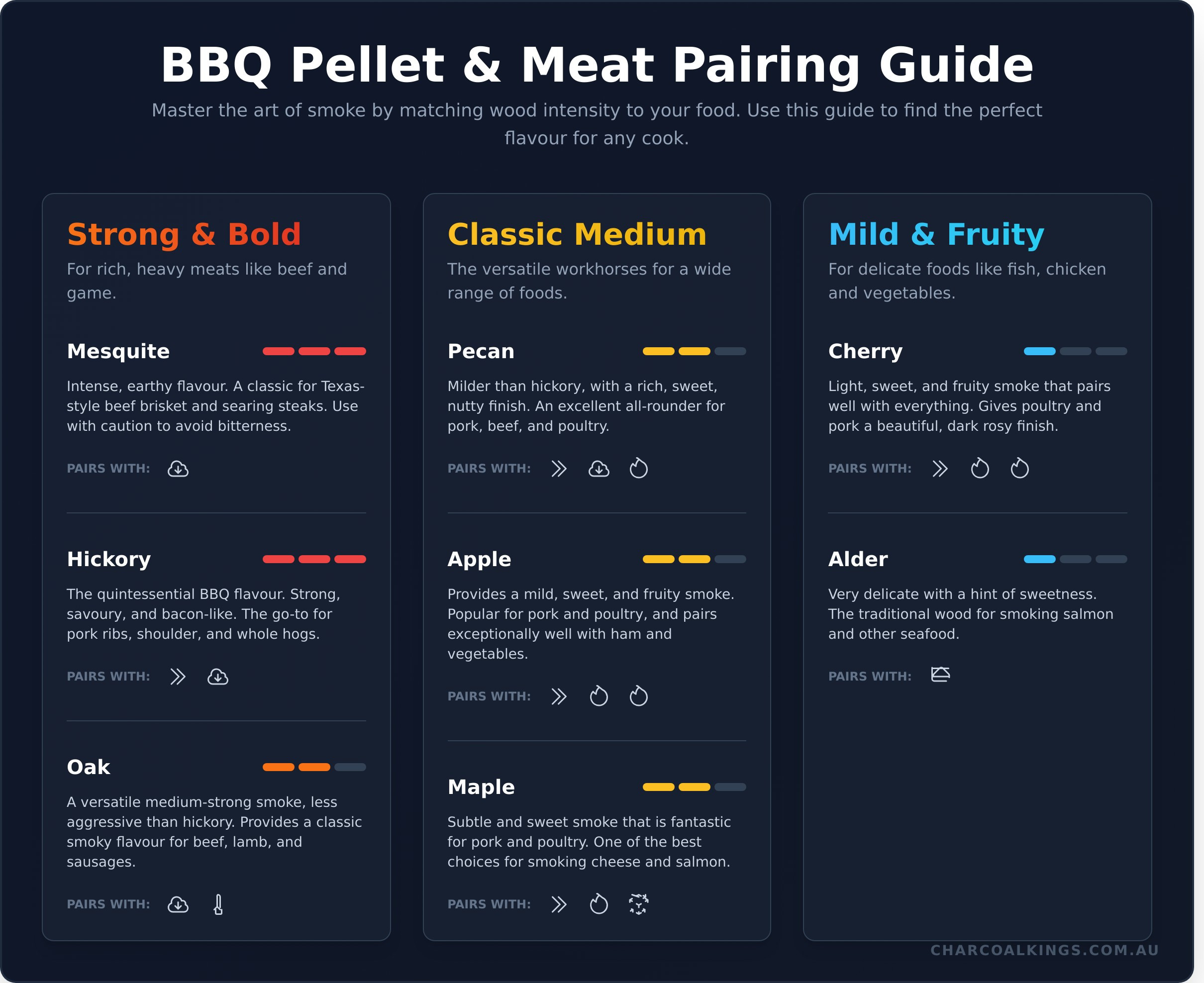
The key to exceptional barbecue is balance. You want the smoke to complement the meat, not overpower it. A simple rule to follow is to match the intensity of the smoke to the food: bold woods for bold meats and mild woods for delicate foods. The sheer variety of wood pellets available today is a testament to the scale of the industry. Official reports like the U.S. Pellet Production Data show millions of tons of feedstock being processed, allowing for specialized flavour profiles from classic hickory to nuanced fruitwoods. For those seeking a reliable, all-purpose option, blended pellets offer a balanced smoke profile that works well with almost anything. While this guide provides a solid starting point, the best results come from experimentation.
Strong & Bold Flavours for Rich Meats
When you’re smoking heavy, rich meats like beef or game, you need a wood that can stand up to their flavour. These strong woods deliver a powerful, robust smoke that penetrates deep into the meat.
- Mesquite: Delivers an intense, earthy flavour. It’s a classic choice for Texas-style beef brisket and searing steaks. Use with caution, as too much can turn food bitter.
- Hickory: The quintessential BBQ flavour. Strong, savoury, and often described as bacon-like, it’s the go-to for pork ribs, shoulder, and whole hogs.
- Oak: A versatile medium-strong smoke that’s less aggressive than hickory or mesquite. Oak provides a classic smoky flavour that complements beef, lamb, and sausages without overwhelming them.
Classic Medium Flavours for Versatility
These pellets are the workhorses of the smoking world. They provide a noticeable smoke flavour that enhances, rather than dominates, a wide range of foods. High-quality pellets for pellet smokers in this category are essential for consistent results.
- Pecan: Related to hickory but milder and sweeter with a rich, nutty finish. An excellent all-rounder, particularly for pork, beef, and poultry.
- Apple: Provides a mild, sweet, and fruity smoke. It’s a popular choice for pork and poultry, and it pairs exceptionally well with ham and vegetables.
- Maple: Subtle and sweet, maple smoke is fantastic for pork and poultry. It’s also one of the best choices for smoking cheese and salmon.
Mild & Fruity Flavours for Delicate Foods
For fish, chicken, vegetables, and even baked goods, a delicate touch is required. Mild fruitwoods provide a subtle smokiness and a hint of sweetness that won’t overpower the food’s natural taste.
- Cherry: A light, sweet, and fruity smoke that pairs well with everything. It’s famous for giving poultry and pork a beautiful, dark rosy finish.
- Alder: Very delicate with a hint of sweetness. This is the traditional wood for smoking salmon and other seafood.
Ready to experiment and find your signature flavour? Explore our range of 100% hardwood pellets.
Quality Matters: How to Spot Premium vs. Inferior Pellets
Not all wood pellets are created equal. The quality of the fuel you put into your smoker directly impacts flavour, temperature stability, and the amount of cleanup required. Sub-par pellets deliver inconsistent heat and a bitter, acrid smoke profile, while premium pellets provide a clean, reliable burn. At Charcoal Kings, we set the standard for excellence because we know that superior barbecue starts with superior fuel.
The number one rule is simple: look for pellets made from 100% natural hardwood with no fillers, binders, or flavouring oils. Low-quality pellets often use glues or adhesives that can clog your grill’s auger, leading to costly mechanical failures. Choosing the right pellets for pellet smokers isn’t just about taste-it’s about protecting your equipment.
Key Signs of High-Quality Pellets
A premium pellet is easy to identify once you know what to look for. A quality product will consistently show these characteristics:
- Uniformity and Sheen: Pellets should be consistent in size and length. A slight, waxy sheen indicates that natural lignins from the wood were released and used as a binder during compression-a sign of pure manufacturing.
- Minimal Dust: A small amount of dust is normal, but a quality bag will have very little. This shows the pellets are dense, well-made, and won’t break apart easily.
- Fresh Wood Aroma: Open the bag and take a sniff. The pellets should smell fresh and clean, like the natural hardwood they’re made from.
Red Flags of Low-Quality Pellets
Avoid pellets that display any of these warning signs, as they will compromise your cook and potentially your smoker:
- Excessive Dust: A bag full of sawdust is a major red flag. This fine dust can choke your auger, cause temperature fluctuations, and even lead to flame-outs. It also requires careful attention to safe handling and storage guidelines to minimise risk.
- Inconsistent and Crumbly Pellets: If pellets are of wildly different lengths or crumble in your hand, it points to poor manufacturing and low-density compression.
- Artificial Smells: An overpowering or chemical-like scent often means the manufacturer used flavouring oils instead of 100% real flavour wood. This results in an artificial, overpowering taste.
Ash Production: The Ultimate Test
The final proof of quality is in the ash. After a long smoke session, check your fire pot. Premium, 100% hardwood pellets produce very little fine, white ash. This indicates a clean, efficient, and complete burn. Conversely, pellets made with bark, fillers, or other additives will leave behind excessive, heavy, dark ash. This high ash content can quickly smother the fire pot, restricting airflow and causing your smoker’s temperature to drop unexpectedly mid-cook.
How to Use and Store Pellets for Peak Performance
Using premium natural hardwood pellets is the first step to incredible flavour. The second is ensuring you handle and store them correctly. Poor handling can lead to inconsistent temperatures, flameouts, and even damage to your smoker. Follow these straightforward practices to guarantee every cook is a success.
Best Practices for Your Pellet Grill
Consistent performance from your smoker starts before you even press the ignition button. To get the most from your pellets for pellet smokers, integrate these habits into your routine:
- Start with a clean fire pot. Before every cook, clear out any leftover ash from the fire pot. This ensures proper airflow for reliable ignition and a steady, efficient burn.
- Sift your pellets. Over time, pellets can break down, creating fine dust at the bottom of the bag. This dust can clog your auger and smother the fire. Use a simple sieve to filter it out before loading your hopper.
- Keep the hopper lid closed. During a cook, always keep the hopper lid securely shut. This prevents ambient moisture, especially in humid Australian weather, from compromising the pellets inside.
Proper Storage: Your Pellets’ Worst Enemy is Moisture
Wood pellets are made from compressed sawdust. When exposed to water or high humidity, they rapidly absorb moisture, swell, and disintegrate back into useless sawdust. This not only ruins your fuel but can cause a concrete-like blockage in your auger, leading to costly repairs.
The solution is simple: airtight storage. Never leave your pellets in an open bag. We recommend transferring them to a dedicated, sealed container like a food-grade bucket with a gamma seal lid. Store the container in a cool, dry place such as a garage or shed, keeping it off concrete floors to prevent moisture transfer. Proper storage is the key to protecting your investment in quality Charcoal Kings fuel.
Pellets vs. The Competition: Chips, Chunks & Lump Charcoal
Understanding the right fuel for your barbecue is fundamental. While wood chips, chunks, lump charcoal, and pellets all come from wood, they serve distinct purposes. Using the wrong fuel can lead to poor results or even damage your equipment. This section clarifies the roles of each, ensuring you get the best performance from your smoker.
Pellets vs. Wood Chips/Chunks
The most critical distinction is between fuel and flavour. Wood chips and chunks are flavour enhancers, designed to be added to a primary heat source like charcoal or gas to produce smoke. Pellets, however, are both the heat source and the flavour source in a pellet grill. Their uniform size and density are engineered to be fed precisely through an auger system. Never use chips or chunks in a pellet grill; they will jam and break the auger mechanism.
Can You Use Pellets in a Charcoal Grill?
Yes, you can use pellets to add smoke flavour to a charcoal or gas grill. Simply place them in a smoker tube or a foil pouch with holes poked in it, and set it on the hot coals or over the burners. In this scenario, the pellets act as a flavour additive, not the primary fuel. This is an excellent way to introduce a different smoke profile to your cook. Need fuel for another BBQ? Check out our premium lump charcoal.
The defining advantage of a pellet grill is its automated, ‘set and forget’ convenience. The system is designed around a single, consistent fuel source. The auger delivers a precise amount of pellets into the firepot to maintain a stable temperature, giving you complete control with minimal effort. This is why choosing high-quality, 100% natural hardwood pellets for pellet grills is essential for clean smoke and reliable performance.
Ultimately, each fuel has its place. For the unmatched convenience and integrated smoke flavour of a pellet grill, pellets are the only choice. For the primal heat and hands-on experience of a charcoal kettle, nothing beats quality lump charcoal.
Fuel Your Flavour: The Final Word on BBQ Pellets
Mastering your smoker begins with understanding your fuel. As we’ve covered, choosing the right flavour profile for your meat is the first step to incredible barbecue. But just as important is selecting high-quality pellets for pellet smokers-the difference between premium and inferior fuel directly impacts your heat, smoke, and the final taste on the plate. Proper storage and use will ensure you get peak performance from every single bag.
Don’t compromise on your cook. True barbecue deserves a clean, consistent fuel source made from 100% natural hardwood, with absolutely no fillers or binders. Our pellets are engineered to burn hot and clean with minimal ash, delivering pure wood-fired flavour every time. Ready to elevate your results? Shop our full range of premium, 100% natural hardwood BBQ pellets.
With Australia-wide delivery for all your BBQ needs, everything you need for your next legendary cook-up is just a click away. Now, get out there and get smokin’.
Frequently Asked Questions About BBQ Pellets
Can you use heating pellets for smoking food?
No. Never use heating pellets for cooking. They are produced from softwoods and often contain binders, glues, and chemicals that release toxic fumes when burned. Using them will ruin your food and can damage your smoker. Always use 100% natural, food-grade hardwood pellets. This ensures a clean burn, authentic smoke flavour, and a safe, premium-quality result for your barbecue.
How long does a 9kg bag of BBQ pellets last?
A 9kg bag of BBQ pellets typically provides 6 to 20 hours of cooking time. The burn rate depends entirely on your cooking temperature. For low-and-slow smoking around 110°C, expect to use about 0.5kg per hour. For high-heat grilling above 230°C, consumption can increase to 1.5kg per hour. Weather conditions like wind and cold can also affect how efficiently your smoker burns fuel.
Do BBQ pellets ever go bad or expire?
BBQ pellets do not have a set expiry date, but they can be ruined by moisture. When pellets get wet, they expand and break down into sawdust, which will clog your smoker’s auger system. To ensure maximum performance and longevity, store your pellets in a sealed, waterproof container in a dry area like a garage or shed. Proper storage guarantees a consistent, clean smoke for every cook.
Can I mix different flavours of pellets together?
Yes, mixing pellet flavours is an effective technique for creating custom smoke profiles. A popular strategy is to blend a strong wood like mesquite or hickory with a milder fruitwood such as apple or cherry to balance the flavour. Start with a 50/50 or 70/30 ratio and experiment from there. This allows you to precisely control the smoke intensity and develop a signature flavour for your barbecue.
Why is there so much dust in my bag of pellets?
A small amount of sawdust is a normal byproduct of pellets rubbing together during shipping. However, excessive dust can signal low-quality manufacturing or moisture exposure. The best pellets for pellet grills are made from pure hardwood and compressed tightly to minimise breakage. Too much dust can block the auger and lead to temperature problems, so sifting your pellets before use is a recommended practice.
What are the best all-around pellets for a beginner?
For those new to pellet smoking, a versatile and balanced hardwood is the ideal choice. Oak, hickory, or a quality competition blend work exceptionally well. These options provide a classic, robust smoke flavour that pairs well with almost any meat, including beef, pork, and chicken. They offer a true barbecue taste without overpowering the food, allowing you to master your technique with a reliable, all-purpose fuel.